Issue 106
, 2021
This, in a nutshell, is the onslaught that India’s law for granting environmental permissions to projects has been subject to in the last decade, largely to facilitate the ‘ease of doing business’....Read Full Story
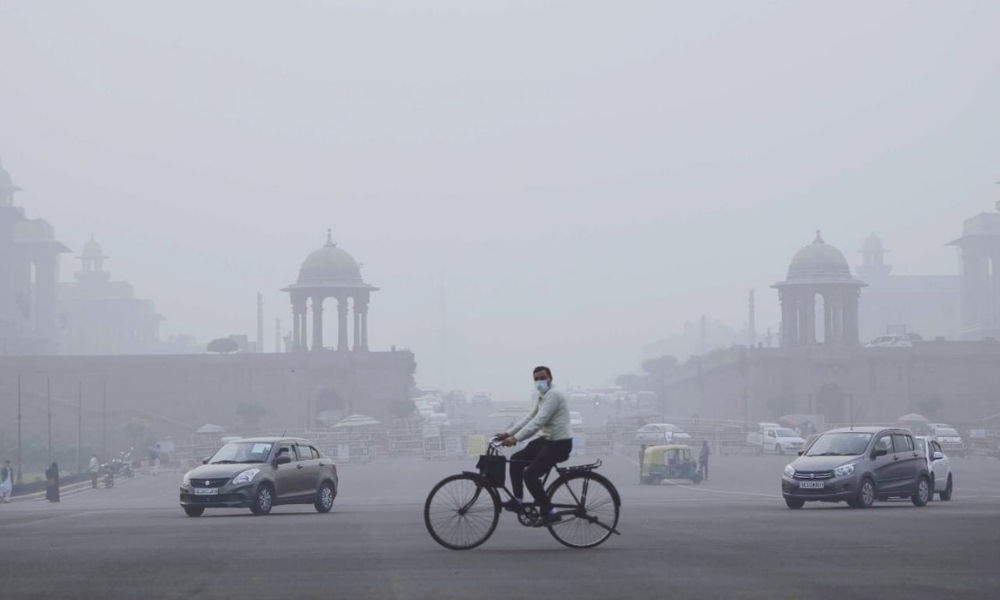 Of the 100 cities in the world vulnerable to environmental risk, 99 are in Asia. And of the 99, 43 are in India alone. This was released in a report published by research firm Verisk Maplecroft last week....Read Full Story Of the 100 cities in the world vulnerable to environmental risk, 99 are in Asia. And of the 99, 43 are in India alone. This was released in a report published by research firm Verisk Maplecroft last week....Read Full Story
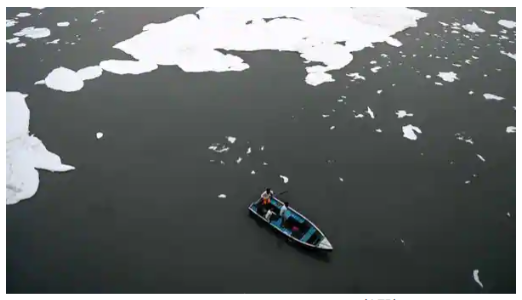 Geocycle the global waste management arm of LafargeHolcim, that manufactures building materials,will implement the innovative ‘bubble curtain’ technology for the first time in India to stop plastic from entering the Yamuna river....Read Full Story Geocycle the global waste management arm of LafargeHolcim, that manufactures building materials,will implement the innovative ‘bubble curtain’ technology for the first time in India to stop plastic from entering the Yamuna river....Read Full Story
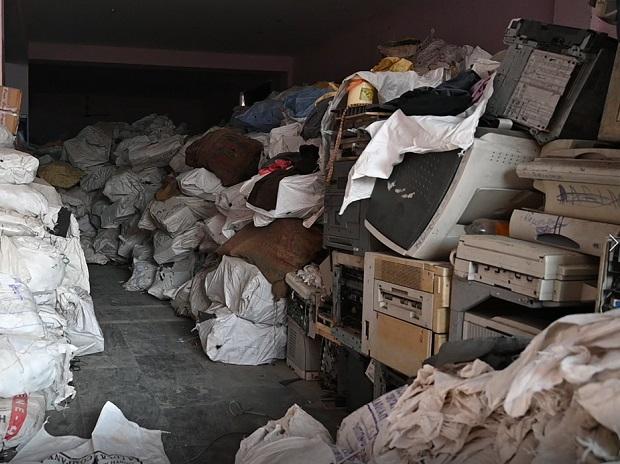 Aiming to deal with e-waste as part of the larger plan of the Indian government to encourage circular economy, or ensuring zero to minimal wastage in the use of electronics and electrical sector, the Ministry of Electronics and Information Technology (MeitY) has formula...Read Full Story Aiming to deal with e-waste as part of the larger plan of the Indian government to encourage circular economy, or ensuring zero to minimal wastage in the use of electronics and electrical sector, the Ministry of Electronics and Information Technology (MeitY) has formula...Read Full Story
 Gurgaon generated over 1.7 lakh kg of Covid-related biomedical waste in April alone, which is the highest it has produced since the beginning of the pandemic. According to Biotic, the Municipal Corporation of Gurgaon’s (MCG) concessionaire for biomedical waste managemen...Read Full Story Gurgaon generated over 1.7 lakh kg of Covid-related biomedical waste in April alone, which is the highest it has produced since the beginning of the pandemic. According to Biotic, the Municipal Corporation of Gurgaon’s (MCG) concessionaire for biomedical waste managemen...Read Full Story
Issue 105
, 2021
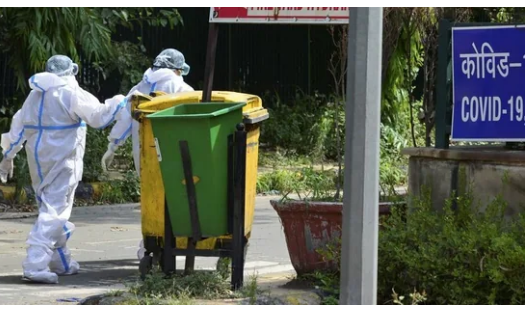 With the number of Covid-19 infections rising over the past several weeks, the city is facing a massive surge in biomedical waste.
According to Biotic Waste Management, one of the largest common biomedical waste treatment facilities in Delhi, Covid-19 waste generated l...Read Full Story With the number of Covid-19 infections rising over the past several weeks, the city is facing a massive surge in biomedical waste.
According to Biotic Waste Management, one of the largest common biomedical waste treatment facilities in Delhi, Covid-19 waste generated l...Read Full Story
As per the UN, more than 50 million tonnes of electronic waste was discarded in 2019, with the vast majority ending up in landfills and on scrap heaps. That’s not all. The World Economic Forum suggests that e-waste is now the fastest-growing waste stream in the world. I...Read Full Story
Guwahati is among two urban centres in Asia — and three across the continents — featuring in a zero-waste cities challenge launched by U.K.-based international NGO WasteAid to find entrepreneurs with innovative ideas that help reduce or recycle and create green employme...Read Full Story
India has joined hands with Germany to establish an efficient system that ensures no waste finds its way into rivers or seas.
The project, aimed at enhancing practices to prevent plastic accumulation in oceans that is adversely affecting marine ecosystems, will be unde...Read Full Story
For well over a year now, Single Use Plastic (SUP) has made a resurgence of sorts in Bengaluru and other urban centres in India on account of the Covid- 19 pandemic, making it harder to reverse the dependence on the extremely polluting products, officials said....Read Full Story
Issue 104
, 2021
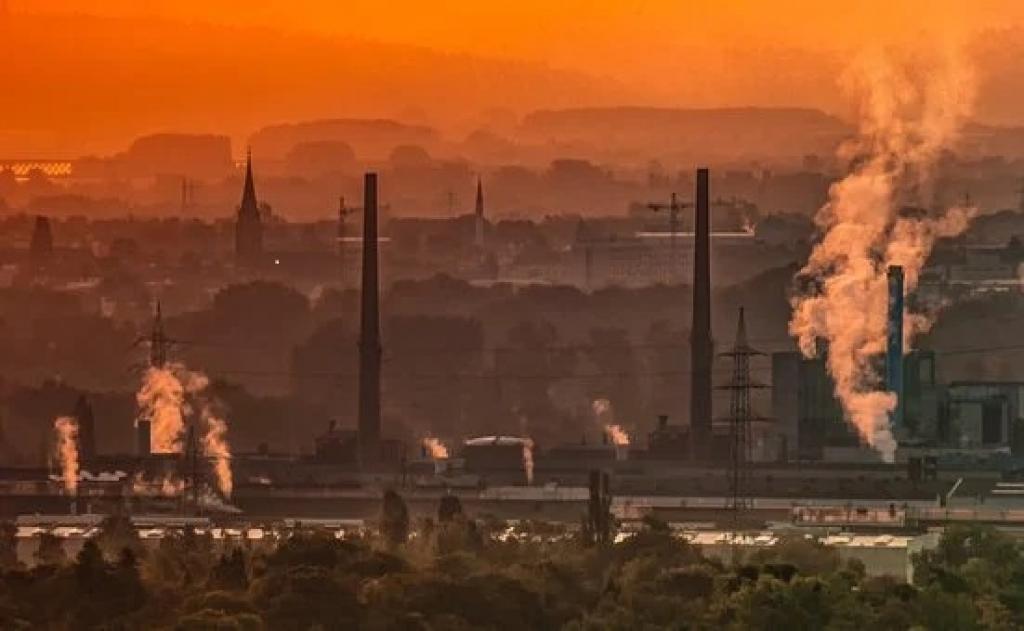 A new monitoring mechanism is indicating that industrial pollution levels continue to worsen in India. An evaluation of 88 industrial clusters identified by central and state pollution control boards (CPCB and SPCBs) as polluted industrial areas has thrown up a bleak pi...Read Full Story A new monitoring mechanism is indicating that industrial pollution levels continue to worsen in India. An evaluation of 88 industrial clusters identified by central and state pollution control boards (CPCB and SPCBs) as polluted industrial areas has thrown up a bleak pi...Read Full Story
 Following the orders of the Delhi high court, the city’s forest department has arranged for a workshop for all road-owning agencies, to apprise them of ways to preserve the ecology of an area while it carries out digging and construction activities....Read Full Story Following the orders of the Delhi high court, the city’s forest department has arranged for a workshop for all road-owning agencies, to apprise them of ways to preserve the ecology of an area while it carries out digging and construction activities....Read Full Story
 A clean environment is a basic right of citizens and the plea of non-availability of funds cannot be an excuse for not ensuring it, the National Green Tribunal (NGT) has said while rapping the Uttarakhand government over waste disposal dump yards illegally set up on the...Read Full Story A clean environment is a basic right of citizens and the plea of non-availability of funds cannot be an excuse for not ensuring it, the National Green Tribunal (NGT) has said while rapping the Uttarakhand government over waste disposal dump yards illegally set up on the...Read Full Story
 A parliamentary standing committee has flagged issues of lack of transparency and “misappropriation” of funds in certain schemes under the Union Ministry of Environment, Forests and Climate Change....Read Full Story A parliamentary standing committee has flagged issues of lack of transparency and “misappropriation” of funds in certain schemes under the Union Ministry of Environment, Forests and Climate Change....Read Full Story
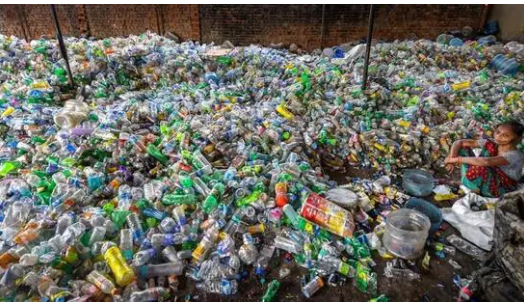 The ministry has issued a draft notification on March 11 which lays down how various single-use plastic products will be prohibited in phases next year. The All India Plastics Manufacturers Association, however, underlined that the move could impact at least 1 million j...Read Full Story The ministry has issued a draft notification on March 11 which lays down how various single-use plastic products will be prohibited in phases next year. The All India Plastics Manufacturers Association, however, underlined that the move could impact at least 1 million j...Read Full Story
Issue 102
, 2020
 Environment Minister Prakash Javadekar on Monday said from 2021, 10 best National Parks, five coastal and marine parks and the top five zoos in the country will be ranked and awarded every year....Read Full Story Environment Minister Prakash Javadekar on Monday said from 2021, 10 best National Parks, five coastal and marine parks and the top five zoos in the country will be ranked and awarded every year....Read Full Story
 Parts of north India remained under the grip of an intense cold wave on Sunday with night temperatures dropping below the 5 degrees Celsius-mark at some places and dense fog enveloping several areas....Read Full Story Parts of north India remained under the grip of an intense cold wave on Sunday with night temperatures dropping below the 5 degrees Celsius-mark at some places and dense fog enveloping several areas....Read Full Story
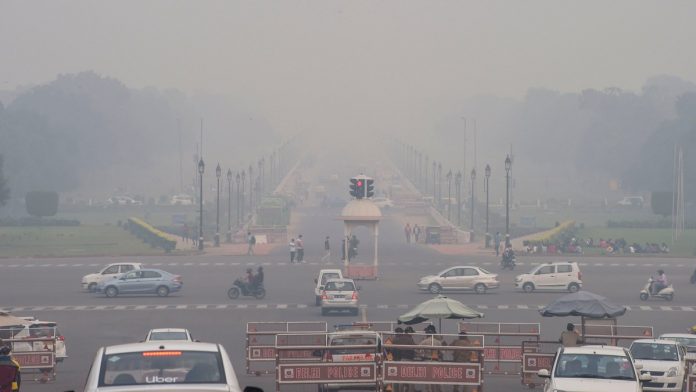 Air pollution caused more than 16.7 lakh deaths in India in 2019 - over ten times more than the country's Covid-19 death toll so far -- causing economic losses of nearly $36.8 billion (Rs 2,71,446 crore), according to a study published in The Lancet Planetary Health jou...Read Full Story Air pollution caused more than 16.7 lakh deaths in India in 2019 - over ten times more than the country's Covid-19 death toll so far -- causing economic losses of nearly $36.8 billion (Rs 2,71,446 crore), according to a study published in The Lancet Planetary Health jou...Read Full Story
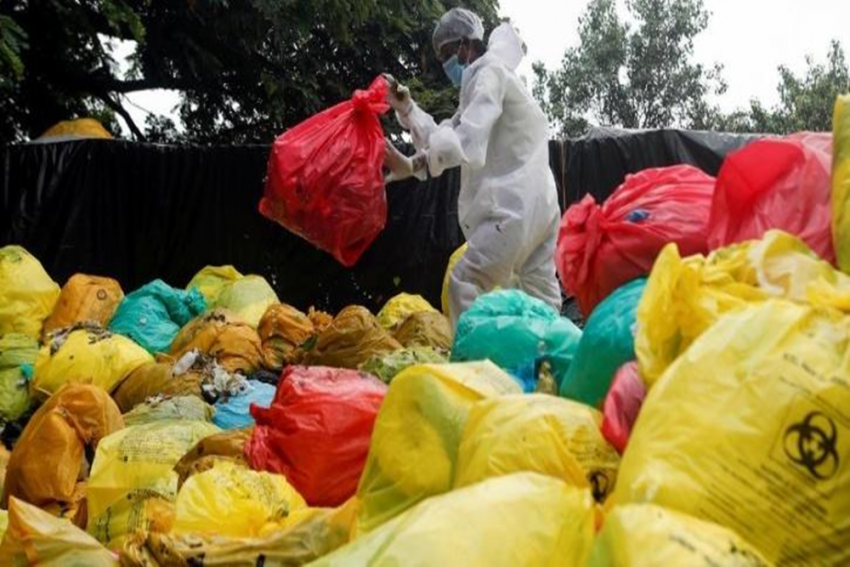 India has generated around 33,000 tonnes of Covid-19 biomedical waste in the last seven months. You read that right!...Read Full Story India has generated around 33,000 tonnes of Covid-19 biomedical waste in the last seven months. You read that right!...Read Full Story
India collected just 10 per cent of the electronic waste (e-waste) estimated to have been generated in the country 2018-19 and 3.5 per cent of that in the generated in 2017-18, said a recent report by the Central Pollution Control Board....Read Full Story
Issue 101
, 2020
 Licypriya Kangujam was five years old when she first heard of climate change. She accompanied her father to raise funds for the victims of the Nepal earthquake in 2015.Next year, when she moved from her hometown in Manipur to Delhi, she was appalled by the air quality t...Read Full Story Licypriya Kangujam was five years old when she first heard of climate change. She accompanied her father to raise funds for the victims of the Nepal earthquake in 2015.Next year, when she moved from her hometown in Manipur to Delhi, she was appalled by the air quality t...Read Full Story
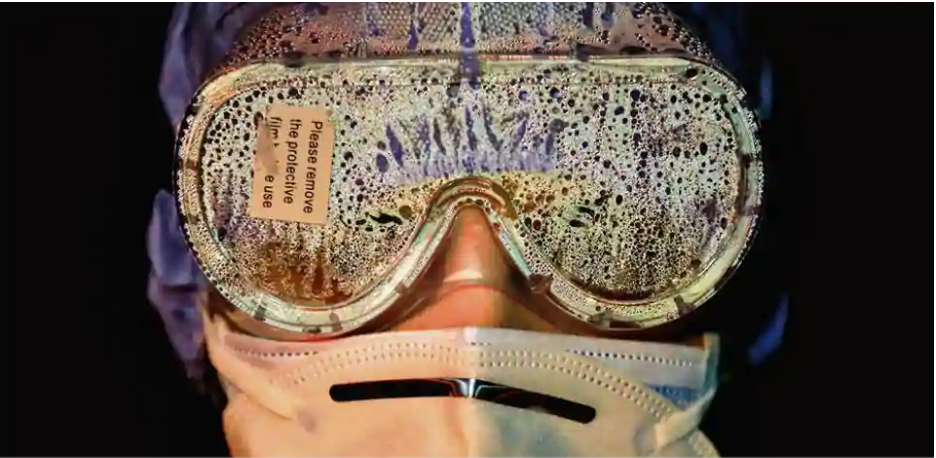 On Monday, former US Food and Drug Administration (FDA) chief Scott Gottlieb said in an interview to CNBC that his estimate is that by the end of the year 30% of Americans would have been infected by the Sars-CoV-2 virus which causes the coronavirus disease. That's almo...Read Full Story On Monday, former US Food and Drug Administration (FDA) chief Scott Gottlieb said in an interview to CNBC that his estimate is that by the end of the year 30% of Americans would have been infected by the Sars-CoV-2 virus which causes the coronavirus disease. That's almo...Read Full Story
Blue skies during the lockdown months made us hopeful about a different winter this time. That hope has been belied.Air pollution in most Indian cities was far worse in October than what it was in 2019, Mint reported last month. November has been no different so far. As...Read Full Story
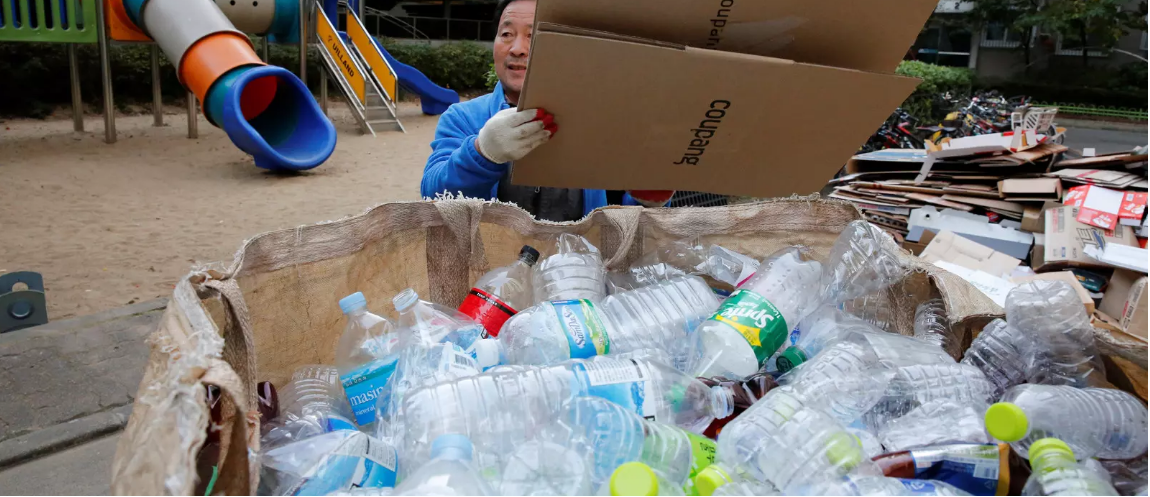 Anyone who has seen a child tear open their presents on Christmas morning knows how little attention gets paid to the wrapping - it's all about what's inside.Yet packaging is responsible for an extraordinarily high proportion of waste, which all too often ends up in the...Read Full Story Anyone who has seen a child tear open their presents on Christmas morning knows how little attention gets paid to the wrapping - it's all about what's inside.Yet packaging is responsible for an extraordinarily high proportion of waste, which all too often ends up in the...Read Full Story
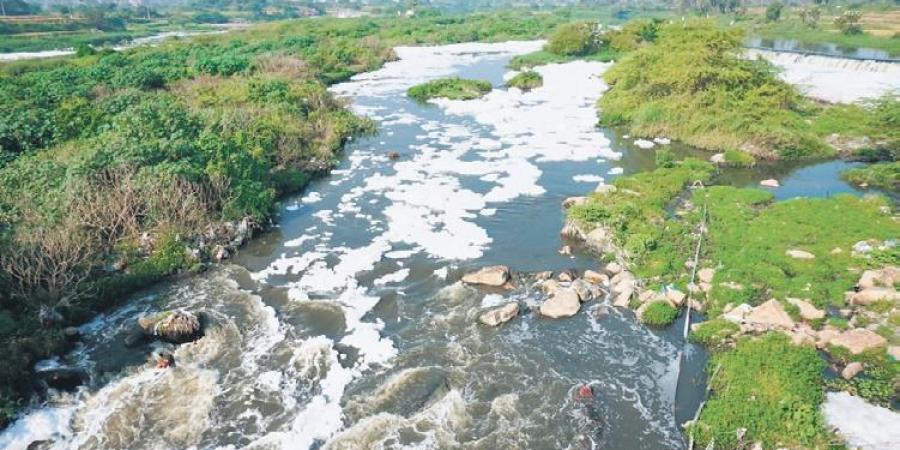 The Patancheru-Bollaram industrial cluster is home to around 100 polluting units, about half of which are pharmaceutical entities and drug companies. For decades now, locals of Patancheru and Bollaram have been complaining of air and water pollution that has allegedly l...Read Full Story The Patancheru-Bollaram industrial cluster is home to around 100 polluting units, about half of which are pharmaceutical entities and drug companies. For decades now, locals of Patancheru and Bollaram have been complaining of air and water pollution that has allegedly l...Read Full Story
Diamond City is sweeping clean all cleanliness records. This time, after donning the crown of being the second cleanest city in the country, Surat has emerged as a model centre for handling biomedical waste during the pandemic.An Indo-Norwegian study of the global pande...Read Full Story
Issue 100
, 2020
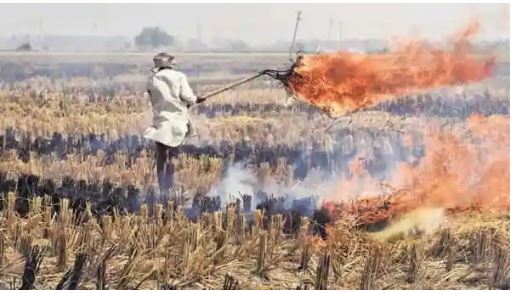 Stubble burning incidents in Punjab have nearly quadrupled as compared to last year. As many as 2,873 incidents have been reported between 21 September and 12 October, from to 755 cases during the same period a year ago, news agency ANI tweeted Tuesday quoting Anil Sood...Read Full Story Stubble burning incidents in Punjab have nearly quadrupled as compared to last year. As many as 2,873 incidents have been reported between 21 September and 12 October, from to 755 cases during the same period a year ago, news agency ANI tweeted Tuesday quoting Anil Sood...Read Full Story
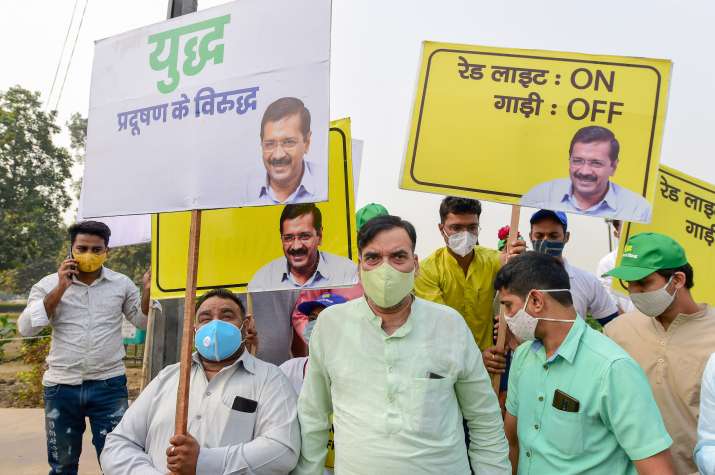 Motivating Delhiites to participate in the 'Red Light On, Gaadi Off' campaign, Delhi Environment Minister Gopal Rai on Wednesday said that the citizens must prompt five of their peers, friends, or acquaintances to play their part in reducing the pollution in the nationa...Read Full Story Motivating Delhiites to participate in the 'Red Light On, Gaadi Off' campaign, Delhi Environment Minister Gopal Rai on Wednesday said that the citizens must prompt five of their peers, friends, or acquaintances to play their part in reducing the pollution in the nationa...Read Full Story
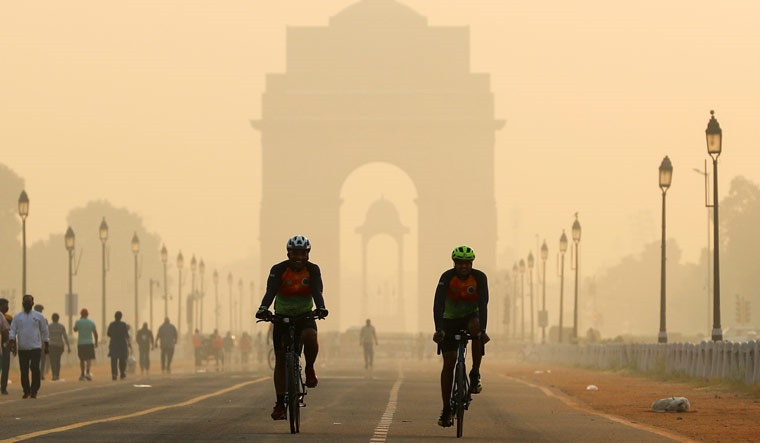 The government will soon bring in a new law to curb air pollution in Delhi-NCR, a top official from the ministry of environment said on Monday. "The new law will be only for Delhi and NCR. It will come out soon. I cannot comment on what penalties it will entail. It's a ...Read Full Story The government will soon bring in a new law to curb air pollution in Delhi-NCR, a top official from the ministry of environment said on Monday. "The new law will be only for Delhi and NCR. It will come out soon. I cannot comment on what penalties it will entail. It's a ...Read Full Story
The Golden beach in Puri has been accorded the prestigious 'Blue Flag' certification by FEE Denmark. Blue Flag beaches are considered to be the cleanest beaches....Read Full Story
 With Pune slowing down considerably and now reporting less than 1,000 cases a day, Bengaluru has emerged as the city with the second-largest number of coronavirus cases in the country, next only to Delhi....Read Full Story With Pune slowing down considerably and now reporting less than 1,000 cases a day, Bengaluru has emerged as the city with the second-largest number of coronavirus cases in the country, next only to Delhi....Read Full Story
Issue 99
, 2020
The National Green Tribunal (NGT) has pulled up the Jharkhand Pollution Control Board (PCB) for damage to the environment due to operation of quarrying and crushing units in Rajmahal hills.
It noted that "the damage to the environment and public health cannot be brus...Read Full Story
Delhi HC adjourns to Oct 23 Environment Ministry's plea against order to publish EIA notification in different languages
The Delhi High Court on Wednesday adjourned till October 23, a petition filed by The Ministry of Environment against the court's June 30 order whe...Read Full Story
Disposal of biomedical waste including PPE kits worn by healthcare professionals and public became a challenge during the ongoing COVID-19 pandemic, the Union Health Ministry told the Rajya Sabha on Sunday.
Also read: Little protection for sanitation workers during C...Read Full Story
Electronic waste (e-waste) generation in India increased by over 43 per cent between 2017-18 and 2019-20, according to the written statement presented by Babul Supriyo, Union minister of state in the ministry of Environment, Forest and Climate Change, presented in the L...Read Full Story
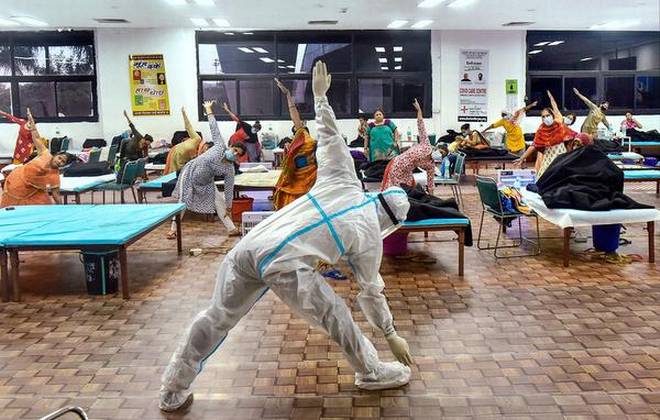 Union Health Minister Harsh Vardhan on Sunday cautioned that the Indian Council of Medical Research's (ICMR) COVID-19 first sero-survey should not create a sense of complacency in people with regard to the virus.
Speaking in his social media interaction Sunday Samvaa...Read Full Story Union Health Minister Harsh Vardhan on Sunday cautioned that the Indian Council of Medical Research's (ICMR) COVID-19 first sero-survey should not create a sense of complacency in people with regard to the virus.
Speaking in his social media interaction Sunday Samvaa...Read Full Story
Issue 98
, 2020
New Delhi: A 7500 MW solar park is being built in Ladakh for electricity and infrastructure development in the region. The Ladakh, Leh and Kargil region will be developed and declared to be a carbon neutral region, PM Modi said in his Independence Day speech on Saturday...Read Full Story
New Delhi: Prime Minister Narendra Modi Saturday announced the launch of Project Dolphin to boost the conservation of both river and sea dolphins in India.
?India is committed to protect its biodiversity. We have successfully carried out Project Tiger and Project Ele...Read Full Story
India has set a record for the world's highest single-day increase in coronavirus cases.
The nation, the world's third-most infected, on Sunday reported 78,761 new cases in 24 hours, passing the number posted in the US on 17 July.
The rise comes as the government cont...Read Full Story
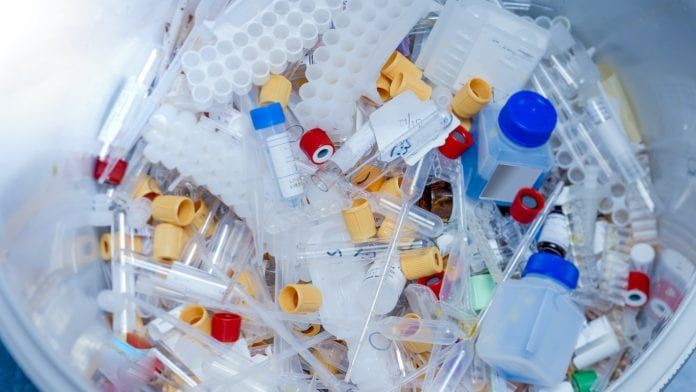 The COVID-19 Pandemic has forced the Indian Government to frame more stringent laws relating to disposal of Bio-medical waste. The Central Government under powers conferred by section 6, 8 and 25 published the Bio-medical Waste ManagementRules, 2016 vide notification No...Read Full Story The COVID-19 Pandemic has forced the Indian Government to frame more stringent laws relating to disposal of Bio-medical waste. The Central Government under powers conferred by section 6, 8 and 25 published the Bio-medical Waste ManagementRules, 2016 vide notification No...Read Full Story
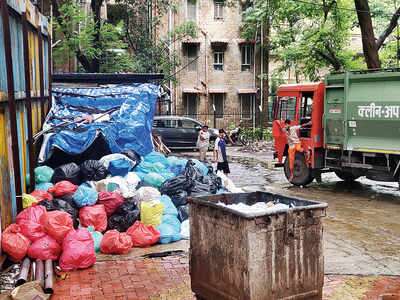 Large quantities of biomedical waste, including highly infectious Covid-19 discards, was removed from all major BMC and state-run hospitals on Friday, a day after Mumbai Mirror reported piling up of waste as the sole contractor appointed for its collection struggled wit...Read Full Story Large quantities of biomedical waste, including highly infectious Covid-19 discards, was removed from all major BMC and state-run hospitals on Friday, a day after Mumbai Mirror reported piling up of waste as the sole contractor appointed for its collection struggled wit...Read Full Story
 NEW DELHI: The Central Pollution Control Board (CPCB) has found that the majority of registered e-waste dismantling and recycling units in the country were found violating waste disposal rules.
Computers, servers, monitors, printers, scanners, cellular phones, TVs, iPo...Read Full Story NEW DELHI: The Central Pollution Control Board (CPCB) has found that the majority of registered e-waste dismantling and recycling units in the country were found violating waste disposal rules.
Computers, servers, monitors, printers, scanners, cellular phones, TVs, iPo...Read Full Story
The national capital has witnessed intermittent heavy rainfall over the past two days. As many across the city relish the rains, the houses of hundreds of people, located near the 40 m tall mountain of garbage in North West Delhi?s Bhalswa, are under threat.
Yesterday ...Read Full Story
Issue 97
, 2020
The recent military stand-off between India and China and the resulting call for the boycott of Chinese goods is shaping up a breathing space for indigenous and traditional toys for children.
Suffocated by the dominance of China-manufactured children's toys in the Indi...Read Full Story
 Ranjeet Kumar, a garbage collector, arrives early every morning at the garbage dump near Nangloi Railway Station.These days, he is chary about directly handling the trash in the dhalao there....Read Full Story Ranjeet Kumar, a garbage collector, arrives early every morning at the garbage dump near Nangloi Railway Station.These days, he is chary about directly handling the trash in the dhalao there....Read Full Story
Alliance to End Plastic Waste, a Singapore-based-NGO working in the environmental sector, plans to invest between $70 million to $100 million in India over the next five years to majorly to reduce plastic waste....Read Full Story
 Union Environment Minister Prakash Javadekar on Tuesday released the report of the Tiger Census on eve of Global Tiger Day. "India is proud of its tiger assets. The country today has 70% of the world's tiger population. We are ready to work with all the 13 tiger range c...Read Full Story Union Environment Minister Prakash Javadekar on Tuesday released the report of the Tiger Census on eve of Global Tiger Day. "India is proud of its tiger assets. The country today has 70% of the world's tiger population. We are ready to work with all the 13 tiger range c...Read Full Story
 While a lot of attention is given to the mining and burning of coal that leads to huge carbon emissions, the dangers of fly ash, the residue left after coal is burnt in thermal power plants, have received less public attention, despite the risks to our health and to the...Read Full Story While a lot of attention is given to the mining and burning of coal that leads to huge carbon emissions, the dangers of fly ash, the residue left after coal is burnt in thermal power plants, have received less public attention, despite the risks to our health and to the...Read Full Story
Issue 96
, 2020
 Student unions from several universities and colleges from across India have petitioned Union Environment Minister Prakash Javadekar to put the draft of the proposed Environment Impact Assessment Notification 2020 on hold....Read Full Story Student unions from several universities and colleges from across India have petitioned Union Environment Minister Prakash Javadekar to put the draft of the proposed Environment Impact Assessment Notification 2020 on hold....Read Full Story
State-owned Oil India Limited (OIL) had managed to get environmental clearances to expand its hydrocarbon testing and drilling activity in the eco-sensitive Baghjan area of Assam?s Tinsukia district without facing public hearings, an official document reviewed by The Wi...Read Full Story
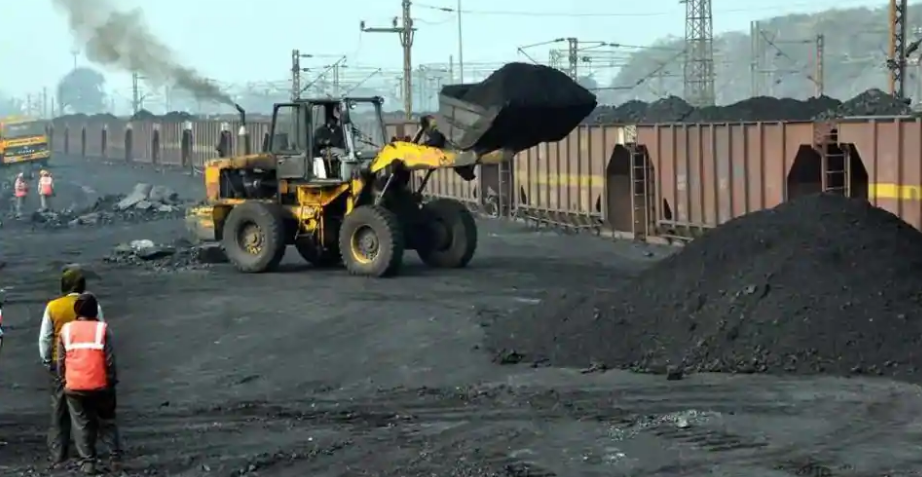 The ongoing auction of 41 coal mines across the country would open up pristine and contiguous forests for mining in parts of central India, government documents show, even as the Union environment ministry has said decisions regarding auctioning were being taken on a ca...Read Full Story The ongoing auction of 41 coal mines across the country would open up pristine and contiguous forests for mining in parts of central India, government documents show, even as the Union environment ministry has said decisions regarding auctioning were being taken on a ca...Read Full Story
 The covid-19 pandemic has made work-from-home the new normal for India's IT and technology firms. Microsoft India has transitioned to a virtual workplace for nearly all its operations and currently, only a small number of employees who perform essential services continu...Read Full Story The covid-19 pandemic has made work-from-home the new normal for India's IT and technology firms. Microsoft India has transitioned to a virtual workplace for nearly all its operations and currently, only a small number of employees who perform essential services continu...Read Full Story
 COVID-19, the pandemic that has shaken the world, will perhaps change our lives forever. Often, we now talk of a ?pre-COVID? world, where business was as usual, and a ?post-COVID? world which is the new normal. While the disease, caused by a tiny virus, has affected mil...Read Full Story COVID-19, the pandemic that has shaken the world, will perhaps change our lives forever. Often, we now talk of a ?pre-COVID? world, where business was as usual, and a ?post-COVID? world which is the new normal. While the disease, caused by a tiny virus, has affected mil...Read Full Story
Issue 94
, 2020
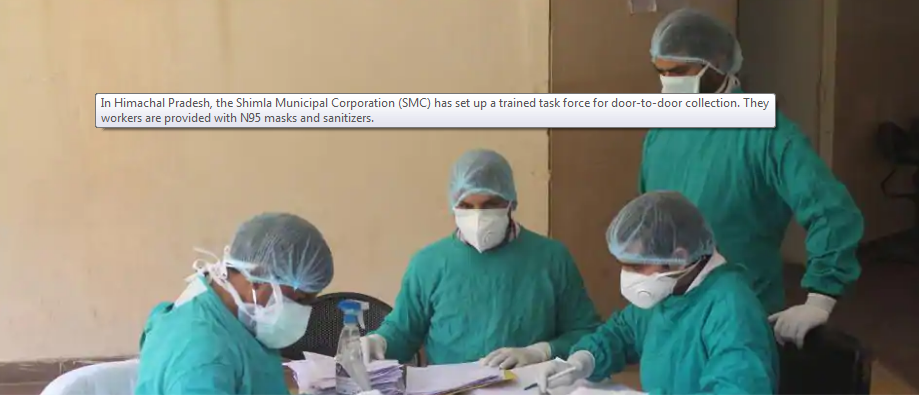 The Central Pollution Control Board has tagged these wastes – masks and gloves - generated from quarantined homes as ‘domestic hazardous waste and has issued guidelines on how to handle them. More......Read Full Story The Central Pollution Control Board has tagged these wastes – masks and gloves - generated from quarantined homes as ‘domestic hazardous waste and has issued guidelines on how to handle them. More......Read Full Story
Air pollution in India is at its lowest in two decades, says a study published by US space agency National Aeronautics and Space Administration (NASA)...Read Full Story
Three weeks after being locked into homes there is now the beginning of a realisation that our future as a species demands a drastic rethink of our present style of destructive and exploitative living — a living which thrives on ‘development’...Read Full Story
A for-profit social enterprise set up in 2011 by former Toyota engineer Shubendhu Sharma, Afforestt, employs the Miyawaki Technique, which is named after the Japanese botanist Akira Miyawaki......Read Full Story
Earth Day, is an international event celebrated around the world to pledge support for environmental protection. The year 2020 marks the 50th anniversary of the annual celebrations....Read Full Story
 Has commercialization and globalization charged us too much? Well, it is difficult to answer precisely. While the world has turned into a global village, it has well been exploited at the optimal level....Read Full Story Has commercialization and globalization charged us too much? Well, it is difficult to answer precisely. While the world has turned into a global village, it has well been exploited at the optimal level....Read Full Story
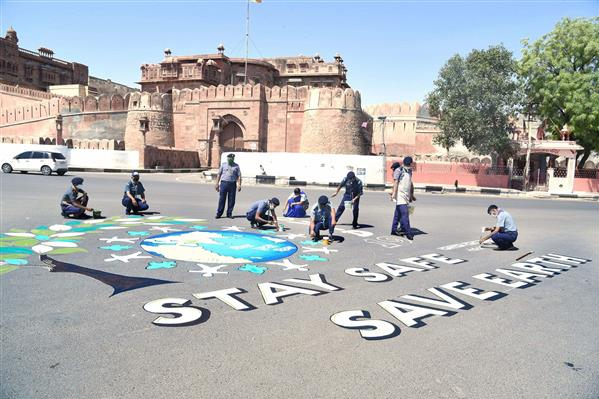 Taking on the developed nations, in particular America and Europe, Javadekar said India’ power consumption was just 1,000 units per year per person in comparison to 12,000 units per year per person in the US....Read Full Story Taking on the developed nations, in particular America and Europe, Javadekar said India’ power consumption was just 1,000 units per year per person in comparison to 12,000 units per year per person in the US....Read Full Story
Issue 93
, 2019
Delhi government will rank all the 272 municipal wards of the city for sanitation services available. The first of the many “cleanliness competitions” has already been launched by the urban development department, covering Anand Vihar, Mayur Vihar and Yamuna Vihar in ea...Read Full Story
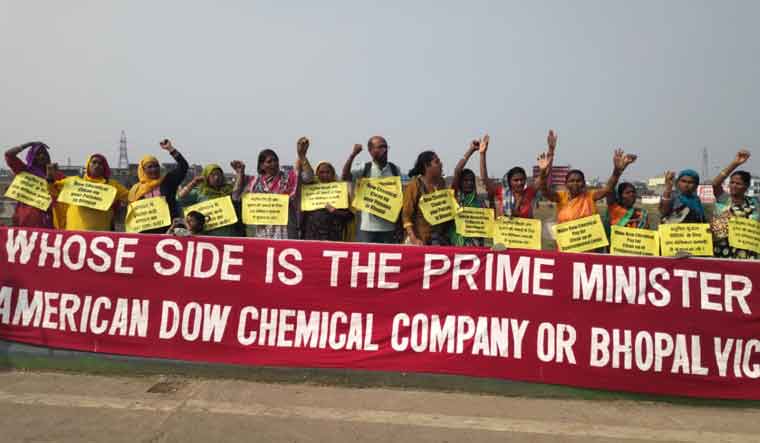 Just a fortnight before the 35th anniversary of the Bhopal gas disaster—one of the biggest industrial disasters in the world—Abdul Jabbar, 62, succumbed to health complications at a local private hospital.Jabbar was not 'just' a survivor of the disaster. He was the most...Read Full Story Just a fortnight before the 35th anniversary of the Bhopal gas disaster—one of the biggest industrial disasters in the world—Abdul Jabbar, 62, succumbed to health complications at a local private hospital.Jabbar was not 'just' a survivor of the disaster. He was the most...Read Full Story
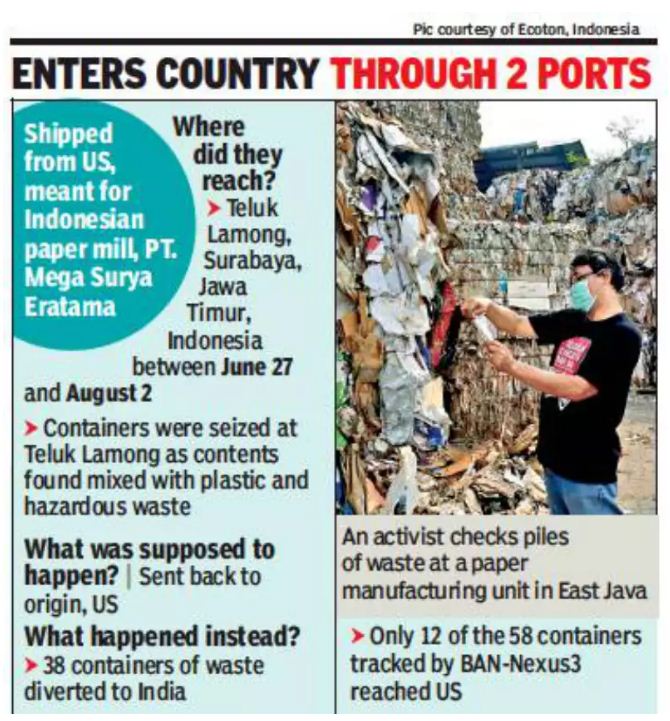 India seems to have fallen prey to the bustling racket of global waste trafficking. Thirty-eight containers, carrying hazardous and contaminated waste from the US, were allegedly sneaked into the country over the course of a couple of weeks, raising concern among green ...Read Full Story India seems to have fallen prey to the bustling racket of global waste trafficking. Thirty-eight containers, carrying hazardous and contaminated waste from the US, were allegedly sneaked into the country over the course of a couple of weeks, raising concern among green ...Read Full Story
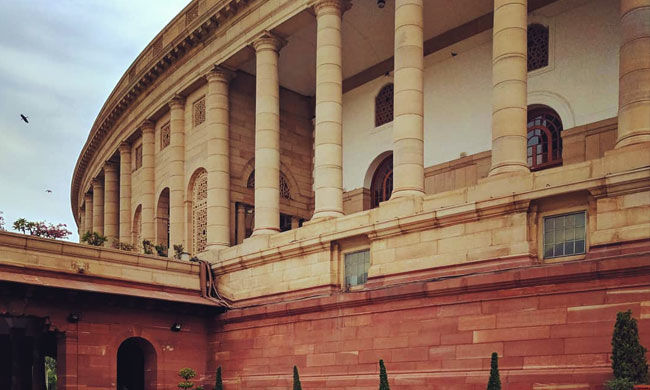 The Lok Sabha on Tuesday passed the Recycling of Ships Bill, 2019, by voice vote. The Bill introduced by the Minister of State for Shipping, Mansukh Mandaviya, seeks to restrict the use of hazardous material on ships and regulates the recycling of ships by establishing ...Read Full Story The Lok Sabha on Tuesday passed the Recycling of Ships Bill, 2019, by voice vote. The Bill introduced by the Minister of State for Shipping, Mansukh Mandaviya, seeks to restrict the use of hazardous material on ships and regulates the recycling of ships by establishing ...Read Full Story
 The World Health Organization (WHO), a specialized agency of the United Nations working on international public health, has rebuked Union environment minister Prakash Javadekar for stating that there is no link between air pollution and reduced lifespan. “We wish it did...Read Full Story The World Health Organization (WHO), a specialized agency of the United Nations working on international public health, has rebuked Union environment minister Prakash Javadekar for stating that there is no link between air pollution and reduced lifespan. “We wish it did...Read Full Story
India is "walking the talk" in its climate change commitments and has reduced emission intensity by 21 per cent of its GDP while also being on track to achieve the goal of 35 per cent emission reduction as promised in the Paris summit in 2015, Environment Minister Praka...Read Full Story
Railway stations across the country are required to obtain necessary environmental permissions as several polluting activities take place there, the National Green Tribunal has said. A bench headed by NGT Chairperson Justice Adarsh Kumar Goel said there can be no disput...Read Full Story
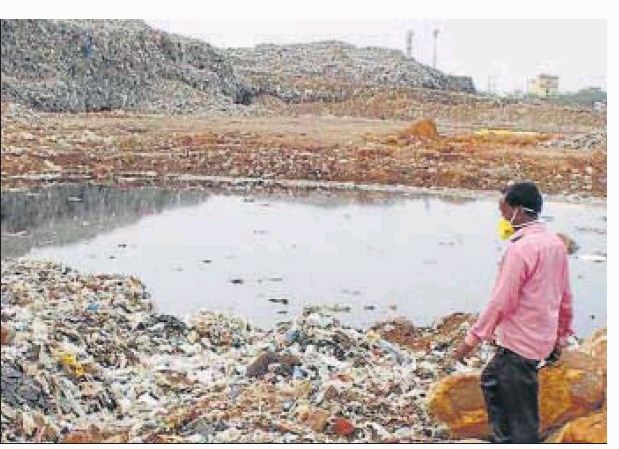 The National Green Tribunal (NGT) has ruled in favour of the Municipal Corporation of Gurugram’s (MCG’S) proposed waste-to-energy (WTE) plant in the Aravallis, at the Bandhwari landfill site, 17 kms from the city. The Tribunal said it was “unable to interfere with the g...Read Full Story The National Green Tribunal (NGT) has ruled in favour of the Municipal Corporation of Gurugram’s (MCG’S) proposed waste-to-energy (WTE) plant in the Aravallis, at the Bandhwari landfill site, 17 kms from the city. The Tribunal said it was “unable to interfere with the g...Read Full Story
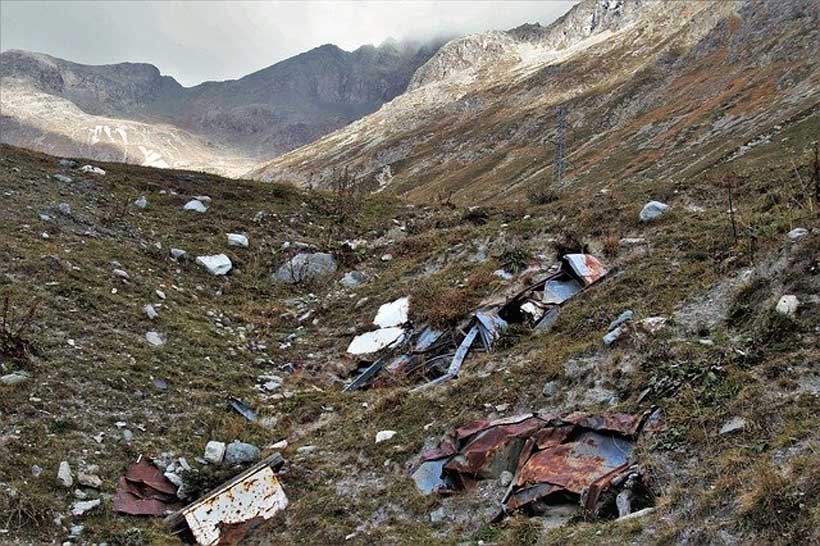 The global waste crisis has become an issue of concern worldwide in an age of climate change. The World Bank warns that global waste will increase up to 70 percent on current levels by 2050 unless urgent actions are undertaken. The international financial institution al...Read Full Story The global waste crisis has become an issue of concern worldwide in an age of climate change. The World Bank warns that global waste will increase up to 70 percent on current levels by 2050 unless urgent actions are undertaken. The international financial institution al...Read Full Story
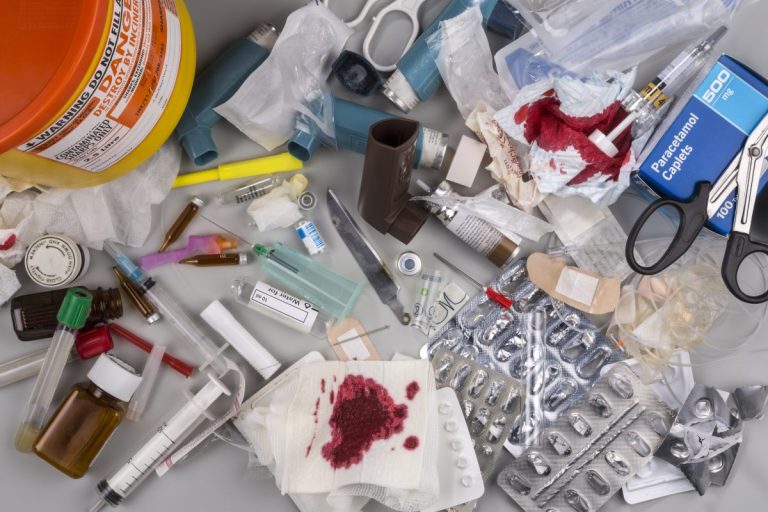 The Bihar State Pollution Control Board (BSPCB) has ordered the closure of 318 health facilities in the state over improper biomedical waste disposal, highlighting a national pollution and sanitation issue....Read Full Story The Bihar State Pollution Control Board (BSPCB) has ordered the closure of 318 health facilities in the state over improper biomedical waste disposal, highlighting a national pollution and sanitation issue....Read Full Story
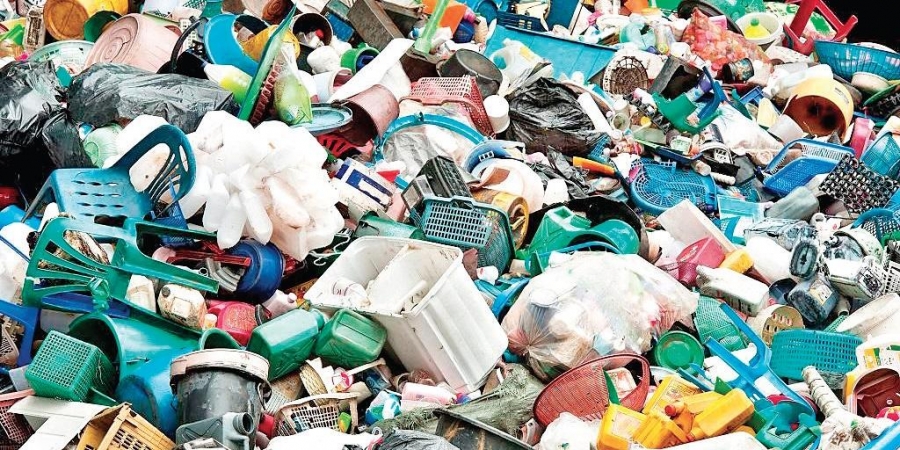 To deal with the problem of solid waste, a Chennai-based research fellow has developed a website and application, Madras Waste Exchange, with support from the Greater Chennai Corporation, through which one can easily buy and sell solid waste. Within a fortnight of its l...Read Full Story To deal with the problem of solid waste, a Chennai-based research fellow has developed a website and application, Madras Waste Exchange, with support from the Greater Chennai Corporation, through which one can easily buy and sell solid waste. Within a fortnight of its l...Read Full Story
Issue 92
, 2019
 From January 1, Indian ships will prohibit on board a large number of single-use plastic products, including ice cream containers, hot dish cups, microwave dishes and potato chips bags. The decision has been taken in larger public interest by the Directorate General of ...Read Full Story From January 1, Indian ships will prohibit on board a large number of single-use plastic products, including ice cream containers, hot dish cups, microwave dishes and potato chips bags. The decision has been taken in larger public interest by the Directorate General of ...Read Full Story
The Swachh Bharat Abhiyan pitch may have touched a high in the country but villages in an around Kanpur are still forced to live in filthy surroundings. The Kanpur Municipal Corporation's solid waste management plant is close to Panki Padao, Jamui, Baduapur Saraymira vi...Read Full Story
India is one of the most vulnerable countries in terms of climate change, water, air and environmental pollution. The Tata Centre for Development (TCD) is harnessing the rigour of the University of Chicago’s Economics department to address some of India’s most pressing ...Read Full Story
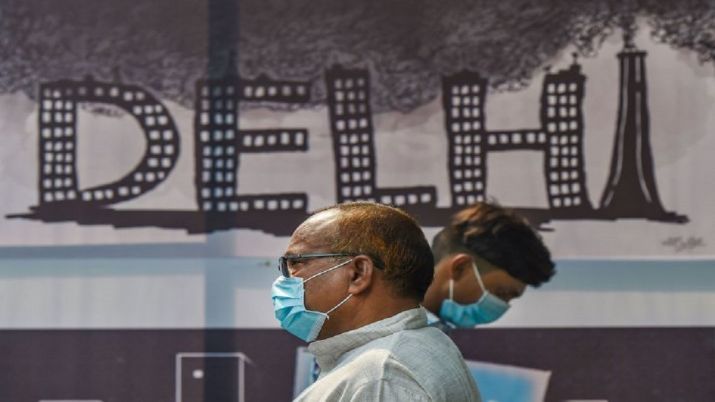 If you live in Delhi-NCR, there's more bad news in store for you. A whopping 41 per cent of the Delhi and NCR population are found to be suffering from severe heavy metal toxicity, according to a survey conducted by Daivam Wellness....Read Full Story If you live in Delhi-NCR, there's more bad news in store for you. A whopping 41 per cent of the Delhi and NCR population are found to be suffering from severe heavy metal toxicity, according to a survey conducted by Daivam Wellness....Read Full Story
While Gurgaon, Delhi and several modern cities are still struggling to get housewives to segregate wet and dry waste for proper management of solid waste, in Danapur, Khagaul, Phulwari Sharif blocks of Patna district of Bihar, representatives of women’s self-help groups...Read Full Story
 Artists creating beautiful artworks is the most valued talent, however, upcycling electronic waste into attractive art pieces is not only eco-friendly but a unique talent....Read Full Story Artists creating beautiful artworks is the most valued talent, however, upcycling electronic waste into attractive art pieces is not only eco-friendly but a unique talent....Read Full Story
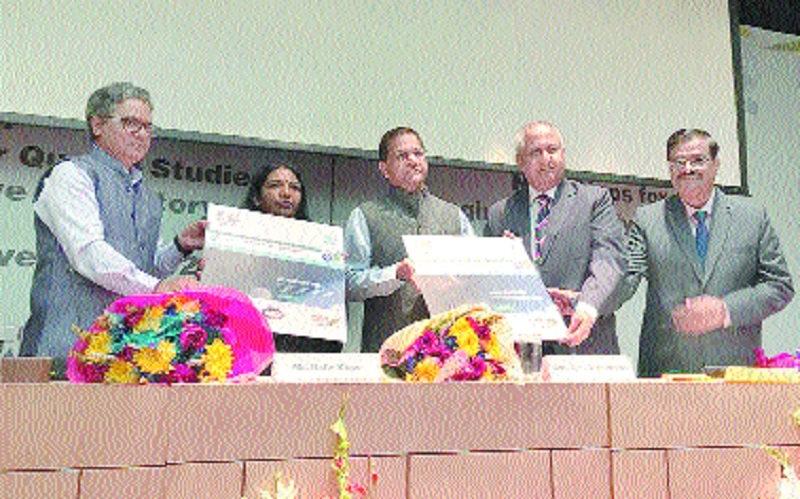 For long, it is thought that research on air pollution is at a ‘nascent’ stage. To put this notion to rest, Council of Scientific and Industrial Research (CSIR)-National Environmental Engineering Research Institute (NEERI) has launched India’s first web repository, docu...Read Full Story For long, it is thought that research on air pollution is at a ‘nascent’ stage. To put this notion to rest, Council of Scientific and Industrial Research (CSIR)-National Environmental Engineering Research Institute (NEERI) has launched India’s first web repository, docu...Read Full Story
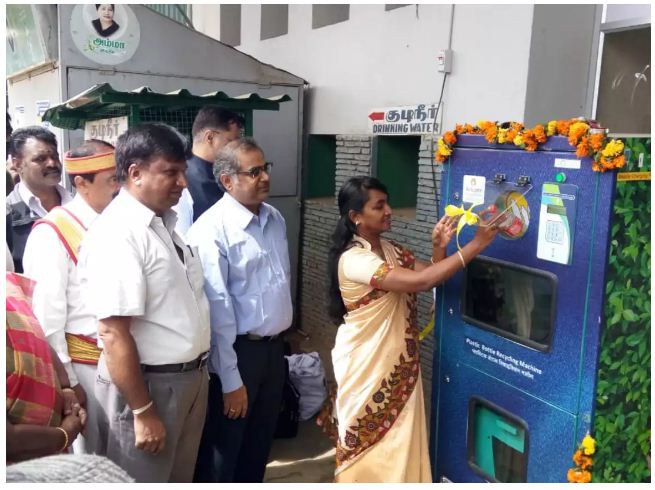 Ooty is leading the national narrative on plastic waste management. The district collector J. Innocent Divya, has inaugurated five reverse vending machines to collect and recycle PET bottles, which is the highest recycled plastic type in India....Read Full Story Ooty is leading the national narrative on plastic waste management. The district collector J. Innocent Divya, has inaugurated five reverse vending machines to collect and recycle PET bottles, which is the highest recycled plastic type in India....Read Full Story
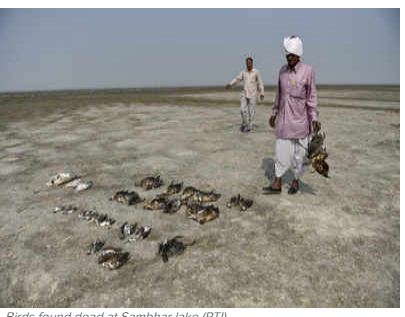 Thousands of migratory birds of about ten species were found dead around Sambhar Lake, the country's largest inland saltwater lake near Jaipur, sending shock waves among locals and authorities....Read Full Story Thousands of migratory birds of about ten species were found dead around Sambhar Lake, the country's largest inland saltwater lake near Jaipur, sending shock waves among locals and authorities....Read Full Story
Issue 91
, 2019
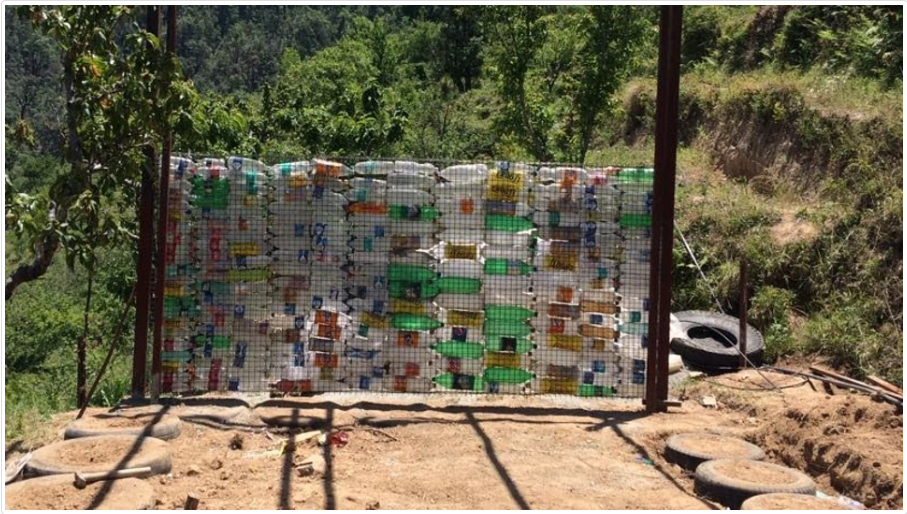 They wanted to give a message of using plastic in a better way in the mountains, instead of making the himalayas a dumping ground....Read Full Story They wanted to give a message of using plastic in a better way in the mountains, instead of making the himalayas a dumping ground....Read Full Story
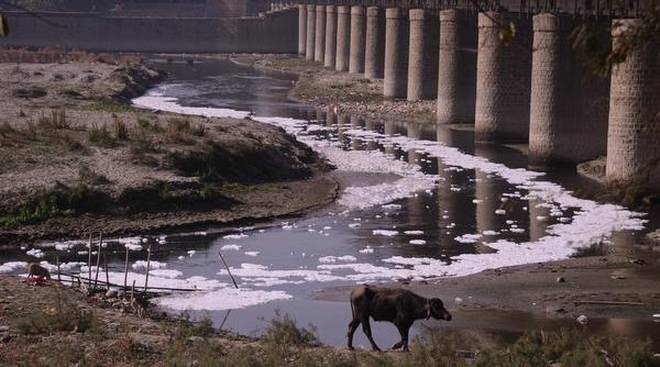 With a new investigation of Delhi tap water showing that it is not safe to drink, the Centre has announced plans to test the quality of piped drinking water in the states and release Swachh Pani rankings early next month. It is also trying to build a consensus to make q...Read Full Story With a new investigation of Delhi tap water showing that it is not safe to drink, the Centre has announced plans to test the quality of piped drinking water in the states and release Swachh Pani rankings early next month. It is also trying to build a consensus to make q...Read Full Story
To get rid of the menace of plastics, which posed threat to the life and environment, was the need of the hour, said NDMC Chairman Vijay Kumar Dev....Read Full Story
The Central Government will bring down the wrath of the law on those found immersing idols in the Ganga and its tributaries in multiple states....Read Full Story
Students of Indian Institute of Management Indore conducted a cleanliness drive at the zoo doing their bit to make it garbage-free....Read Full Story
The Delhi Sikh Gurdwara Management Committee (DSGMC) on Tuesday said that Gurdwara Bangla Sahib here has decided to go green by banning the use of all types of plastic to commemorate the 550th Birth anniversary of Guru Nanak Dev....Read Full Story
 A Monitoring Committee appointed by the National Green Tribunal (NGT) for the cleaning of the Yamuna has slammed multiple government bodies, including the New Delhi Municipal Council (NDMC), South Delhi Municipal Corporation and the Delhi Jal Board (DJB) for pollution o...Read Full Story A Monitoring Committee appointed by the National Green Tribunal (NGT) for the cleaning of the Yamuna has slammed multiple government bodies, including the New Delhi Municipal Council (NDMC), South Delhi Municipal Corporation and the Delhi Jal Board (DJB) for pollution o...Read Full Story
The Supreme Court (SC) on Monday said no more trees can be cut in Aarey Milk Colony until the next date of hearing in the case on October 21....Read Full Story
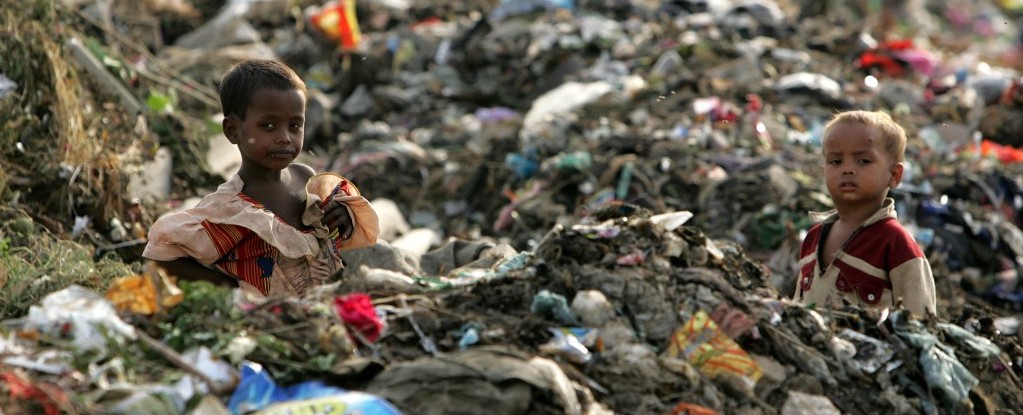 India’s financial capital, Mumbai, and the national capital, Delhi, are the country’s top two metro cities when it comes to solid waste generated per day. Together, it is estimated, they generate nearly as much waste as the next eight metro cities on the list....Read Full Story India’s financial capital, Mumbai, and the national capital, Delhi, are the country’s top two metro cities when it comes to solid waste generated per day. Together, it is estimated, they generate nearly as much waste as the next eight metro cities on the list....Read Full Story
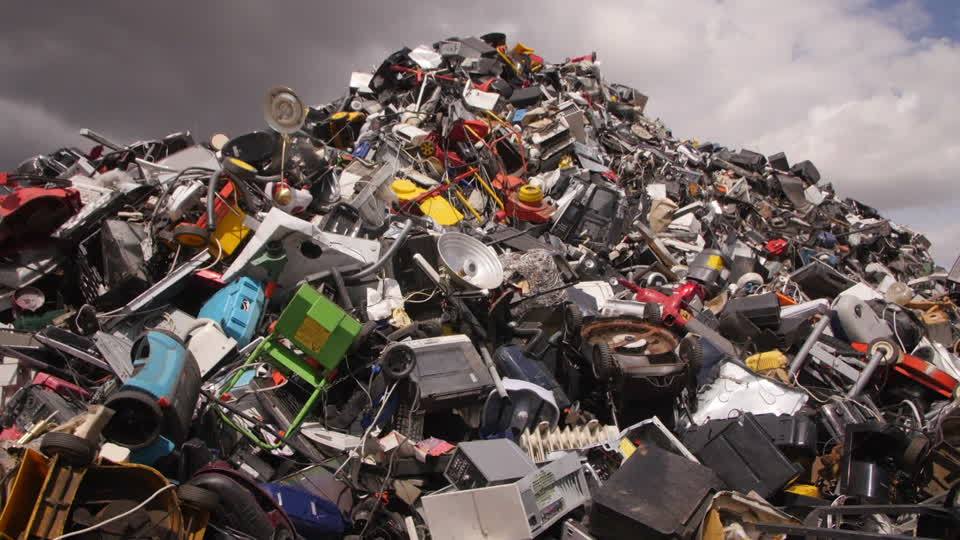 Electronic waste (also known as e-waste) is discarded electrical or electronic devices. Improper disposal and processing of this waste can lead to adverse human and environmental damages. There are now more mobile phones than the number of people around the world....Read Full Story Electronic waste (also known as e-waste) is discarded electrical or electronic devices. Improper disposal and processing of this waste can lead to adverse human and environmental damages. There are now more mobile phones than the number of people around the world....Read Full Story
The NGT has directed the Delhi Pollution Control Committee to submit a report on a plea alleging that 5,000 illegal e-waste processing units are operating in and around Delhi as per a study undertaken by an NGO....Read Full Story
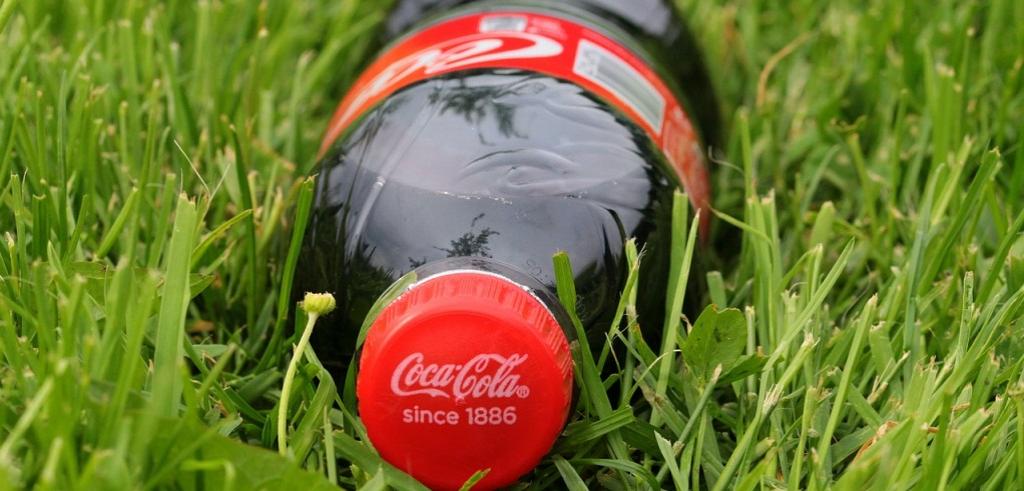 The Coca-Cola Co has emerged as the No.1 global plastic polluter for the second consecutive year, according to a report on the top 10 plastic polluting companies in the world. The beverages brand was followed by Nestlé SA and PepsiCo In....Read Full Story The Coca-Cola Co has emerged as the No.1 global plastic polluter for the second consecutive year, according to a report on the top 10 plastic polluting companies in the world. The beverages brand was followed by Nestlé SA and PepsiCo In....Read Full Story
Issue 90
, 2019
Without proper waste segregation, we are staring at lung disease, reduced fertility and cancer....Read Full Story
 The Indian Railways has chalked out a slew of measures through an Environment Sustainability Plan for the next 10 years....Read Full Story The Indian Railways has chalked out a slew of measures through an Environment Sustainability Plan for the next 10 years....Read Full Story
The Delhi Pollution Control Committee (DPCC) has amended its directions to allow the immersion of idols taller than five feet in designated artificial ponds across the city during the festive season....Read Full Story
The University Grants Commission has issued guidelines to impose a ban on single-use plastic. Prime Minister Narendra Modi launching a mass revolution against it....Read Full Story
 Debt-ridden Air India said Thursday it will stop using single-use plastic and replace packaging with eco-friendly paper and wooden cutlery, as the government ramps up its "clean India" mission....Read Full Story Debt-ridden Air India said Thursday it will stop using single-use plastic and replace packaging with eco-friendly paper and wooden cutlery, as the government ramps up its "clean India" mission....Read Full Story
To mobile citizens in the fight against single-use plastic, , the East Delhi Municipal Corporation plans to launch an ambitious campaign — My 10 Kilograms Plastic — from September 11....Read Full Story
The railways will add money to your mobile phone wallet if you use plastic bottle crushing machines installed at stations as part of efforts to promote Prime Minister Narendra Modi's initiative of junking single-use plastic....Read Full Story
The Indian Express has learnt that when the DPCC inspected 43 out of a list of 80 centres sent to them by the CPCB, at least 20 e-waste collection centres of multinational giants, including Samsung, HP, Canon and Vivo, were found either untraceable or non-existent....Read Full Story
In February this year, the NGT committee — led by Shailaja Chandra and BS Sajwan — ordered the Central Pollution Control Board (CPCB) and National Environmental Engineering Research Institute (NEERI) to take up separate studies after Hindustan Times published a report o...Read Full Story
 The officials said plastic recycling can also be profitable for women. In Tamil Nadu, women groups have developed a successful model for recycling and segregating plastics for their supply to construction firms for building roads....Read Full Story The officials said plastic recycling can also be profitable for women. In Tamil Nadu, women groups have developed a successful model for recycling and segregating plastics for their supply to construction firms for building roads....Read Full Story
We Are United in association with ‘Cyber Safe Girl’ will launch e-Swachh Bharat, an e-waste management campaign, in Mangaluru....Read Full Story
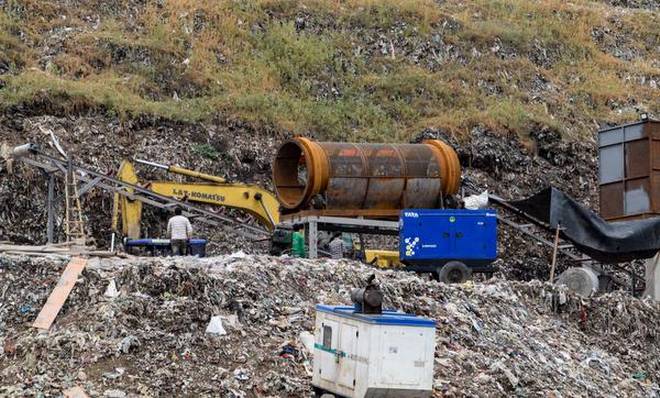 The infamous garbage hills of Delhi — at alswa Okhla, Bhand Ghazipur — will soon be “biomined” in order to have them cleared....Read Full Story The infamous garbage hills of Delhi — at alswa Okhla, Bhand Ghazipur — will soon be “biomined” in order to have them cleared....Read Full Story
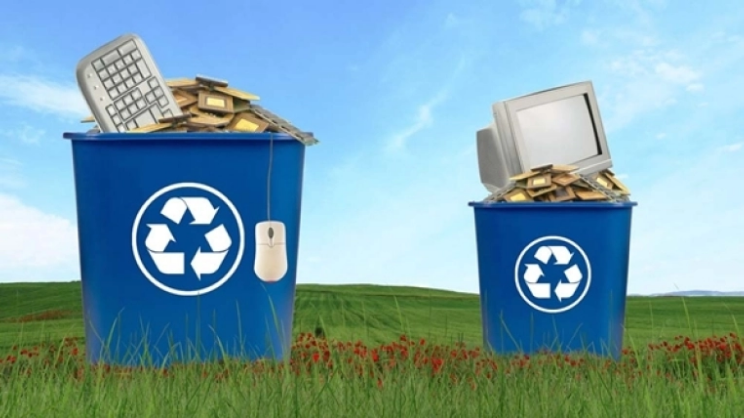 Three electronic waste clinic will be set up in the city. After three-month pilot project in state capital, e-waste clinics will be replicated across the country....Read Full Story Three electronic waste clinic will be set up in the city. After three-month pilot project in state capital, e-waste clinics will be replicated across the country....Read Full Story
The entire campus, including all hostels, Jamia Community Centre, all canteens, shops and coffee houses, will become plastic-free, with the university deciding to ban all single-use plastic items, it said....Read Full Story
 Chief minister Jaganmohan Reddy has asked the officials to study various methods used by other countries to preserve the environment and control the pollution...Read Full Story Chief minister Jaganmohan Reddy has asked the officials to study various methods used by other countries to preserve the environment and control the pollution...Read Full Story
Issue 89
, 2019
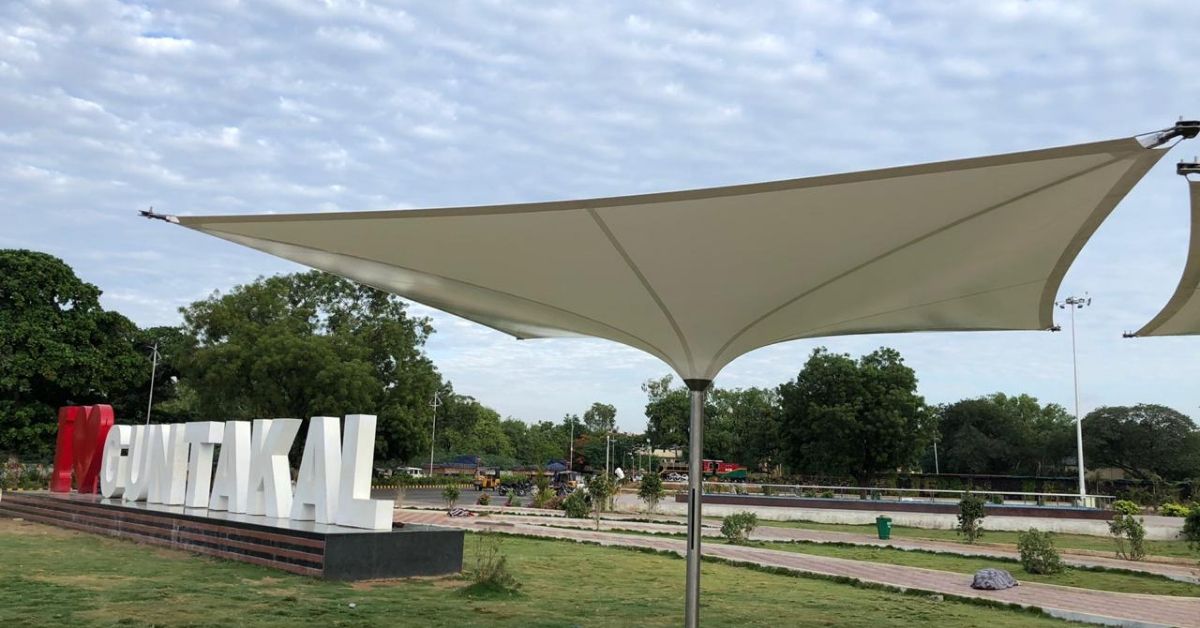 Having installed six of these innovative ‘inverted umbrellas,’ the Guntakal railway station now has the capacity to store 60,000 litres of water used to not just clean the station, but also to recharge the groundwater table!...Read Full Story Having installed six of these innovative ‘inverted umbrellas,’ the Guntakal railway station now has the capacity to store 60,000 litres of water used to not just clean the station, but also to recharge the groundwater table!...Read Full Story
A highly polluted Gomti may contaminate groundwater if urgent steps are not taken to sanitise the lifeline river...Read Full Story
 Do you have a hunger for electronics and technology and does it keep on growing? And if Yes, then what did you do with your old stuff or electronic waste? In this technology-driven era, many of us keep on updating our electronic gadgets fairly often and dump down the ol...Read Full Story Do you have a hunger for electronics and technology and does it keep on growing? And if Yes, then what did you do with your old stuff or electronic waste? In this technology-driven era, many of us keep on updating our electronic gadgets fairly often and dump down the ol...Read Full Story
Following directions of the State Pollution Control Board (SPCB) to get information about e-waste (electrical and electronic equipments), the Directorate of School Education, Jammu, (DSEJ) has issued instructions to all chief education officers (CEOs) to send the same i...Read Full Story
While the North Delhi Municipal Corporation has already issued such orders, the east and south corporation have been asked to take action on similar lines....Read Full Story
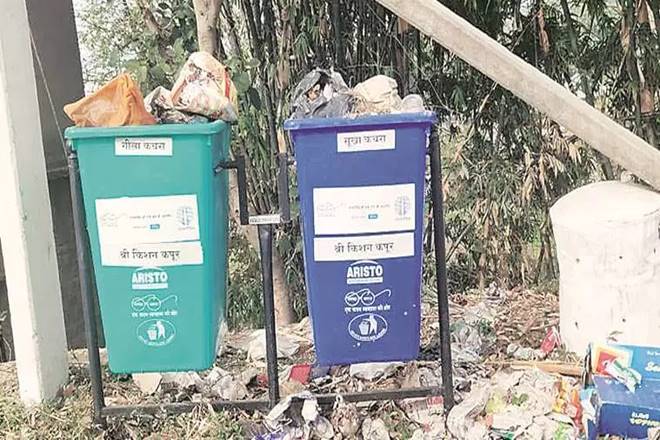 Launching Swachh Survekshan 2020, themed Cleanliness is Our Right, the minister Hardeep Singh Puri said the survey's major focus has always been on citizen engagement, be it through feedback or indicators involving their participation....Read Full Story Launching Swachh Survekshan 2020, themed Cleanliness is Our Right, the minister Hardeep Singh Puri said the survey's major focus has always been on citizen engagement, be it through feedback or indicators involving their participation....Read Full Story
In his Independence Day speech, PM Narendra Modi called for significant steps to make the country free from single-use plastic....Read Full Story
After Prime Minister Narendra Modi’s call to put end on single use of plastic, the Ministry of Animal Husbandry and Dairying on Wednesday asked the AMUL and Mother Dairy Federations to formulate action plan/protocol to recycle milk pouches and share with it for circula...Read Full Story
The National Green Tribunal has directed stakeholders to give specific schedule for cleaning the Yamuna, while noting that repeated timelines have not been adhered to in the last 30 years and pollution of the river was still continuing....Read Full Story
Pollution control body report finds metals such as manganese, copper, lead in the Yamunna river. Groundwater also contained high levels of iron and manganese....Read Full Story
These include plastic bags, cups, plates, small bottles, straws and certain types of sachets, said officials....Read Full Story
Issue 88
, 2019
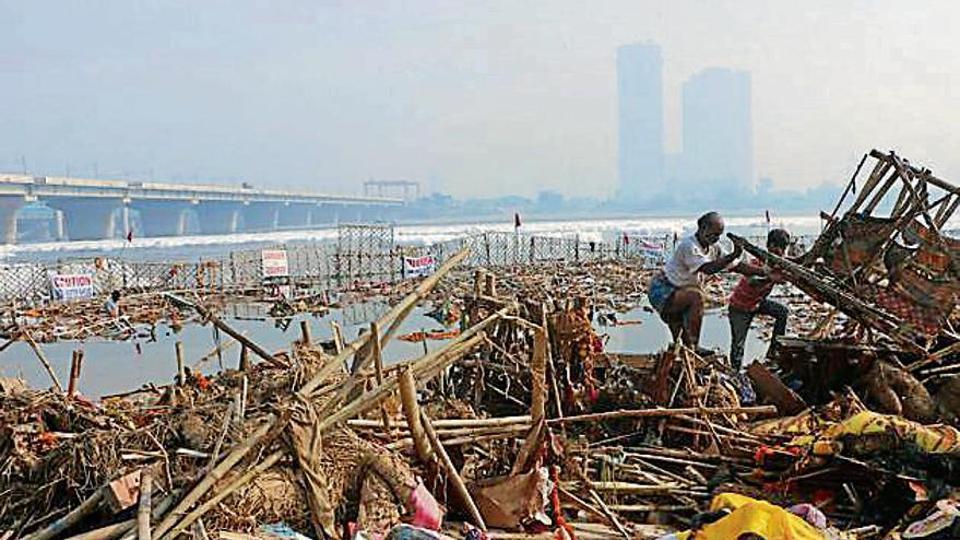 The land holding and civic agencies have also come up with a list of around 150 sites – mostly DDA and MCD parks - where artificial ponds could be constructed for immersion of smaller idols....Read Full Story The land holding and civic agencies have also come up with a list of around 150 sites – mostly DDA and MCD parks - where artificial ponds could be constructed for immersion of smaller idols....Read Full Story
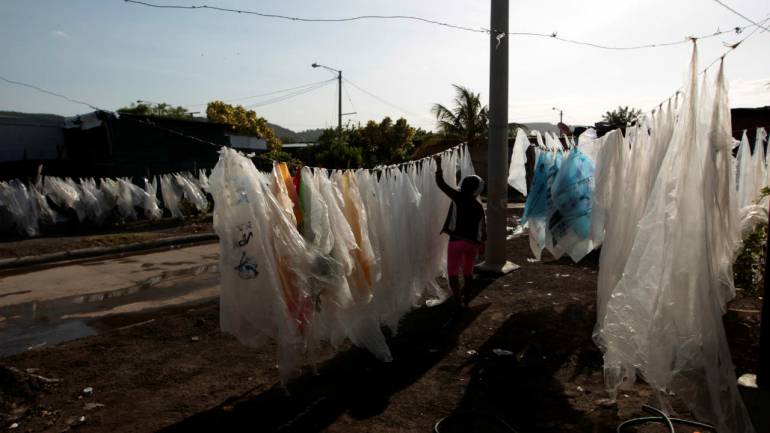 The Sirohi administration and the Forest Department have decided to ban the use of plastic in Rajasthan's Mount Abu from August 15....Read Full Story The Sirohi administration and the Forest Department have decided to ban the use of plastic in Rajasthan's Mount Abu from August 15....Read Full Story
In a major penalty, the Delhi Pollution Control Committee (DPCC) has directed a small dental clinic situated in the South Delhi area to pay a penalty of Rs. 14.30 lakh on account of operating without obtaining/applying for mandatory authorization under Bio-Medical Waste...Read Full Story
 The Central Pollution Control Board (CPCB) has pulled up 52 companies — including Amazon, Flipkart, Danone Foods and Beverages and Patanjali Ayurved Limited — for not specifying a timeline or a plan to collect the plastic waste that results from their business activitie...Read Full Story The Central Pollution Control Board (CPCB) has pulled up 52 companies — including Amazon, Flipkart, Danone Foods and Beverages and Patanjali Ayurved Limited — for not specifying a timeline or a plan to collect the plastic waste that results from their business activitie...Read Full Story
 E-waste is a growing threat to the environment, with smartphones being a major contributor. Two million tonnes of e-waste are contributed by India alone. More than 50 per cent of Bengaluru’s e-waste is five years old and while citizens are aware of e-waste disposal, onl...Read Full Story E-waste is a growing threat to the environment, with smartphones being a major contributor. Two million tonnes of e-waste are contributed by India alone. More than 50 per cent of Bengaluru’s e-waste is five years old and while citizens are aware of e-waste disposal, onl...Read Full Story
Environment conservation is almost everything for retired Brigadier Prakash Singh Bhatti. Known as one man army for his endless toil, Bhatti, in the field of environmental development, has earned himself a reputation. He has been connected with the UNO as well as severa...Read Full Story
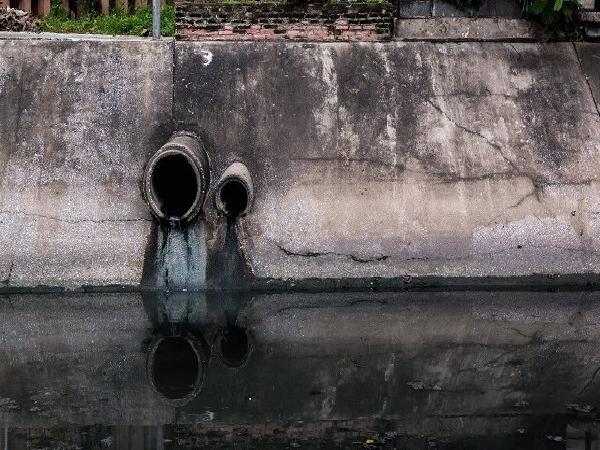 Farmers in Qutubgarh in north-west Delhi say they know the harmful effects of growing vegetables with drain water, but they don't have any choice as water level has declined and the cost of fertiliser went up....Read Full Story Farmers in Qutubgarh in north-west Delhi say they know the harmful effects of growing vegetables with drain water, but they don't have any choice as water level has declined and the cost of fertiliser went up....Read Full Story
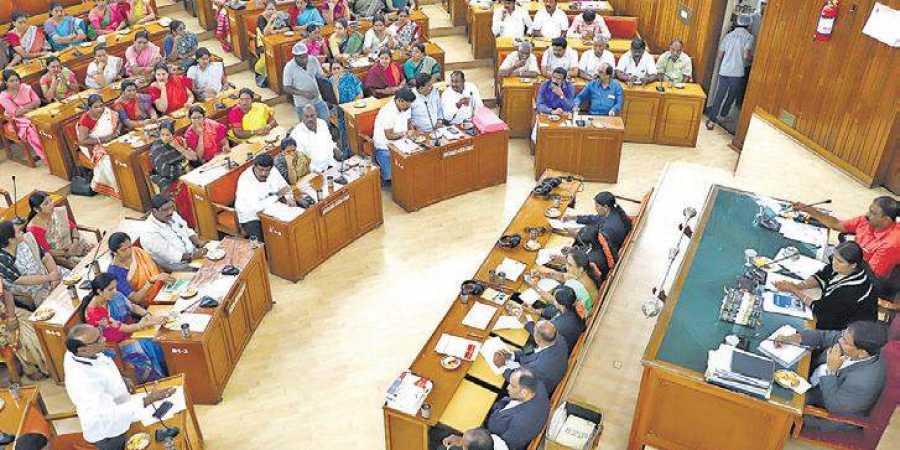 To improve the garbage scenario in Bengaluru, e-waste collection bins will be placed at all the zonal and ward offices of Bruhat Bengaluru Mahanagara Palike (BBMP)....Read Full Story To improve the garbage scenario in Bengaluru, e-waste collection bins will be placed at all the zonal and ward offices of Bruhat Bengaluru Mahanagara Palike (BBMP)....Read Full Story
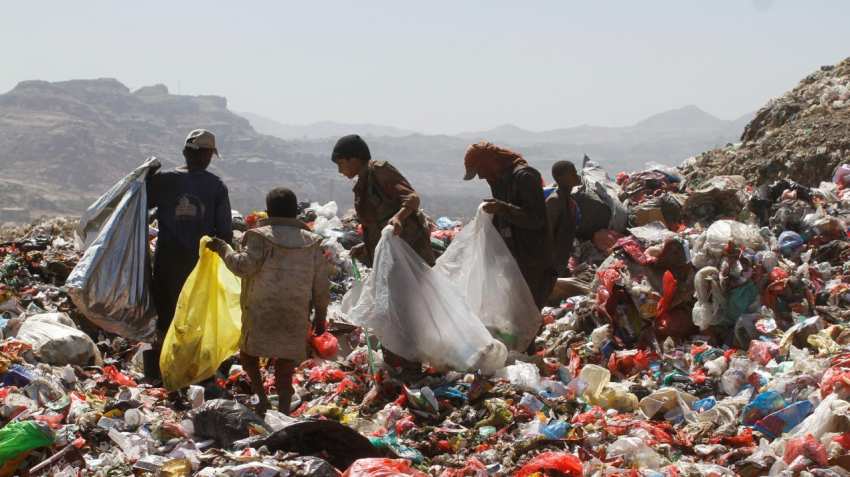 By launching India's first garbage cafe, Ambikapur, a city in the state of Chhattisgarh, is bringing out the 'best out of waste'. This innovative idea birthed by the Municipal Corporation will not only tackle the ever rising problem of waste management but will also add...Read Full Story By launching India's first garbage cafe, Ambikapur, a city in the state of Chhattisgarh, is bringing out the 'best out of waste'. This innovative idea birthed by the Municipal Corporation will not only tackle the ever rising problem of waste management but will also add...Read Full Story
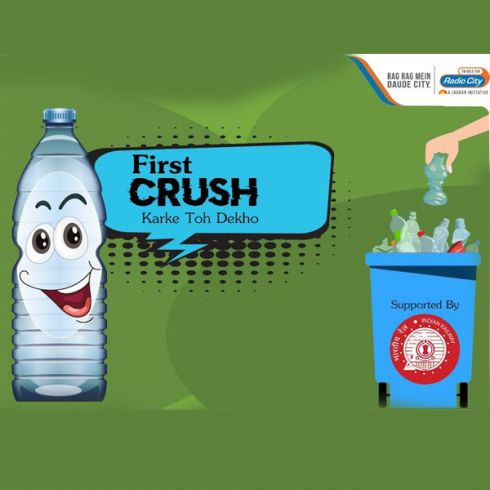 Radio City has launched the First Crush… Kar Ke Dekho campaign in Jaipur in collaboration with the Indian Railways and thus reaffirmed its commitment towards developing sustainable and pollution free cities in India. The campaign aims to enlighten the importance of recy...Read Full Story Radio City has launched the First Crush… Kar Ke Dekho campaign in Jaipur in collaboration with the Indian Railways and thus reaffirmed its commitment towards developing sustainable and pollution free cities in India. The campaign aims to enlighten the importance of recy...Read Full Story
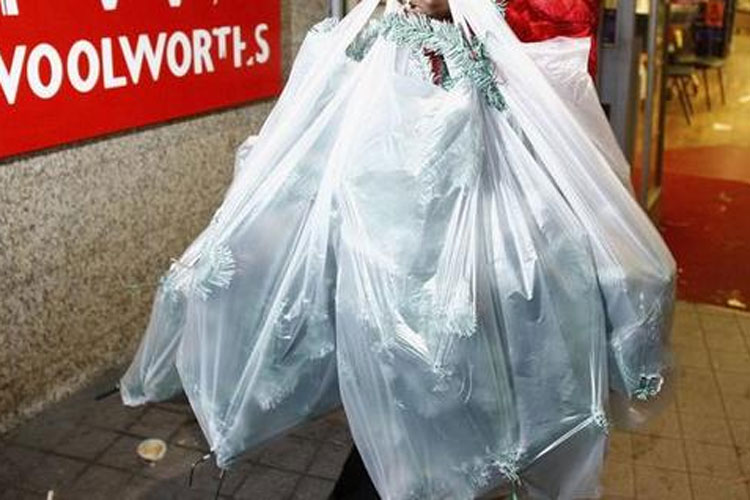 Plastic/thermocol products including cup, plate, glass, fork, spoon, plastic-coated cup, plates, pouch containing water, packet, plastic flag, banner, flax and festoon are under government's consideration for the ban, Modi said....Read Full Story Plastic/thermocol products including cup, plate, glass, fork, spoon, plastic-coated cup, plates, pouch containing water, packet, plastic flag, banner, flax and festoon are under government's consideration for the ban, Modi said....Read Full Story
Issue 87
, 2019
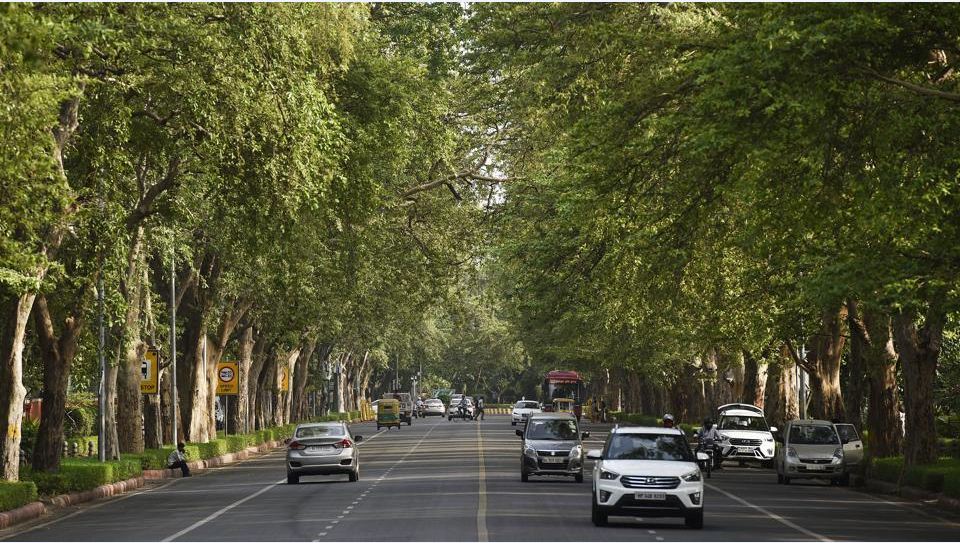 These city forests are being developed primarily as eco-tourism zones, with limited human activity, which could work as platforms for creating larger public awareness about the flora and fauna of the area, a senior official said....Read Full Story These city forests are being developed primarily as eco-tourism zones, with limited human activity, which could work as platforms for creating larger public awareness about the flora and fauna of the area, a senior official said....Read Full Story
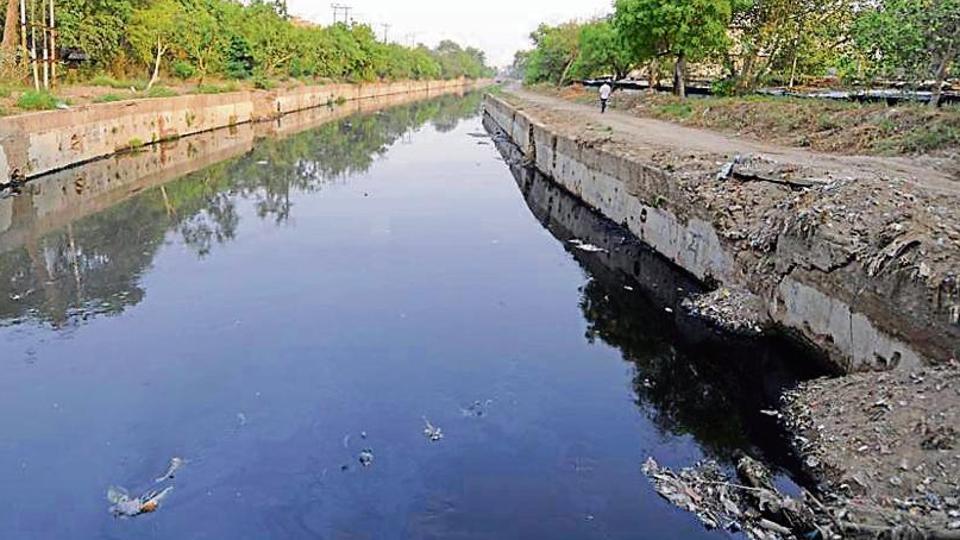 As per the CPCB report, 52 million litres per day (MLD) untreated sewage is being dumped into drains in Noida, thereby polluting the environment....Read Full Story As per the CPCB report, 52 million litres per day (MLD) untreated sewage is being dumped into drains in Noida, thereby polluting the environment....Read Full Story
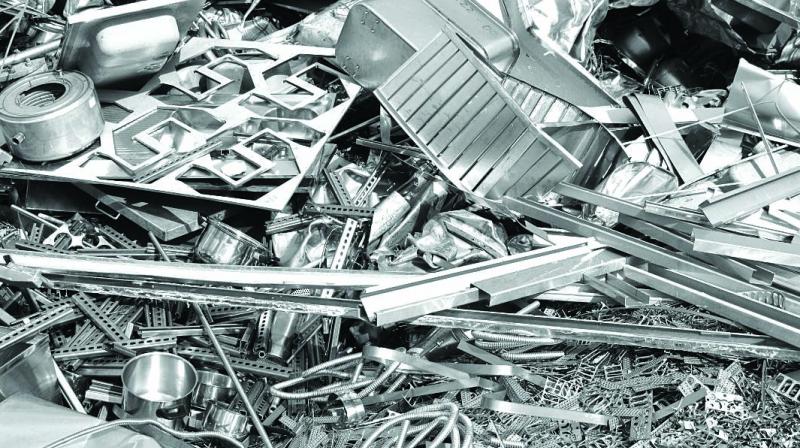 Interestingly, India is the fastest growing steel market in the world which is generating increasingly larger volume of scrap....Read Full Story Interestingly, India is the fastest growing steel market in the world which is generating increasingly larger volume of scrap....Read Full Story
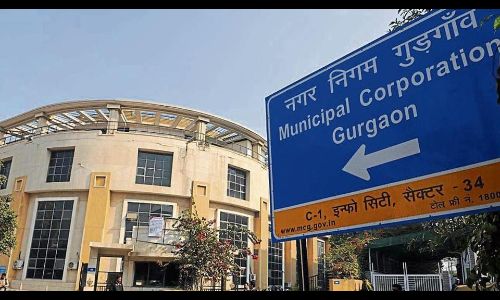 In order to make the city clean and prepare for swachatta survekshan 2020, the Municipal Corporation of Gururgam reviewed the waste policy. More emphasis was given on tackling the e-waste that is being generated in the city. Taking cognizance of the situation, the Munic...Read Full Story In order to make the city clean and prepare for swachatta survekshan 2020, the Municipal Corporation of Gururgam reviewed the waste policy. More emphasis was given on tackling the e-waste that is being generated in the city. Taking cognizance of the situation, the Munic...Read Full Story
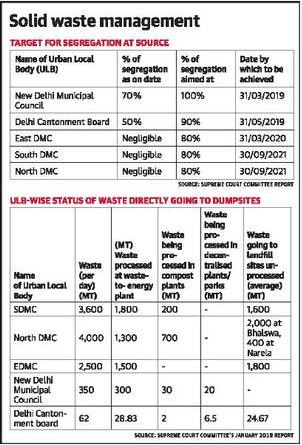 Implementation of law can be achieved if residents and authorities work in tandem....Read Full Story Implementation of law can be achieved if residents and authorities work in tandem....Read Full Story
Discarded electronics, when improperly disposed, have the potential of harming our ecosystem. If you hang on to your old gadgets because you don’t have the heart to discard it, now is the time....Read Full Story
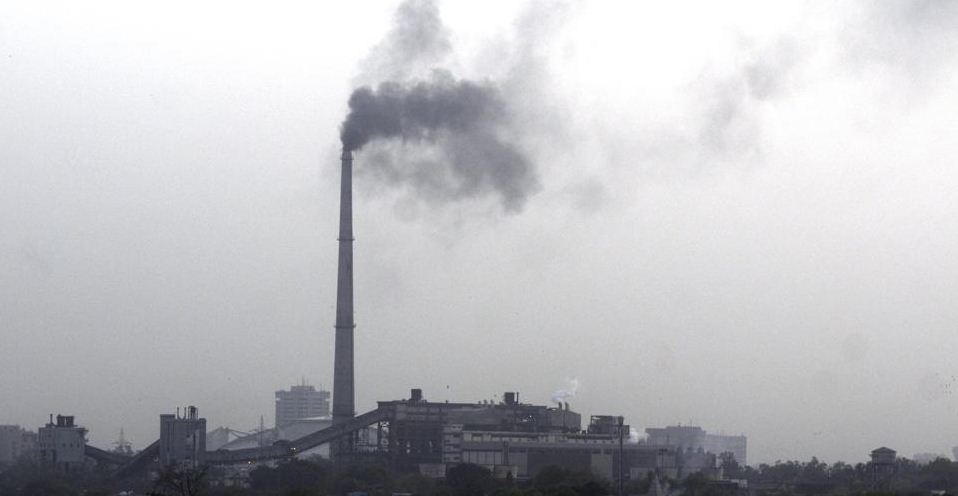 India is not alone in facing the problem of air pollution. Nine out of 10 people worldwide are exposed to unsafe air. This often-invisible problem adds to the loss of lives of seven million people each year, causes conditions from asthma to dementia, and, according to t...Read Full Story India is not alone in facing the problem of air pollution. Nine out of 10 people worldwide are exposed to unsafe air. This often-invisible problem adds to the loss of lives of seven million people each year, causes conditions from asthma to dementia, and, according to t...Read Full Story
Issue 87
, 2019
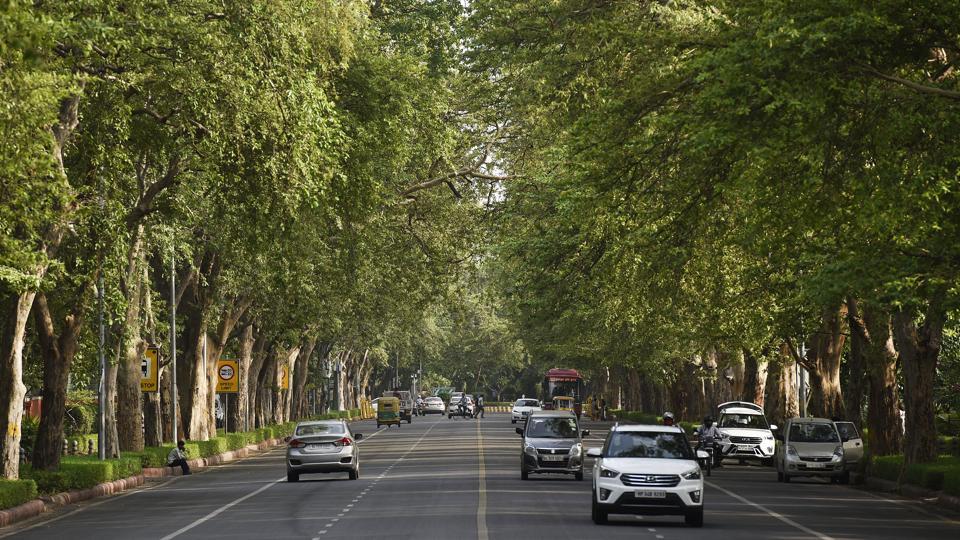 These city forests are being developed primarily as eco-tourism zones, with limited human activity, which could work as platforms for creating larger public awareness about the flora and fauna of the area, a senior official said....Read Full Story These city forests are being developed primarily as eco-tourism zones, with limited human activity, which could work as platforms for creating larger public awareness about the flora and fauna of the area, a senior official said....Read Full Story
Issue 86
, 2019
A trend has been observed among the Governments throughout the globe to call for a plastic ban policy. Even though partial success has been noticed in some foreign countries, this policy cannot fetch a complete solution to plastic waste problem for the following reasons...Read Full Story
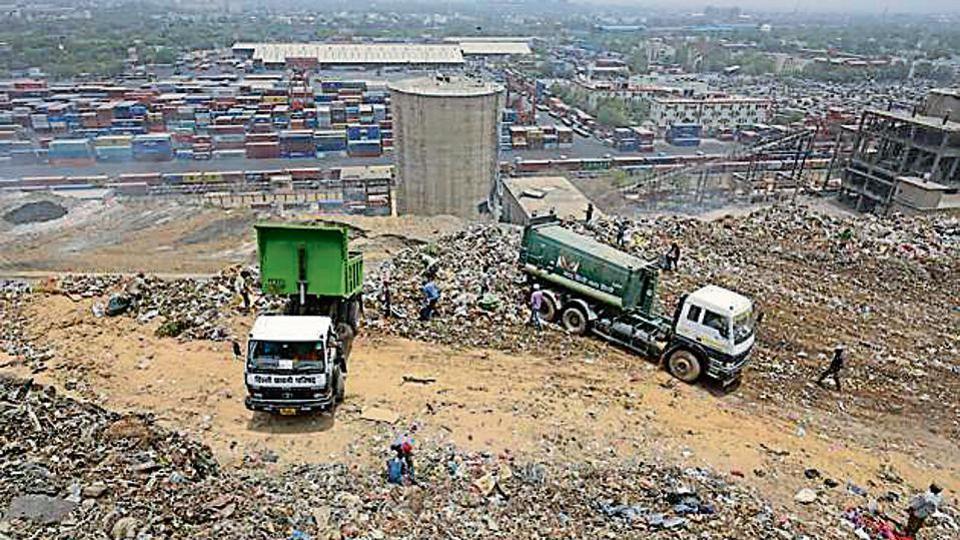 These are required to transport garbage from dhalaos to landfills, in mechanical road sweeper machines and super sucker machines to clean drains....Read Full Story These are required to transport garbage from dhalaos to landfills, in mechanical road sweeper machines and super sucker machines to clean drains....Read Full Story
 In a bid to tackle the growing menace of e-waste, RP tech India has commenced 50 e-waste collection points across the country. The company has collaborated with Reteck Envirotech, one of the largest authorised e-waste recyclers, to recycle end of life electronics and ac...Read Full Story In a bid to tackle the growing menace of e-waste, RP tech India has commenced 50 e-waste collection points across the country. The company has collaborated with Reteck Envirotech, one of the largest authorised e-waste recyclers, to recycle end of life electronics and ac...Read Full Story
 The public apathy is back after revival of Neela Hauz lake in South Delhi three years back. The public has again made the lake a dumping ground for all kinds of waste. People park their vehicle near the lake, situated on the Aruna Asaf Ali Marg, and dump all waste inclu...Read Full Story The public apathy is back after revival of Neela Hauz lake in South Delhi three years back. The public has again made the lake a dumping ground for all kinds of waste. People park their vehicle near the lake, situated on the Aruna Asaf Ali Marg, and dump all waste inclu...Read Full Story
Cities, which are home to more than half the world’s population, are stepping up efforts to slash pollution, often wresting the fight against climate change away from national governments....Read Full Story
These pop-up kiosks will be stationed at prominent locations, making it convenient for residents to drop off not just e-waste but also old clothes,
toys, books and household items among others that they wish to discard. This will then be recycled and reused....Read Full Story
With an average survival rate of 85% for their plantations, the group calculated that they reduce carbon emissions by 78.25 million kg every year....Read Full Story
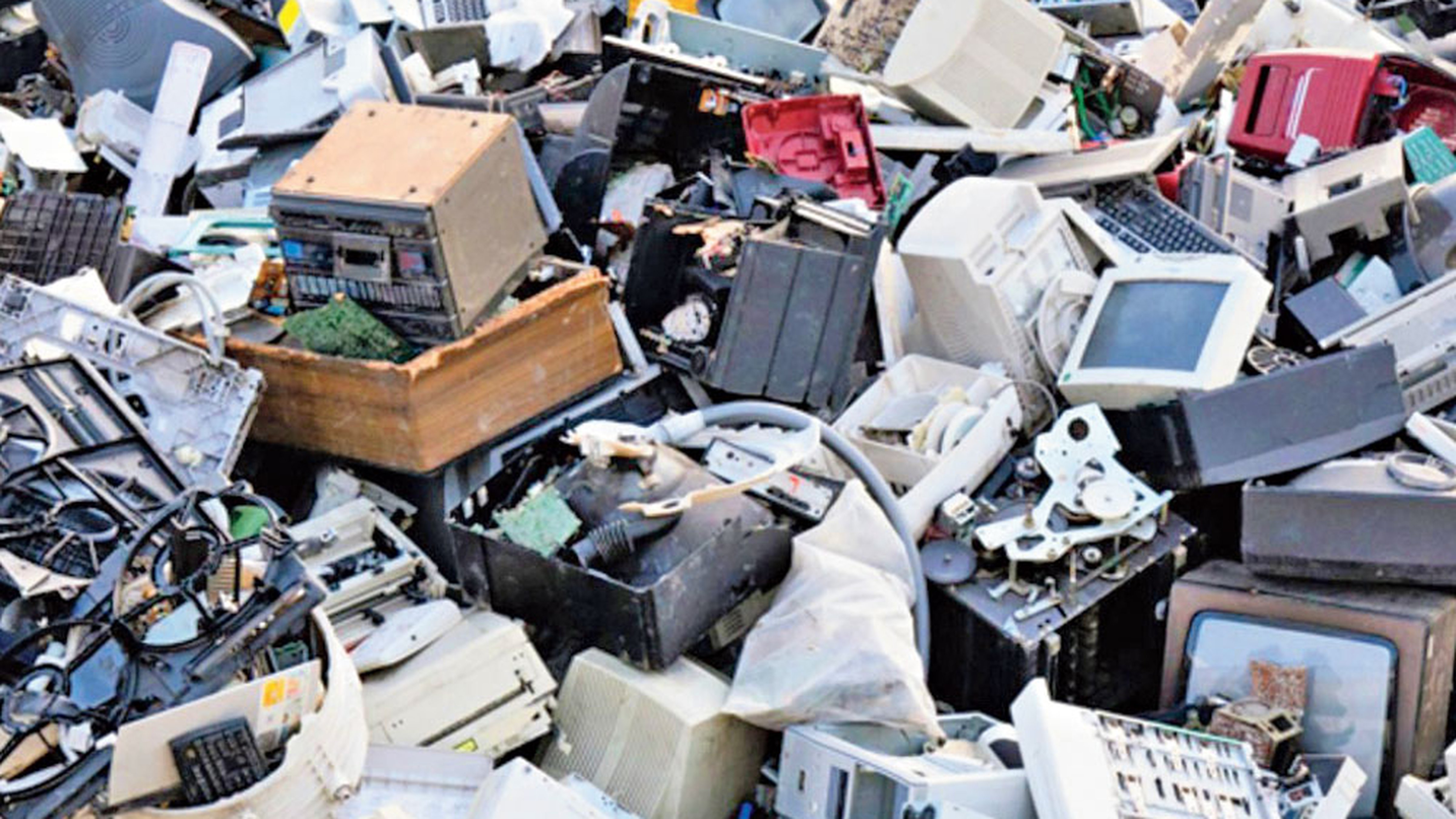 The New Town Kolkata Development Authority (NKDA) will upcycle e-waste collected from the township and Sector V and make them fit for reuse in an attempt to prevent accumulation of hazardous materials at dumping sites....Read Full Story The New Town Kolkata Development Authority (NKDA) will upcycle e-waste collected from the township and Sector V and make them fit for reuse in an attempt to prevent accumulation of hazardous materials at dumping sites....Read Full Story
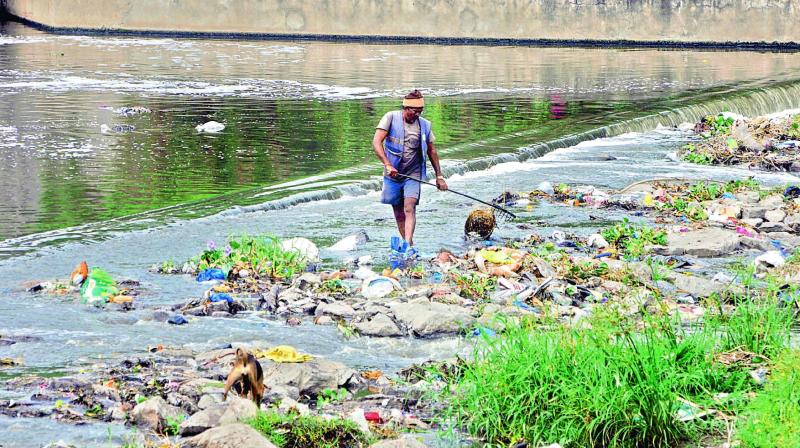 An assessment of 72 rivers around the world has found antibiotic pollution in rivers and soil to be a global health emergency....Read Full Story An assessment of 72 rivers around the world has found antibiotic pollution in rivers and soil to be a global health emergency....Read Full Story
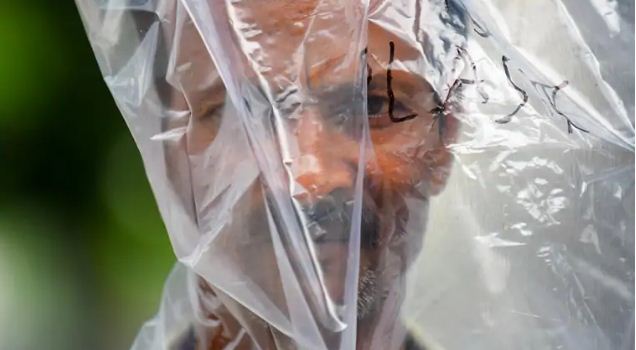 The Himalayan cleanup initiative was started last year with a massive cleaning drive across 12 hilly states of the country lying beside the Himalayan Range....Read Full Story The Himalayan cleanup initiative was started last year with a massive cleaning drive across 12 hilly states of the country lying beside the Himalayan Range....Read Full Story
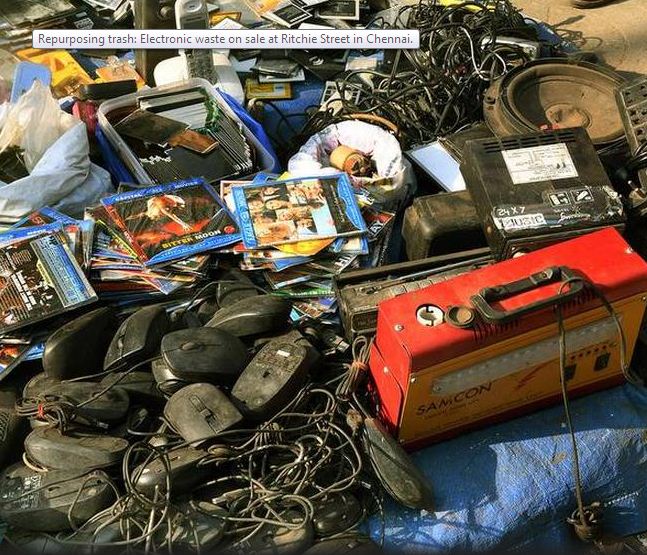 A total of 65 companies with a presence in the State have been brought into the ambit of extended producers responsibility (EPR), which means they will be collecting their e-waste and ensuring that it gets properly disposed. Though 65 is a small number compared to the n...Read Full Story A total of 65 companies with a presence in the State have been brought into the ambit of extended producers responsibility (EPR), which means they will be collecting their e-waste and ensuring that it gets properly disposed. Though 65 is a small number compared to the n...Read Full Story
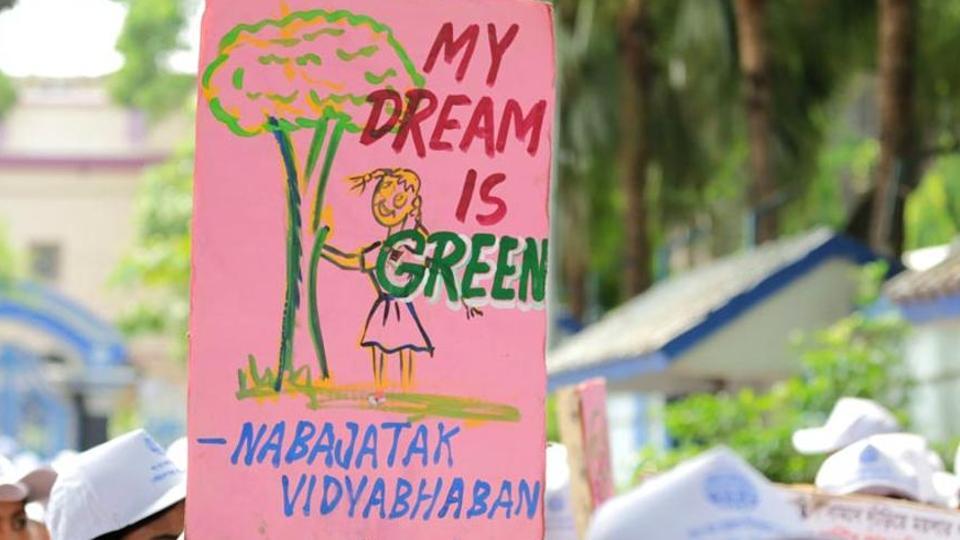 The march, scheduled for May 24 in line with the global climate strike for future, will begin from Galleria Market in DLF Phase 4 at 1pm....Read Full Story The march, scheduled for May 24 in line with the global climate strike for future, will begin from Galleria Market in DLF Phase 4 at 1pm....Read Full Story
Issue 85
, 2019
Phayeng is a scheduled caste village of the Chakpa community in Imphal West district and its conservation efforts are mainly linked to the belief that the forest is a sacred grove, but the idea has changed over the years....Read Full Story
A boat ride down the Yamuna in the capital provides visual proof of how polluted the river is. But a new technology quantifies this presence of pollutants....Read Full Story
In violation of the Hazardous Waste Management Rules-2016 in the Marrawala area of Haryana bordering the Baddi-Barotiwala industrial belt, chemical-ridden drums are being openly washed in the Sirsa river. Not only this, plastic waste can also be seen floating on the su...Read Full Story
Named as the Hazardous Waste Treatment, Storage and Disposal Facility, the unit is being set up by the Delhi State Industrial and Infrastructure Development Corporation (DSIIDC)....Read Full Story
On its 61st foundation day, the National Environmental Engineering Research Institute (Neeri) dedicated the first--of-its-kind ‘Waste Management Park’ to the city....Read Full Story
The seemingly endless stream of biomedical waste management in India has necessitated the Ministry of Environment, Forest and Climate Change to amend and enforce the 'parent rules' of 2016...Read Full Story
The National Green Tribunal (NGT) on Friday directed the Ministry of Environment, Forests and Climate Change (MoEF&CC) to conduct a study to ascertain whether cigarette and bidi butts fall within the category of toxic waste....Read Full Story
At least 90 per cent of hospitals in major cities across Jharkhand are flouting rules of bio-medical waste management and contributing to a major public health concern, an independent survey by a New Delhi-based NGO Toxics Link revealed on Thursday....Read Full Story
A recent report ‘State of Global Air 2019’, by the US-based Health Effects Institute, revealed that over 12 lakh deaths in India were caused by air pollution. The burden of Type 2 diabetes contributed by exposure to fine particulate pollution is the highest in India, ac...Read Full Story
Toxic fumes emitted by vehicles on the roads are taking a toll on the kids across the world including India where at least 3,50,000 children fell to chronic respiratory disease, asthma. India is second only to China, as per a Lancet study that analysed 194 countries and...Read Full Story
Issue 84
, 2019
Hyderabad-based Sanshodhan E-waste Exchange enables corporates (in several cities) and societies (across Hyderabad) to identify and directly transfer their e-waste to government-authorised, technically competent recyclers....Read Full Story
Taking an important step towards tackling the menace of plastic waste in India, the government has completely banned import of solid plastic waste/scrap into the country. India generates 25,940 tonnes of plastic waste every day....Read Full Story
The green panel said the absence of implementation of noise pollution norms affects the health of citizens, especially infants and senior citizens....Read Full Story
The world's largest e-waste recycling facility has opened in Dubai, a media report said....Read Full Story
The district magistrate has also ordered to disconnect the electricity supply to these units. According to officials, the dyeing units were allegedly releasing polluted water without treating it first....Read Full Story
Environment experts and policymakers Monday stressed on the need for using technology and reducing waste at household-level in order to manage it effectively....Read Full Story
Noting non-compliance of its order on air pollution by six states, the National Green Tribunal (NGT) has directed chief secretaries of Maharashtra, Punjab, Assam, Jharkhand, Uttarakhand and Nagaland to submit their clean air action plans by next month or pay Rs 1 crore ...Read Full Story
Issue
,
After streamlining waste collection in the city to an extent through the decentralized solid waste management (SWM) system, Trichy City Corporation has chalked out a plan to set up decentralized pyrolysis plant (a closed process of decomposing materials at high temperat...Read Full Story
Issue 83
, 2019
The National Green Tribunal has sought an action plan from a committee headed by CPCB to stop discharge of polluted water in the Yamuna river and prosecute the offenders.
A bench headed by NGT Chairperson Justice Adarsh Kumar Goel directed various authorities -- Cent...Read Full Story
Trichy: After streamlining waste collection in the city to an extent through the decentralized solid waste management (SWM) system, Trichy City Corporation has chalked out a plan to set up decentralized pyrolysis plant (a closed process of decomposing materials at high ...Read Full Story
For the first time in India, scientists from IIT-Guwahati have developed biodegradable plastic with the help of homegrown technology. Though the US has been a major producer of biodegradable plastic, the production costs there are very high. He added that the biodegrada...Read Full Story
Children living in homes that have toxic chemicals on the floors and furniture are exposed to higher concentrations of harmful semi-volatile organic compounds (SVOCs) in their blood or urine than those without these materials, finds a new study. SVOCs, which are a subgr...Read Full Story
A parliamentary panel has rapped the government for not giving due attention to the solid waste generation and management despite its "potentially devastating ramifications”. The panel also said that waste collection efficiency in the country is also "very low" as it ra...Read Full Story
A draft performance audit report on Rejuvenation of the Ganga pointing out Bengal government’s failure in checking pollution in the river has left the top brass of the administration grappling for answers. According to sources, the draft report has come as an embarrassm...Read Full Story
Delhi’s reckless consumerism produces tonnes of garbage every day that has now piled up in three landfills that are an eyesore in the city: Bhalswa, Ghazipur and Okhla. There are colonies of scavengers living near these sites that have been completely overlooked by the ...Read Full Story
Aravali areas that enjoy any form of legal protection will get thinner. Haryana’s town and country planning department has directed all districts to submit a report on natural conservation zones (NCZ) but only after excluding ‘bhood’ (sandy foothills) areas. The exclus...Read Full Story
Global investment firm KKR and Ramky Enviro Engineers Limited - provider of environmental services and solutions in India and overseas, on Monday announced the completion of their previously announced transaction. Under the terms of the transaction, KKR has acquired a 6...Read Full Story
Dropping a bombshell, the Tamil Nadu Pollution Control Board has set a one-month deadline for 95 top brands using multi-layered plastics — mostly Fast Moving Consumer Goods companies — to submit an Extended Producer’s Responsibility proposal. Those failing to do so will...Read Full Story
In the next few months, at least some railway stations will start looking cleaner, thanks to directions from the principal bench of the National Green Tribunal (NGT) to the raliways ministry. The Comptroller and Auditor General (CAG) has also been directed to carry out ...Read Full Story
One neighbourhood may have the answer to Bengaluru’s garbage management problems. For the past three months, nearly three tonnes of wet waste generated by residents of a few neighbourhoods in Koramangala's 5th and 6th Blocks is being processed and converted to biogas. T...Read Full Story
More than three decades after the Ganga Action Plan was launched, the ancient city of Varanasi is set to have zero sewer discharge in the holy river by November this year. The Ganga Action Plan was launched by then Prime Minister Rajiv Gandhi in Varanasi on June 14, 198...Read Full Story
India has a very lax approach when it comes to protecting the nation from environmental degradation. Lack of awareness and stringent measures by the government has turned north India into a gas chamber. Whether it is stubble burning that has made the capital’s air hazar...Read Full Story
Issue 82
, 2018
The Plastic Bottles Manufacturers’ Association met us saying they will ensure a proper buyback mechanism for smaller bottles too...” Ramdas Kadam Minister for Environment....Read Full Story
Gurugram: The landfill site in Gurugram East may just be proving a deadly trap for its residents. Ever since the landfill site was set up in Bhandwari village in 2013, there have been around 100 deaths due to cancer in an area comprising 9,000 residents....Read Full Story
A metropolitan magistrate’s court has imposed a penalty of Rs 15,000 each on seven societies for not processing their wet waste under the new BMC rule....Read Full Story
The Maharashtra government's decision to ban the use of plastic has been welcomed by environmentalists, but frowned upon by some stakeholders who feel that lakhs of people will be rendered jobless in the Rs 50,000 crore industry....Read Full Story
The saturation point of the Ghazipur landfill site and non-availability of alternative land to manage garbage has prompted East Delhi Municipal Corporation (EDMC) to move the National Green Tribunal (NGT)....Read Full Story
The National Green Tribunal (NGT) has directed the Delhi Government to complete the demarcation of forest land in Southern Ridge are by June 30. A Bench headed by Justice Raghuvendra S Rathore warned the officers concerned that in case the work is not completed till tha...Read Full Story
Issue 81
, 2017
Roseland Residency members have been celebrating ever since the announcement of them bagging the National Swachh Bharat Award 2017 under the Resident Welfare Association (RWA) category was made on September 28. Residents of the society congratulated each other and the m...Read Full Story
In an effort to go green, the Goa government has decided to minimise the use of environmentally hazardous plastic on different occasions including the state functions. Chief Minister Manohar Parrikar had instructed all the departments to reduce the use of plastics inclu...Read Full Story
The Yamuna choked on debris and waste materials on Sunday, a day after idols from nearly 200 Durga Pujas pandals in Delhi, Gurgaon, Noida, Ghaziabad, Faridabad and surrounding areas made way to the designated ghats for immersions. According to a revenue department offic...Read Full Story
Electronic waste is no more a problem of the rich and elite in India but a cause of serious concern for the environment. The toxic waste, generated from thousands of tonnes of discarded electronic devices across the country, plays havoc with public health with nearly fi...Read Full Story
Chennai Corporation has started collecting segregated waste from homes, institutions and commercial establishments in all zones. The civic body has directed all the 16,004 conservancy workers to stop collecting recyclable waste on a daily basis. The workers will collect...Read Full Story
AFTER PRESENTING arguments pertaining to the state of the site where the World Culture Festival was held last year, in front of the National Green Tribunal (NGT) Tuesday, festival organiser Art of Living (AOL) Foundation talked about the “environmental work” it has carr...Read Full Story
With the deaths of at least 18 farmers in Maharashtra from inhaling toxic insecticide fumes sprayed in farmlands, Chief Minister Devendra Fadnavis on Tuesday ordered a high-level probe to ascertain the causes and initiate remedial measures. Besides 18 deaths, another 60...Read Full Story
Rivers of India are often called its lifeline. They are revered and worshipped by people who got their identities in the ancient times by settling near rivers. Till today, many states, now metropolises, are situated on riverbanks, thriving from the resources that it pro...Read Full Story
Various kinds of fragrances are around us. And it is believed they tend to make us feel more attractive. But if someone says that the cologne you wear can make you sick, would you believe it? Well you might have to.As many as one in three people experience symptoms incl...Read Full Story
The city has disposed close to 50,000 tonnes of e-waste in the past 10 years from households alone. Though behind when compared to Bangalore and New Delhi, e-waste management is still slowly picking up in the State during the past five years when close to 3% of e-waste ...Read Full Story
With the air quality across the National Capital Region (NCR) already reaching unhealthy levels, residents are bracing up for even more toxic days ahead - especially with Diwali round the corner. The Supreme Court last month lifted a temporary ban on sale of fire cracke...Read Full Story
The National Green Tribunal has directed the Central Pollution Control Board (CPCB) to collect and analyse the ambient air quality samples around the Okhla waste-to-energy plant once in four months. A bench headed by NGT chairperson Justice Swatanter Kumar modified its ...Read Full Story
An independent fact-finding team of farmer rights groups and farm experts has pointed out several loopholes in the ground-level monitoring mechanism of sale and use of pesticides in Yavatmal district, Maharashtra, which saw a number of deaths in the past few weeks due t...Read Full Story
Citing toxins in the air, Supreme Court has banned the sale of firecrackers in Delhi-NCR this Diwali. The only official document on the ‘known health impact’ of fireworks is a compilation of findings of surveys, put together by Central Pollution Control Board. The India...Read Full Story
THE House Committee on Ecology chaired by Rep. Estrellita Suansing of the First District of Nueva Ecija has approved the creation of a technical working group (TWG) out to amend the Clean Air Act of 1999 and the Solid Waste Management Act of 2000, which were found to be...Read Full Story
To avoid defacement of the campus, the National Green Tribunal (NGT) has directed the Delhi University to strictly ensure that no posters or pamphlets are put up on the walls of its premises. A bench headed by NGT Chairperson Justice Swatanter Kumar asked the Delhi gov...Read Full Story
The East Delhi Municipal Corporation (EDMC) said it has set the ball rolling for setting up a waste-to-energy plant of 2,000 MT capacity at Ghazipur landfill site. East Delhi Mayor Neema Bhagat said the corporation is concerned about such fire incidents and the idea now...Read Full Story
Reports of farmers dying from pesticide exposure in Maharashtra’s cotton belt in Yavatmal make it evident that the government’s efforts to regulate toxic chemicals used in agriculture have miserably failed. It is natural for cotton growers under pressure to protect thei...Read Full Story
Scientists have been asked to develop zero-pollution firecrackers that do not cause health hazards to children, Union Environment Minister Harsh Vardhan said on Sunday ahead of Diwali. The comments come close on the heels of the Supreme Court banning the sale of firecra...Read Full Story
The Indian government ordered diesel generators and a power plant in Delhi to be shut down on Tuesday as air quality in the capital deteriorated ahead of the Hindu festival of lights, when a night of firecrackers sends pollution levels rocketing. Under a plan that impos...Read Full Story
A canal from Red Hills lake which drains excess water during monsoon is flanked by a garbage dump, resulting in leachate and possible contamination of water when the lake fills up.The Red Hills lake, popularly known as ‘Puzhal lake’, serves as one of the biggest rain-fe...Read Full Story
Last week, the Maharashtra government registered a police complaint against three pesticide companies and Krishi Seva Kendras (agro-input centres) for selling pesticides not recommended for the region after 32 farmers from Vidarbha died of poisoning. The agriculture dep...Read Full Story
Raw food sold in most city markets have Lead concentration far above the permissible limit and can permanently damage key human organs, a survey conducted by the Geological Survey of India (GSI) has found. Samples of raw food items like polished rice, red lentil (masoor...Read Full Story
Pollution killed 25 lakh Indians in 2015. The highest in the world, even more than in China which is the country with the highest population. In China, the figure is 18 lakhs. In India, over 18 lakh lives were snuffed out by foul air alone as per a global panel of publi...Read Full Story
The National Green Tribunal (NGT) on Monday slapped a fine of ₹1 lakh each on four railway stations in the Capital for not complying with solid waste management rules. Heavy penalties were levied on Anand Vihar railway station, Vivek Vihar railway station, Shakur ...Read Full Story
The National Green Tribunal (NGT) on Monday rapped the Delhi Jal Board (DJB) and the Aam Aadmi Party (AAP) government for not complying with its previous orders with regard to the Yamuna cleaning project. Further, the green panel asked both the authorities to show cause...Read Full Story
Every time 50-year-old Mahipal Singh crosses the pile of garbage on the pucca road near the canal in Ghazipur, it’s a grim reminder of the son he lost on September 1. Abhishek, 20, was on his way home to Rajbir Colony, when a portion of the landfill fell into the canal,...Read Full Story
THE SUPREME Court on Tuesday directed Uttar Pradesh, Haryana and Rajasthan to ban the use of pet coke and furnace oil in industries, failing which, the court said, it will be forced to ban these material from November 1. In its order on May 2, the court had directed the...Read Full Story
The All India Institute of Medical Sciences (AIIMS) on Tuesday launched a device which will be used for personal protection from air pollution. The device, called as 'Airlens', is a nasal wearable device created by a team of Indian Institute of Delhi (IIT) with the help...Read Full Story
It comes as no surprise that Sahibabad has been identified as one of the five most polluted areas in the National Capital Region by the Supreme Court-appointed Environment Pollution (Prevention and Control) Authority. This is because out of 356 air polluting industries ...Read Full Story
Most of the hospitals and nursing homes in Arunachal Pradesh don't have facilities for disposal of bio-medical wastes, according to a recent report by the Comptroller and Auditor General of India. The CAG report which was tabled in the state assembly this month highligh...Read Full Story
There are large chunks of unused land in Sector 71 which is commonly used for dumping and burning waste. Although Sector 71 is largely home to urban settlers, residents said civic authorities have been negligent towards it. We have been imposing fines and this issue (wa...Read Full Story
There is always a fire at Bhalswa landfill site and the garbage is being dumped there even today. The irony is that for the disposal of waste, the norms set by the Central Environment Ministry are not being followed even after a disaster has happened. People, especially...Read Full Story
Issue 80
, 2017
Health institutions in the state continue to violate the biomedical waste management laws as the state is yet come up with a proposal to establish a full-fledged common biomedical waste treatment facility. Government hospitals and private clinics generate a large quanti...Read Full Story
Three unseeingly, but characteristic “monuments” greet us at major bordering locations (Ghazipur from East, Bhalswa on North and Tehkhand in South) while we enter the national capital. Not to forget stench of decaying garbage, a large flock of predatory birds (Black Kit...Read Full Story
The Central Pollution Control Board (CPCB) has issued notice to 228 electrical and electronic equipment (EEE) manufacturers across India, including four in Telangana and three in Andhra Pradesh, for not adhering to the E-waste (Management) Rules of 2016. The notices wer...Read Full Story
Terming the Ghazipur landfill incident a disaster in waiting to happen, experts said that the only solution ahead is to reduce the volume of waste generated by the national capital through segregation at source. Segregation of waste means separating biodegradable and no...Read Full Story
Air pollution is diminishing India's capacity to harness power from the sun, experts say, undermining billions being invested in renewables as the energy-hungry giant emerges as a solar superpower.New research has found the smog and dust that sickens millions across Ind...Read Full Story
The Ghazipur landfill was not just a source of sustenance for the local rag pickers, but also used to support an entire ecosystem of other small scale businesses– from local dairies to wig industry – that had evolved around it over the past three decades. “Most of the t...Read Full Story
There were 4.24 million deaths globally in 2015 attributable to PM2.5—fine particulate matter with a diameter less than 2.5 micrometer—of which the share of India’s 1.09 million deaths is 26%, according to the latest report of the World Health Organization (WHO). PM2.5 ...Read Full Story
By 2020 India's e-waste from old mobiles and computers will rise by about 1800 per cent and 500 per cent respectively by 2020 as compared to the levels in the year 2007, according to an ASSOCHAM-KPMG joint study. India discarded approximately 18 lakh metric tonnes of e-...Read Full Story
Experts have cautioned awareness among people against the increasing health hazards associated with the disposal of ewaste, primarily computers. Recycling e-waste has become a major concern for the city civic body. Guwahati is among the 10 cities selected by the ministr...Read Full Story
Issue 79
, 2017
The Peshawar High Court (PHC) has directed the Khyber Teaching Hospital (KTH) management to close incinerator till the next order after receiving Environmental Protection Agency (EPA)'s report that it was creating air pollution. A bench comprising Chief Justice Yahya Af...Read Full Story
Inaugurating the second state level workshop on implementation of Biomedical Waste Management Rules 2016, Deputy Chief Minister Manish Sisodia today stressed the need for generating awareness among health service providers about the new provisions and rules about Biomed...Read Full Story
Uttar Pradesh metropolis, Ghaziabad, has won the dubious distinction of being labelled the most toxic city in India. The Central Pollution Control Board of India (CPCB) has announced the list of the most polluted cities in the country. And the Uttar Pradesh metropolis,...Read Full Story
Climate and energy efficiency solutions company Danfoss India has been conferred with the ‘Golden Peacock Award’ for Environment Management. The award was presented here during the 19th World Congress on Environment Management’ in the presence of Supreme Court Justice K...Read Full Story
Union Environment Minister Harsh Vardhan on Monday said the entire world is looking at India's traditional methods to combat climate change and global warming. The solutions to protect the nature and environment are in our DNA, said the minister while speaking at a plan...Read Full Story
Progress in renewable energy development last year was impressive – in October, renewables overtook coal as the world’s largest source of power capacity, a milestone in the world’s ambition to phase out hydrocarbons. November marked the Paris Climate Deal coming into fo...Read Full Story
The National Green Tribunal on Tuesday banned the use of synthetic and nylon (Chinese) manja on the grounds that it posed threat to life and the environment. The order excludes cotton thread when coated with a degradable material. The bench, headed by Justice Swatanter...Read Full Story
The decision to develop an Integrated Solid Waste Management Plant in the Bandhwari area on the outskirts of Gurugram and Faridabad has come under sharp criticism from locals, who say the move will undo their own green ways of waste management. After it caught fire in 2...Read Full Story
A 100-metre area on either side of Ganga between Haridwar and Unnao (Uttar Pradesh) will be a "no-construction, no-development zone", the National Green Tribunal ruled on Thursday while ordering a green compensation of Rs 50,000 on anyone dumping waste in the river. In ...Read Full Story
A plea alleging rising air pollution by diesel-run ships in the Indian territorial waters today prompted the National Green Tribunal to seek replies from the Centre and others. A bench headed by NGT Chairperson Justice Swatanter Kumar issued notices to the ministries of...Read Full Story
Activities such as segregation, composting, refuse-derived fuel (RFD) making and setting up of waste-to-energy plants up to 15 megawatt capacity at existing landfill sites, don't require green clearance, the Union environment and forests ministry has said. This is likel...Read Full Story
Though partially, the impact of the ban on polythene carrybags is visible at the ground level, not because of the administration's efforts, but due to untiring efforts of a few green crusaders in the city. Despite constraints, some self-motivated Bhopalis are doing thei...Read Full Story
Following the orders of the National Green Tribunal (NGT) regarding solid waste management, the Chief Secretary has called a meeting of the local bodies officials and commissioners of municipal corporations on July 21. Ajoy Sharma, Secretary, Local Bodies, said a prelim...Read Full Story
In late March, after U.S. Environmental Protection Agency chief Scott Pruitt reversed an Obama-era recommendation to ban chlorpyrifos—a widely used, highly toxic pesticide found by the EPA itself to cause learning disabilities and developmental delays in children—NRDC a...Read Full Story
The workshop was to discuss and share ideas on how the problem of e-waste has been a burning issue which needs to be tackled in Goa. In view of this, Goa-based NGO Communicare Trust along with the ministry of electronics and information technology, NASSCOM, MAIT, CEAMA ...Read Full Story
Over 1,000 Delhi residents have shown interest in installing solar panels on their rooftops, Greenpeace India claimed today, after a month-long campaign to create awareness about it. “After a month-long campaign to spread awareness about rooftop solar, Greenpeace India ...Read Full Story
The National Green Tribunal today slammed the Ministry of Environment and Forests (MoEF) for terming cigarette butts as biodegradable and directed it to clarify its stand on the issue. A bench headed by NGT Chairperson Justice Swatanter Kumar asked the MoEF to take clea...Read Full Story
In the Art of Living (AOL) Yamuna floodplains matter, the National Green Tribunal (NGT) on Friday directed the Delhi Development Authority (DDA) to supervise formation of a high-level committee that will submit an action plan to the Tribunal on rehabilitation of Yamuna ...Read Full Story
While several agencies have been given the task to ensure free flow of water through drainage lines, their attention has not reached up to Gangua Nala. What was once a freshwater stream is now the main ejection mechanism for exit of waste water from capital Bhubaneswar ...Read Full Story
The fact that Delhi's air is laden with ultrafine particulates is undisputed. But does that automatically make it "toxic"?A study has found that the ultrafine particulates in Delhi's air, mainly PM2.5 and PM10, are made of relatively less harmful chemical components. Sc...Read Full Story
Experts say that the Bureau of Indian Standards (BIS) has insufficient information about Pentaerithrityl Hydroxyhydrocinnamate, a chemical used to stabilise beauty products. A reply to a query filed under the RTI has revealed that the “use of it is not prescribed in any...Read Full Story
Twenty-one thermal power plants were found to be in need of upgradation of their pollution control systems, the government today said, asserting that appropriate action has been initiated against them.Environment Minister Harsh Vardhan in a written reply in Rajya Sabha ...Read Full Story
When Prime Minister Narendra Modi had last year given a call to save cows from plastic, his message brought into focus the hazards of this non-biodegradable product not only for animals but also for the overall environment.Protection of cows or other animals from plasti...Read Full Story
National Green Tribunal (NGT), central bench, on Wednesday asked the state government to file a reply in three weeks on biomedical waste (BMW) being disposed of through in-house facilities in various hospitals, which under the new rules of 2016 being prohibited. -*"The ...Read Full Story
E-waste managers say that a majority of the households in the city are guilty of irresponsible disposal of domestic e-waste. The practice in most households is to either put all the waste into the garbage bin or sell it to the local scrap dealer. Scrap dealers usually s...Read Full Story
Each year, an estimated 500 billion to 01 trillion plastic bags are consumed worldwide. That’s over 01 million plastic bags used per minute! These are the most widely used bags and they seem harmless until one starts counting the billions that are thrown away each day a...Read Full Story
Commonly used antibiotics may be harming the good microbes that are essential to a healthy environment, a study warns. When people take antibiotics, their bodies break down and metabolise only a portion of the drugs. The rest is excreted and enters wastewater. As wastew...Read Full Story
Inspire of India generating 1.85 million tonnes of e-waste annually and ranked in the top 5 countries of electronic waste generation, e-waste has not been categorized separately under the new GST regime which has created an air of ambiguity for e-waste organizations. To...Read Full Story
Has the litchi been exonerated? Eating litchis on an empty stomach did not trigger encephalitis-like symptoms in hundreds of malnourished children in Muzaffarpur, Bihar in 2014, resulting in deaths. So, a January paper in Lancet Global Health (‘Association of Acute Toxi...Read Full Story
Issue 78
, 2017
In a city where multi-tasking is an essential skill, residents of a Mulund housing society have incorporated the skill to save the environment. Over the past one year, residents of Marathon Onyx have composted organic garbage, recycled other waste and harvested rainwate...Read Full Story
Delhi is gradually cementing its position as one of the most polluted cities. On many bad days, the national capital remains covered in a blanket of smog, and elevated particulate matter give us nightmares, apart from gifting respiratory ailments. But what’s the solutio...Read Full Story
If all goes well, compost from city waste will soon go for sale on a larger level. On Saturday, the state government issued an iconic order, urging all the local bodies to scientifically process garbage, and promote marketing and sale of compost under its brand 'Harit M...Read Full Story
State-run Steel Authority of India Limited (SAIL) would be using plasma technology for the disposal of hazardous waste for the conservation of the environment and natural resources.The company would be the setting up a state of the art Polychlorinated Biphenyls (PCBs) m...Read Full Story
Underlining air pollution as a serious problem, the government's think tank Niti Aayog in its latest action agenda has come out with a five-point remedy, including higher taxes on petrol\diesel, higher parking fees and shutting down coal-based power plants in a phased m...Read Full Story
Standing on the banks of the dry Cauvery river channel, P. Elango, a textile processing unit owner in Komarapalayam, a textile town in Namakkal district, recalls how the units were asked to stop drawing water from the river, the only source they depended on, over a de...Read Full Story
The Delhi government on Tuesday decided to keep in “abeyance” its directive to schools in the city to install air purifiers for combating air pollution. The Directorate of Education (DoE), however, did not specify any reason for suspending the directive within a few day...Read Full Story
After installation of vending machines for sanitary napkins in girls schools in Rajasthan, state's first napkin disposal incinerator will be installed in Jodhpur. Government girls' schools have been identified for installation of bio-napkin disposal incinerators. These ...Read Full Story
Rajeevan spent most of his life watching his favourite river die. For two decades, the Kuttemperoor river in south Kerala’s Alappuzha district slowly choked under the weight of rampant illegal sand mining and construction sites that dumped tons of sewage on its once-pri...Read Full Story
The Delhi Pollution Control Committee (DPCC) is probing the Saturday’s chemical leak in Tughlakabad, which triggered toxic fumes that left 475 schoolchildren sick with breathlessness, eye irritation, nausea and severe headache.According to a Delhi environment department...Read Full Story
Environ, a group of environmental management for sustainable development, has started an awareness programme on environmental hazards of electronic waste under the ‘Digital India Initiative’.The Ministry of Electronics and Information Technology in partnership with NASS...Read Full Story
Jute - the golden fibre of India - is often the toast of fashion circuits. Now it seems jute is going to shine in electronic circuits too. A group of Indian and American scientists have used recycled jute to fabricate high performance, flexible supercapacitors which hav...Read Full Story
The National Green Tribunal (NGT) has directed an inspection team headed by the Central Pollution Control Board (CPCB) to inform it about the mechanism for e-waste collection and transport at the premises of power distribution companies here....Read Full Story
Negligence on the part of the GMCH-32 staff has come to the fore. It is learnt that medical waste, including used syringes and injections, are being dumped in sewers. The matter came to light when a choked sewer was being cleared near the emergency area of the hospital ...Read Full Story
The New Delhi Municipal Council (NDMC) is likely to set up 97 rain water harvesting (RWH) pits in the New Delhi area by the August end. The pits, having the storage capacity of 1700 cubic metre of water, will be commissioned at Chankya Puri, Sarojini Nagar and Gole Mark...Read Full Story
Where does Mumbai's waste go after you flush it down the toilet? In a wooded patch close to the Bandra sea link toll booth, municipal engineers and maintenance staff monitor a constant gush of light brown water as a dull stench permeates the air. Sub-engineer Abhijit De...Read Full Story
Chinchwad Municipal Commissioner Shravan Hardikar said on Monday that the civic body would increase garbage processing at its Moshi garbage depot, which was running out of space. He added that the Pimpri-Chinchwad Municipal Commission (PCMC) would also launch a campaign...Read Full Story
No data on composition of waste at Bandhwari treatment plant is available with the civic authorities, according to a report submitted by the Central Pollution Control Board(CPCB) with the National Green Tribunal (NGT).The CPCB recently filed a comprehensive report on th...Read Full Story
Raising concern over unauthorised dismantling and recycling of e-waste, Environment Minister Imran Hussain said the government has authorised 37 collection centres for collecting e-waste. Stressing the need for public awareness about hazards of improper disposal of ele...Read Full Story
A lot of garbage clearing thus is the done informally, by ragpickers who work without any job security, salary or dignity. Not just that, they are regularly exposed to cuts, infection, respiratory diseases and tuberculosis apart from poverty, humiliation, harassment, an...Read Full Story
The Ministry of Urban Development had set an ambitious target of October 2019 for converting all organic waste generated in cities into compost or biogas, and marketing the compost with the help of fertiliser companies. The project has, however, run into hurdles with on...Read Full Story
The National Green Tribunal has sought response from the Institute of Human Behaviour & Allied Sciences (IHBAS) and others on a plea alleging that the hospital was recklessly handling bio-medical waste and causing air pollution by burning garbage in the open. A bench he...Read Full Story
As per the joint study conducted by ASSOCHAM and PwC, in India, about 10 to 15 percent of wastes produced by industries are hazardous and the generation of hazardous wastes is increasing at the rate of two to five percent per year. As per the estimates, annually around ...Read Full Story
In a unique protest, Yamuna river on Monday was given oxygen using cylinders and pipes by a group of volunteers who wanted to draw attention of lawmakers to the pollution in the river. River Connect volunteers gathered at the Etmauddaula view point park with cylinders ...Read Full Story
The State Pollution Control Board (PCB) has issued closure notice to three companies in the Edayar industrial region here for operating without preliminary pollution control measures. The move came after the board carried out inspections at 11 industrial units at Eloor ...Read Full Story
The National Green Tribunal has directed the Delhi government to file a detailed action plan to show how municipal solid waste (MSW) would be processed and disposed of in the city.A bench headed by NGT Chairperson Justice Swatanter Kumar asked the AAP government to hold...Read Full Story
Prime Minister Narendra Modi, on Sunday, announced that a massive waste management campaign in 4000 cities will be launched on June 5, the World Environment Day. Waste bins of blue and green colours will be distributed in the cities along with an awareness drive under t...Read Full Story
A village in Hapur district of Western Uttar Pradesh has become a nightmare for its dwellers as 11 people had died during the last 21 days because of cancer. Allahbaksh Village is situated near Ganga River and according to environmentalists the groundwater here is heavi...Read Full Story
The National Green Tribunal on Tuesday slammed the Haryana government and its civic bodies over disposal of industrial waste and construction debris in the Aravalli forests on the Gurgaon-Faridabad road. "Aravalli hill is a forest area. How can you make it a dumping sit...Read Full Story
In a judgment that should sound alarm bells for hotels and resorts that are coming up in rampant violation of environmental norms at various tourist destinations, the National Green Tribunal (NGT) on Tuesday ordered the demolition of five resorts in Kasauli, Himachal Pr...Read Full Story
Issue 77
, 2017
Indian Institute of Science (IISc) researchers have found a novel way to recycle the mounting pile of electronic waste more efficiently and in an environmentally friendly manner. According to the United National Environmental Programme, about 50 million tonnes of e-wast...Read Full Story
From recycling wastewater to generating its own electricity, the Institute of Chemical Technology (ICT) is taking strides to convert its Matunga campus into a green zone. The institute’s 16-acre campus in the heart of Matunga has 11 academic departments, four specialise...Read Full Story
The seas near Mumbai, Kerala and the Andaman and Nicobar Islands are among the most polluted in the world, a global study that mapped marine pollution around the world has found.Researchers from the Alfred Wegener Institute (AWI), Helmholtz Centre for Polar and Marine R...Read Full Story
A Noida resident has floated a petition on Change.org asking the BJP, Congress, AAP, Swaraj India and BSP to support a green agenda for Delhi for the 2017 MCD elections. “We do not see much emphasis on environment and nature conservation by our governments, perhap...Read Full Story
Two months after the Bruhat Bengaluru Mahanagara Palike (BBMP) started collecting sanitary waste separately, approximately 17 tonnes of it are being collected across all the zones in the city daily. But this just a fraction of what the citizens generate, and the scope o...Read Full Story
The white foam spotted along the Versova beach on Wednesday and Thursday was caused by large quantities of untreated industrial and domestic waste from the Malad creek, experts said, calling it an uncommon sight in Mumbai and warning that the foam could affect both huma...Read Full Story
India's $3 billion plan to clean the Ganga is badly behind schedule with large stretches contaminated by toxic waste and sewage, forcing Prime Minister Narendra Modi to intervene, said Reuters, based on government officials and documents that the news agency said it had...Read Full Story
In the key stretch of Ganga, between Haridwar and Kanpur, 30 drains are directly discharging 701 million litres/day (MLD) of waste water in the Ganga, a recent report of the Central Pollution Control Board has said. The report also highlighted that barring three of the ...Read Full Story
The India national capital has spent over Rs 2,000 crore on Yamuna clean-up in the last 22 years but the reality has only become starker when you consider the recent and the past data that shows absolutely no improvement in the water quality. Despite this, believers co...Read Full Story
What should set the alarm bells ringing for the state government is the increasing presence of uranium in the sub-soil water used for drinking and irrigation. The average value of uranium in sub-soil water is 115 parts per billion (ppb) in the state. This means that the...Read Full Story
Over 15,000 trees were cut in the Capital in the last three financial years to undertake development and construction activities, said Union Environment Minister Anil Madhav Dave on Monday.In a written reply in the Rajya Sabha, Mr. Dave said that 6,161 trees were cut du...Read Full Story
While the Capital and the NCR grapple with the problem of pollution, the Arvind Kejriwal-led Delhi government is moving so slow in this regard that any solution seems like a distant dream. Though the Comprehensive Action Plan, suggested by the Supreme Court-appointed En...Read Full Story
The environment ministry has sought comments and suggestions from stakeholders on three important international meetings that start in less than a fortnight where subjects like transboundary movement of hazardous waste, international trade of hazardous waste and long pe...Read Full Story
While the plastic and its usage have made our lives simpler it has added on to the pollutants that harm the environment. Plastics are now today considered as one of the major toxins on the earth that are depleting its natural habitat. One of the most used ways of plasti...Read Full Story
With burning not an option after the National Green Tribunal banning it in 2015, composting of dry leaves is the best way of getting rid of the fallen foliage in an efficient manner. But with experts complaining that little has been done to facilitate the process, heaps...Read Full Story
Locals were in for a rude shock when they witnessed thick layers of foam formed on the canal near the Athupalam crematorium in the city on Sunday morning. Dyeing and sewage effluents have created these multitudes of foam. "This is created because of the effluents enteri...Read Full Story
Did you know that India, a country of 1.2 billion, is running the risk of drowning in all the waste it generates on a daily basis? At present, around 62 million tonnes of solid waste is generated annually out of which 5.6 million tonnes is plastic waste, 0.17 million to...Read Full Story
The National Green Tribunal today sought a status report from the Delhi government on its order banning the use of disposable plastic in the national capital. A bench headed by NGT Chairperson Justice Swatanter Kumar asked the city government and Delhi Pollution Control...Read Full Story
The source of the medical waste found next to Alahalli Lake in Anjanapura ward on Monday has been traced to Meridian Medical Centre, Fraser Town, revealed investigations by the Karnataka State Pollution Control Board (KSPCB). Board chairman Lakshman told: “A notice has ...Read Full Story
The Kerala state pollution control board (PCB) has issued directives to all industrial units which require `consent to operate' to make their primary effluent treatment plants fully operational from May 22 this year. This follows the directives of the Supreme Court whic...Read Full Story
The Punjab government has decided to ban the use of certain products made of plastic in a bid to conserve the deteriorating environment. A notification to this effect will be issued after an approval by the state cabinet on the decision taken. Chief minister Captain Ama...Read Full Story
In a clear violation of the Biomedical Waste (Management and Handling) Rules, 2016, formulated a year ago, none of the 22 government medical college hospitals in the state owns an effluent treatment plant (ETP) to treat the liquid medical waste. In a ground check conduc...Read Full Story
Industries resorting to illegal dumping of hazardous wastes, effluent discharges or causing air pollution and odour nuisance were by cautioned of stringent action including prosecution as per the provisions under the Water, Air and E(P) Acts by the State Pollution Contr...Read Full Story
A National Green Tribunal (NGT) bench, headed by chairperson Justice Swatanter Kumar, issued on Thursday notices to all state governments and Union territories on CPCB's application that plastic waste management rules 2016 were not being implemented. The Central Polluti...Read Full Story
The Haryana government would set up 15 integrated solid waste management clusters to deal with solid waste in urban areas in the state. Electricity would be generated from the solid waste in three clusters and manure from the remaining 12, an official spokesman said at ...Read Full Story
Issue 76
, 2017
India may have issued directives to ban the use and manufacture of polychlorinated biphenyls (PCBs) to reduce pollution, but decades of using these toxic industrial chemicals in electrical and electronic equipments have contaminated the country’s soil, air, and possibly...Read Full Story
Hindustan Times, Delhi, Mar, 2017: Authorised e-waste dismantling units could soon be coming up in Delhi with the Delhi Pollution Control Committee planning to issue licence to proper handling units.Units, in which electronic waste such as televisions, mobiles, computer...Read Full Story
The implementation of the e-waste rules 2016, which are to come into force this May, may now be delayed with industry associations of electrical and electronic equipment demanding a relaxation in targets of e-waste collection for recycling as specified in the rules.The ...Read Full Story
The Hindustan Business Line, New Delhi, Mar, 2017: Nearly six months after the government decided to limit the lead content in household paints, the Central Pollution Control Board (CPCB) on Tuesday came out with guidelines on compliance and testing procedures.The CPCB ...Read Full Story
By Diwali this year, paints in India will be sold with less than one percent of lead that causes indoor pollution and is harmful for children.The Central Pollution Control Board (CPCB) has prescribed new draft rules that allows maximum of 90 particles per million (ppm) ...Read Full Story
The union environment ministry recently expressed doubts about international reports that link air pollution with mortality and recommended exercising caution in interpreting these studies. But now the union health ministry along with the World Health Organisation (WHO)...Read Full Story
In Ashwath Hegde’s 10th-floor office in the south-Indian city of Bengaluru, plastic has become a multi-sensory experience. “Just see what happens,” Hegde says, tearing a piece from a small plastic bag and setting it on fire. “There are no fumes. Plastic normally has a h...Read Full Story
INDUSTRIAL units, especially small-scale industries, in the Pimpri-Chinchwad-Bhosari industrial area seem to be causing air, water and soil pollution, with the Maharashtra Industrial Development Corporation (MIDC) and the Maharashtra Pollution Control Board (MPCB) alleg...Read Full Story
Plastic waste and bad roads are among the major problems persisting in Indian cities and this man has a common solution to both - plastic roads. An experiment that R Vasudevan, a chemistry professor, conducted long back in 2001 from his not-so-well equipped laboratory a...Read Full Story
In a shocking revelation, more than 1 in 4 deaths of children below 5 years are happening due to unhealthy environments. According to the latest findings of World Health Organization (WHO), every year, environmental risks – such as indoor and outdoor air pollution, seco...Read Full Story
The Central Pollution Control Board has closed the recommended gap between waste-to-energy incineration power plants and residential areas from the 300-500 metres specified in the solid-waste management manual of the centre's Swachh Bharat Mission to 30-100 metres in it...Read Full Story
Adhering to its global commitment, India on Monday launched the country's latest plan to phase-out one of the key refrigerants - Hydro chlorofluorocarbon (HCFC) - under its ultimate goal to end use of harmful ozone-depleting substances (ODS) by switching over to non-ozo...Read Full Story
Wearing used rubber gloves, Manthalesh sifts syringes, blood bags, and empty glucose bottles from a heap of garbage. After segregating the harmful medical waste, she puts the items in black polythene bags, which has 'Danger: Bio-Hazard' in bold letters. But the 26-year-...Read Full Story
The National Green Tribunal today slapped a Rs 50,000 fine on a scientist from the Environment Ministry but withdrew it later, warning officials against passing the buck on matters relating to the cleaning of Ganga. A bench headed by NGT chairperson Justice Swatanter Ku...Read Full Story
Delhi Government in an extensive meeting on Friday with a delegation of Japan discussed to explore the possibility in finding various ways and means to control air and water pollution and solid waste management. Environment Minister, Government of Delhi, Imran Hussain, ...Read Full Story
To monitor pollution in the Ganga on a real time basis, the Central government has installed 44 Real-Time Water Quality Monitoring Stations (RTWQMS) in the river to provide pollution data on the patterns of air pollution data in Delhi. The pollution data will be display...Read Full Story
Despite severe air pollution levels in recent years, the Delhi budget for 2017-18 doesn't reflect any urgency to address the problem. The globally accepted measures such as developing walking, cycling and public transport infrastructure have found little or no mention t...Read Full Story
According to a recent study arsenic molecules might be used to fish out the most toxic elements from radioactive nuclear waste - a breakthrough that could make the decommissioning industry even safer and more effective. The University of Manchester?s Elizabeth Wildman r...Read Full Story
The District Collector has banned the use and dumping of plastic and aluminium food packages in and around the Malayattoor pilgrim area. Any such act would invite a fine of up to 10,000, said a press release here. The ban order is part of the efforts by the district adm...Read Full Story
An international school in Mumbai is doing its part to help the city reduce its waste. The school has recycled more than 3,000kg garbage on its campus in just six months, preventing it from being sent to overburdened landfills. About 100 students and staff of Dhirubhai ...Read Full Story
The National Green Tribunal, which has fixed fines for farmers for burning agriculture waste, has directed the Delhi government and those in four neighbouring States to inform it about the action plan to prevent pollution from crop burning after the harvesting season. A...Read Full Story
Decks have been cleared for the reopening of the Badarpur thermal power plant with the Delhi Pollution Control Committee (DPCC) issuing the formal clearance on Wednesday. A senior Delhi Environment Department official said the necessary orders have been issued. The NTPC...Read Full Story
In what could cheer a vast swathe of industries, the Union Environment Ministry has given a six-month window and a “one-time opportunity” to industrial projects functioning without environmental clearance (EC) to apply for a back-dated green certificate. The reprieve is...Read Full Story
The Delhi-NCR belt, a pollution hotspot, needs a drastic reduction in level of pollutants, by up to 76 per cent in some areas, and several radical interventions for its air to meet safe standards. The observation and the proposals are part of a new plan drafted by the E...Read Full Story
In a landmark judgement, the Uttarakhand High Court on Monday accorded the status of "living human entities" to the Ganga and Yamuna, two of India's most sacred rivers. In a landmark judgement, the Uttarakhand High Court on Monday accorded the status of "living human e...Read Full Story
After a lull of six months, the civic body has again begun to crack the whip on those selling plastic bags below 50 microns. On Tuesday, a team of officials from the Coimbatore Corporation seized five tonnes of banned plastic bags from wholesale shops at Thomas Street a...Read Full Story
The Ahmedabad Municipal Corporation has sent a proposal to the state government for entering into a power purchase agreement with two firms that have signed a contract with the AMC for converting domestic garbage into energy. The AMC stated that the Gujarat Electricity ...Read Full Story
The National Green Tribunal has directed the Odisha government to fence 18 acre forest area, that Kalinga Relief and Charitable Trust is accused of encroaching upon, and restore it to its original status. The order of the Eastern Zone bench of the Green Tribunal, dated ...Read Full Story
The National Green Tribunal (NGT) this week will hear a plea over the encroachment and filling up of a natural stormwater drain — the Badshahpur Nallah — in Gurgaon. Residents alleged that the encroachment is a blatant violation of the provisions of the Water (Preventio...Read Full Story
Even though the Municipal Corporation of Gurugram (MCG) rolled out plans to set up compost units in all the residential areas of the city, MCG is seen struggling with proper treatment of waste. Moreover, garbage is dumped and set on fire in the green area of Aravallis. ...Read Full Story
Globally, oil companies are known to prefer baking the earth for profit. But in India, Prime Minister Narendra Modi's 'Swachh Bharat (Clean India) campaign is driving them to the Himalayas -- sometimes even outside the country's boundaries -- in search of corporate soci...Read Full Story
Many believe that "herbal" is synonymous with "safe," but it turns out ayurvedic medicines, if not prepared as prescribed in rasa shastras can, in fact, turn deadly with metals like lead or mercury! A retired IAS officer and secretary, revenue appeals, Gunwant Champaner...Read Full Story
In a bid to check the water quality, the State Pollution Control Board (SPCB) has enhanced its monitoring locations from the earlier 104 sites across the state to 131. The move has been initiated as per the National Water Monitoring Programme undertaken by the Central P...Read Full Story
The Supreme Court on Wednesday gave weightage to health concerns over commercial interests when it banned the sale and registration of Bharat Stage (BS) -- III type of vehicles across the country from April 1. A bench of Justices Madan B Lokur and Deepak Gupta banned th...Read Full Story
Yamuna River Project, unveiled on Wednesday, will use sustainable bio-remediation technologies to clean water and long-term management strategies to create city-level assets for all. A memorandum of understanding (MoU) was signed between Delhi Jal Board (DJB) and Univer...Read Full Story
The National Green Tribunal (NGT) on Thursday directed public sector oil companies to stop plying Bharat Stage(BS)-I and BS-II vehicles for transporting petrol or petroleum products in the national capital. A bench headed by NGT Chairperson Justice Swatanter Kumar order...Read Full Story
Issue 75
, 2017
The ambient black carbon (BC) concentration in the city has been found to be about five times higher than the limits set by the World Health Organisation (WHO). It was found that the city had BC measurement of over 95,000 ng/m3 (nanogram per cubic metre) whereas the WHO...Read Full Story
An unexplained illness in children aged 15 years and younger in Muzaffarpur, Bihar, which claims many lives in May-June, has been solved. Scientists from the U.S. and India have found that consumption of litchi fruit and skipping evening meal can result in very low bloo...Read Full Story
After deploying fixed compactors to make its areas dhalao-free, the South Delhi Municipal Corporation is now trying to rope in a private agency to encourage scientific disposal of non-biodegradable waste. Currently, areas under SDMC's jurisdiction generate about 150 MT ...Read Full Story
The Times of India, New Delhi, Feb 2017: National Green Tribunal (NGT) rejected an appeal by the residents of Sukhdev Vihar to relocate the Okhla waste-to-energy plant. The residents had moved NGT, alleging that the plant was causing toxic air pollution in the area, whi...Read Full Story
Noting that proper functioning of waste-to-energy plant would serve public interest, which must prevail over “little inconvenience”, the National Green Tribunal has advised citizens to overcome “mental block” that there cannot be a compost yard in the neighbourhood. The...Read Full Story
Bailable warrants have been issued against a former administration official and a police officer who were accused of helping Union Carbide Corporation chairman Warren Anderson escape from India after the 1984 gas tragedy. Then district Collector Moti Singh and retired S...Read Full Story
Most of the states on Tuesday faced the ire of the National Green Tribunal for not complying with its order directing them to file detailed action plan to show how municipal solid waste (MSW) would be processed. A bench headed by NGT Chairperson Swatanter Kumar said the...Read Full Story
At least eight premature deaths take place every day in Delhi due to pollution-related diseases, the Supreme Court noted on Monday as it ordered the Centre to stop the use of furnace oil and petroleum coke (pet coke) by industries located in and around the Capital withi...Read Full Story
Recent comparative product testing by city-based Consumer Education and Research Centre (CERC), found traces of pesticides and heavy metals in six supposedly-organic brands of rice. Three brands of rice sold as organic had traces of the pesticide chlorpyrifos, and these...Read Full Story
The Delhi government has roped in an Israeli firm to clean up, through ecological methods, an eight-kilometre stretch of one of the most polluting drains that empties into the highly-polluted Yamuna river. Delhi Water Minister Kapil Mishra said Israeli firm ‘Ayala Water...Read Full Story
With a majority of oil slick scooped out off the coast, the Coast Guard is contemplating spraying of imported biodegradable dispersants in the shallow waters where chemical dispersants are not recommended due to ecological reasons. The oil spill occurred due to the coll...Read Full Story
Faced with the fact that almost none of the over 400 thermal power plants across the country has complied with new emission norms notified more than a year ago, the Government is learnt to have decided to relax the December 2017 deadline — and even dilute the standards ...Read Full Story
The National Green Tribunal today formed a panel comprising officials of the pollution control boards of Delhi and Uttar Pradesh to examine air quality, noise pollution and traffic congestion near the Kaushambi bus terminal on Delhi border and asked it to submit an anal...Read Full Story
The National Green Tribunal criticised the Government agencies for wasting public money in the name of cleaning the Ganges. The Tribunal told the Center, “Not a single drop of river Ganga has been cleaned so far,” as reported by The Hindu.The bench headed by Justice Swa...Read Full Story
This is one parameter where Gurugram would never want to surpass Delhi. But that's exactly what it is doing. Gurugram turned up on top of the Central Pollution Control Board's list of the 28 most polluted cities on Wednesday with an air quality index (AQI) of 322. It go...Read Full Story
Beaches don’t figure in our imagination of rich ecosystems. Yet, they are teeming with life, as are the oceans. From housing shore birds, to being home for many small animals, the only place where turtles nest, beaches are a unique and fragile ecosystem. That’s why expa...Read Full Story
India’s air now rivals China’s as the world’s deadliest, according to a new study published Tuesday amid warnings that efforts to curb pollution from coal will not yield results any time soon. India’s notoriously poor air quality causes nearly 1.1 million premature deat...Read Full Story
With the State extending the biomedical waste management programme to all Government-run hospitals, the health facilities have been asked to obtain authorisation from the Odisha State Pollution Control Board (OSPCB) for disposal of waste in an organised way. While earli...Read Full Story
The National Green Tribunal directed Delhi government on Thursday to reduce traffic congestion on the city roads and introduce destination buses to improve air quality in the Capital. The green court said the introduction of point-to-point buses would facilitate individ...Read Full Story
Mint, New Delhi, Feb 2017: The environment ministry is likely to defer the implementation of the stringent emission norms that may have resulted in higher electricity tariffs, by two years to December 2019, in a move that would bring succour to nearly two-thirds of Ind...Read Full Story
Stepping up the campaign to prevent use of banned plastic items, Corporation authorities initiated a door-to-door awareness programme in association with students of paramedical institute of Vadamalayan Speciality Hospitals on Thursday. Flagging off a campaign vehicle a...Read Full Story
Organised PET recycling has grown to become a R3,500-crore industry, and is expected to keep growing. The country has around 41 manufacturing units spread across 46 locations with a total capacity of 800 kilotonnes per annum. These units have capacity ranging from 3 ktp...Read Full Story
The Supreme Court has pulled up the Centre for ‘making money’ at the cost of citizens’ health by allowing dumping in India of hazardous waste from foreign countries. A bench headed by Chief Justice J S Khehar termed the issue as ‘important’ and said the authorities cann...Read Full Story
A small group of progressive farmers in Santhanuthalapadu in the Prakasam district of Andhra Pradesh has quit the cultivation of tobacco, the principal commercial crop in the district, to grow organic fruits and vegetables. After burning their fingers growing the “negat...Read Full Story
The city has spent over Rs 2,000 crore on Yamuna clean-up in the last 22 years. This shocking revelation came during a hearing in the Supreme Court on Monday. The reality becomes starker when you consider recent and past data that show no improvement in water quality: t...Read Full Story
Measures implemented under the 'severe' category of the graded response plan on January 20 to combat air pollution may soon be lifted as the city's air quality has improved over the last few weeks.The Environment Pollution (Prevention and Control) Authority (EPCA), empo...Read Full Story
Doctors at New Delhi’s Safdarjung Hospital may soon be operating and treating patients in the dark with the National Green Tribunal (NGT) threatening to cut off its water and power supply if it does not comply with biomedical waste disposal norms within 15 days. “It’s i...Read Full Story
Born in a small village in Haryana, where even stepping out of the house is considered a taboo for women, Pratibha got married at the young age of 21 and went on to give birth to four children. At that time, she had not imagined that one day she will be a self-dependent...Read Full Story
Taking a serious view of industries letting out effluents into rivers and water bodies resulting in pollution, the Supreme Court on Wednesday directed that all the industries to ensure that they put in place their effluent treatment plants (ETPs) and make them functiona...Read Full Story
Nearly a third of Indian cities have breached annual pollution limits mandated by the Central Pollution Control Board (CPCB) between 2011 and 2015, according to figures from the Union Environment Ministry-affiliated organisation. The numbers — the latest available and u...Read Full Story
Bhupender Singh Chahal, regional officer, HSPCB, said, “A resident of Naultha village had filed complaint with the National Green Tribunal (NGT) in 2015 about bleaching units being run in the Naultha area.” On his complaint, a survey was conducted by the HSPCB and 16 bl...Read Full Story
Plastic and pollution go hand in hand, and to control this menace, the residents of Dombivli have joined hands with Urjaa Foundation, an NGO. In an initiative launched this weekend, the residents plan to deposit their household plastic waste with Urjaa Foundation once a...Read Full Story
In less than a year, the environment wing of the country’s national carrier in Mumbai has converted more than 3,500 kg of garden and kitchen waste into 500kg of organic manure, thereby saving it from going to overburdened dumping grounds. In an attempt to find alternati...Read Full Story
Issue 74
, 2017
Residents of Sukhdev Vihar have written to chief minister Arvind Kejriwal complaining about change in land use of a 10 acre “green area“ where the Okhla waste-to-energy plant came up. They highlighted that no notification was issued on change in land use when the plant ...Read Full Story
Mumbai recorded the worst pollution levels on Sunday, the first day of the year, since the Deonar fire in January, 2016. Researchers attributed the spike in pollution to the use of firecrackers on New Year’s night. Pollution levels shot up to dangerously high levels as ...Read Full Story
Decline in ground water level due to overexploitation of available resources had prompted the Centre in 2013 to come out with a master plan for artificial recharge of ground water, specifying how different states would go about it on priority. But majority of the states...Read Full Story
The slow deterioration of the natural green habitats and toxic waste and rubble dumped in the wetlands in Thane are a threat to the inflow of migratory birds, said environmental experts. While migratory birds have made Thane green cover their home for this winter, envir...Read Full Story
Madhya Pradesh ranks highest in terms of deaths due to industrial accidents and inhalation of toxic fumes, a recent report by the National Crime Records Bureau on accidental casualties and suicides in India has revealed. The report said 213 people died in industrial acc...Read Full Story
Winter has set in and pollution levels are once again soaring in Delhi. Even after a slew of measures were announced by the government, little seems to have improved. So what is it that is missing, or hinders, our fight against pollution? Two things are paramount to und...Read Full Story
Frequent fires in many of the 78 sites where uprooted trees were dumped after the cyclone are causing pollution in residential neighbourhoods, disrupting traffic and making residents anxious. On Thursday, a fire was reported at Kotturpuram park around 12.05 p.m. Three f...Read Full Story
Coca-Cola Co and the American Beverage Association trade group were sued on Wednesday for allegedly misleading consumers about the health risks from consuming sugary beverages. The nonprofit Praxis Project accused the defendants of downplaying the risks to boost sales, ...Read Full Story
Environment Minister Imran Hussain on Tuesday reviewed the air quality of Delhi in a meeting with the senior officials of the department and the Delhi Pollution Control Committee. The meeting underlined that the present weather scenario of Delhi is primarily due to the ...Read Full Story
Acting on advice of an expert committee, the Centre will ban use of 18 pesticides in India as it involves risk to humans and animals. The Union agriculture ministry has issued a draft order, asking manufacturers, importers and state authorities to completely ban 12 of t...Read Full Story
The handling and management of fly ash will be a major concern for the world in the coming years. The fact surfaced at a training program organized by the Central Pollution Control Board (CPCB) on Thursday, at the Central Institute of Mining and Fuel Research (CIMFR).Th...Read Full Story
The National Green Tribunal on Tuesday constituted a committee to inspect major waste generators in the national capital including 5-star hotels, malls, hospitals, educational institutions with hostels and housing societies. Noting that the problem of waste generation i...Read Full Story
Waste management rules in India are based on the principles of "sustainable development", "precaution", and "polluter pays". These principles mandate municipalities and commercial establishments to act in an environmentally accountable and responsible manner—restoring b...Read Full Story
The manufacture and sale of plastic carry bags below 40 microns was banned by the Greater Hyderabad Municipal Corporation a few months ago, citing environmental conditions. But many shops continue to supply the bags, which are cheaper than the alternatives, right under ...Read Full Story
Indian multinational company Infosys Monday announced its internal carbon price at $10.5 per ton of Carbon Dioxide equivalent (CO2e) emission. This price, which will be valid for two years from the date of announcement, is essentially the cost of decarbonising the emiss...Read Full Story
The Supreme Court on Tuesday warned that the problem of air pollution was very serious and solutions need to be found urgently, rather than in years. "This pollution problem is very serious. If you talk for years for a solution, then it is a problem," a bench of Justice...Read Full Story
Air pollution contributed to a total of 80,665 premature deaths of adults over 30 years in Mumbai and Delhi in 2015, a two-fold jump from 1995, according to a new study at the Indian Institute of Technology, Bombay. In economic terms, air pollution cost the two cities $...Read Full Story
Technology developed in India for kitchen-waste biogas production is all set to be implemented in the island-nations of Fiji and Vanuatu in the coming days. Mysuru-based National Institute of Engineering’s Centre for Renewable Energy and Sustainable Technologies (NIE-CR...Read Full Story
Experts in the field of packaging have stressed on the need to recycle or regulate plastic produced in the country rather than banning it in order to prevent environmental pollution. “It is necessary that we (industry and consumers) use plastics in an environmentally su...Read Full Story
Industries in residential or `non-conforming areas' of Delhi are contributing to air pollution, members of Supreme Court-mandated Environment Pollution Control Authority (EPCA) told Delhi government officials recently in a meeting over the implementation of the graded r...Read Full Story
The National Green Tribunal (NGT) on Friday, pulled up the Union Ministry of Environment and Forest (MoEF) for delaying work on the forest fire management plans that are to be implemented across all states. A three-member bench, headed by justice Swatanter Kumar, observ...Read Full Story
Monitoring of air quality, which forms the basis of the graded response action plan to curb air pollution in Delhi-NCR, has been patchy for long. In the 46,208 square kilometre area that forms the Delhi-NCR, there are only 51 air quality monitoring stations. Of these, 2...Read Full Story
Supreme Court on Friday directed all state governments to file affidavits within two weeks affirming whether they would implement the Centre’s Master Plan for Artificial Recharge to Ground Water in India, 2013. A bench comprising Chief Justice J S Khehar and Justice N V...Read Full Story
Sunday’s oil spill as a result of the collision of two cargo ships off the Kamarajar Port in Ennore has been polluting Chennai’s beaches too. On Monday morning beach walkers found oil on the sands on the Marina beach, near INS Adyar, at Nochikuppam and at Pattinapakkam....Read Full Story
As Delhi continues to battle 'very poor' air quality, the Supreme Court-empowered EPCA today asked the Delhi government to ensure that the Badarpur thermal power plant, a major source of air pollution in the city, continues to remain shut. Last November, the government ...Read Full Story
Issue 73
, 2016
Air pollution was a major talking point the whole of 2016. It kept both the Centre and the Delhi government on their toes, but couldn't move them enough to look for long-term solutions. But there were short-term measures. Such as the odd-even scheme, which was introduce...Read Full Story
New Delhi, Dec 30, 2016 : Planting and sustaining 100 million trees by 2040 and managing as much as 50 per cent of the city’s waste by 2025 — These are some of the ambitious aims of the non-profit organisation Hara Jeevan. The group has a plan to make various places in ...Read Full Story
New Delhi, Dec 29, 2016 : AAP-BJP political battle in the capital has claimed an unlikely victim -one of the last natural water bodies in north Delhi. A plan to revive the dying Naini lake in Model Town was prepared a year-and-a-half ago by a top biologist but it hasn't...Read Full Story
Kerala, Dec 29, 2016 : Despite the high-octane campaign against toxic pesticides, it has emerged that there was no let-up in their excessive and indiscriminate use in the plantations in Wayanad, which throws up serious environmental concerns. According to the Agricultur...Read Full Story
New Delhi, Dec 28, 2016 : From iron scraps to discarded sheets, broken pipes and tiles - Delhi Metro has used all kinds of waste to develop a park in east Delhi’s Shastri Park. Besides medicinal plants and herbs, the 42,000-square-metres park has 12 sculptures that have...Read Full Story
New Delhi, Dec 27, 2016 : For residents of Nizamuddin, waking up to thick clouds of smoke — from road sides — has become a routine matter. Schoolchildren and parents going to drop them cover their noses to protect themselves from the emission. Morning walkers cough and ...Read Full Story
New Delhi, Dec 27, 2016 : Six children have moved the National Green Tribunal against air pollution caused by industries in west Delhi. NGT has sought responses from the Centre and the Delhi government on the issue.A bench headed by NGT chairperson Justice Swatanter Kum...Read Full Story
New Delhi, Dec 25, 2016 : The National Green Tribunal has directed the Ministry of Environment and Forests (MoEF) to regulate the use of polyvinyl chloride (PVC) and other forms of plastic in flags and banners by political parties during elections after a plea alleged t...Read Full Story
New Delhi, Dec 23, 2016 : The National Green Tribunal (NGT) on Thursday imposed a complete ban on burning of waste in open places and announced a fine of Rs. 25,000 on each incident of bulk waste burning. “We direct that there shall be complete prohibition on open burni...Read Full Story
New Delhi, Dec 23, 2016 : Now throwing garbage in dustbins will get you freebies. Union minister Venkaiah Naidu inaugurated two 'smart dustbins' at Palika Bazaar on Thursday, under the smart city project of New Delhi Municipal Council. In this, only plastic bottles/cans...Read Full Story
New Delhi, Dec 22, 2016 : Northern China was shrouded in almost record pollution for a fifth day on Wednesday, disrupting flights, traffic and shipping, and closing factories and schools, with some residents complaining emergency anti-smog measures were not operating. H...Read Full Story
Kolhapur, Dec 22, 2016 : The Maharashtra Pollution Control Board (MPCB) will be initiating an action plan against the clinics that have been operating without any formal consent with MPCB. Medical clinics must have authoritisation of the biomedical waste (management and...Read Full Story
New Delhi, Dec 21, 2016 : The National Green Tribunal (NGT) on Wednesday reprimanded the Uttar Pradesh Government and asked as to what initiatives it has taken so far to check Ganga pollution. "Do you really know what you are doing about this tribunal?" the NGT asked th...Read Full Story
New Delhi, Dec 21, 2016 : With poor air quality in the national capital becoming a cause of concern, NCRPB, an urban planning body for the NCR, on Tuesday directed Delhi and adjoining states to submit action plans to control air pollution. Underlining that air pollution...Read Full Story
New Delhi, Dec 21, 2016 : If the proposal of IIT Kanpur is implemented, then Delhi could be bracing for a power shortage. The Delhi government on Tuesday said it is considering a report submitted by the institute, according to which there should be ban on power plants w...Read Full Story
New Delhi, Dec 21, 2016 : The Delhi government on Tuesday proposed setting up of a Special Purpose Vehicle (SPV) along with the Centre to oversee cleaning up of Yamuna and Yamuna development front activities. This was a part of a set of recommendations presented by urba...Read Full Story
New Delhi, Dec 19, 2016 : With emphasis on segregation of waste into biodegradable, non-biodegradable and hazardous at the source itself, the south corporation's new regulations under Solid Waste Management (SWM) Rules 2016 want bigger waste generators to carry out comp...Read Full Story
New Delhi, Dec 18, 2016 : Food and beverage companies may have to compulsorily disclose additional information on the sugar, salt and sodium content of their packaged products, as part of a proposed revision of food labelling laws, said a top official of India’s apex fo...Read Full Story
New Delhi, Dec 16, 2016 : With plastic bags being used with impunity in the city, the administration has evidently failed to implement the ban on plastic bags. But sources in the MC said the failure is deliberate. According to them, the civic body was instructed by the ...Read Full Story
New Delhi, Dec 13, 2016 : The holy city of Varanasi has India’s most toxic air, and many north Indian cities are recording worse air-quality than Delhi, according to a new report, in which IndiaSpend is a collaborator. In 2015, the north Indian cities of Varanasi and Al...Read Full Story
New Delhi, Dec 12, 2016 : Tucked behind the boundary wall of Delhi Metro's sprawling Vinod Nagar depot, Sheikh Ajgar (24) lives with his wife and two children. While workers wearing helmets, safety boots and jackets are busy constructing the upcoming metro depot,Ajgar i...Read Full Story
New Delhi, Dec 12, 2016 : East Delhi Municipal Corporation has decided to implement a zerowaste management plan in Vasundhara Enclave and make it a model colony. The idea is to ensure that no dumping and littering is done in this residential locality. The civic body has...Read Full Story
New Delhi, Dec 10, 2016 : Concerned about the East Delhi Municipal Corporation’s (EDMC) proposal to develop a 150-acre landfill and a waste-to-energy plant on the banks of the Yamuna, environmentalists have started a petition asking the Delhi government to put the brake...Read Full Story
New Delhi, Dec 10, 2016 : If you are about to squeeze the oil out of a bajji at a roadside stall with a piece of newspaper, stop. Use of newspapers to wrap, pack or serve food is common in India. But the country’s top food safety authority has now drawn public attention...Read Full Story
New Delhi, Dec 9, 2016 : Justifying setting up of the waste-to-energy plant in Okhla here, the Central Pollution Control Board (CPCB) on Friday told the National Green Tribunal that emissions from the incineration plant were well within the limits set under the Municipa...Read Full Story
New Delhi, Dec 8, 2016 : Industrial units operating in residential areas are one of the major contributors to air pollution in Delhi, the National Green Tribunal has said while directing Delhi Pollution Control Committee (DPCC) to submit complete list of hazardous units...Read Full Story
New Delhi, Dec 8, 2016 : A plea alleging that untreated sewage and industrial effluents were being discharged into river Yamuna through storm water drains on Wednesday prompted the National Green Tribunal to seek a reply from the Environment Ministry and others on the i...Read Full Story
New Delhi, Dec 5, 2016 : Scientists have discovered what could be the world's first polluted river, contaminated about 7,000 years ago by Neolithic humans who may have been producing copper metals from ores.In the now-dry riverbed in the Wadi Faynan region of southern J...Read Full Story
New, Dec 3, 2016 : Rampant use of sulphur-heavy fuel like furnace oil and pet coke in industries across the National Capital Region is generating "enormous" amount of air pollutants and it needs immediate attention, a Supreme Court- appointed body has said. While furnac...Read Full Story
New Delhi, Dec 2, 2016 : The National Green Tribunal on Friday banned the use of disposable plastic in Delhi and NCR with effect from January 1, 2017 and directed the city government to take steps to reduce dumped waste. A bench headed by NGT Chairperson Swatanter Kumar...Read Full Story
New Delhi; Dec 1, 2016 : Months after announcing to use Municipal solid waste sourced from Ghazipur landfill site as solid waste material for widening of NH-24, East Delhi Municipal Corporation (EDMC) on Wednesday announced to ink with the agencies concerned. The Corpor...Read Full Story
Issue 72
, 2016
New Delhi, Nov 2, 2016 : The Ministry of Shipping has sanctioned ₹10 crore as part of the first instalment to the Gujarat Maritime Board for capacity building and safety training of 20,000 workers involved in the ship recycling activities at Alang-Sosiya recycling...Read Full Story
Noida, Nov 3, 2016 : Dry leaves, which are a precious resource for making compost, are more often being burnt right outside the Okhla Bird Sanctuary (OBS). In fact, a stretch of one kilometre in the area has become a permanent leaf-burning site, despite it falling withi...Read Full Story
Ghaziabad, Nov 3, 2016 : After the National Green Tribunal took a serious view of the lack of solid waste management in the city, the authorities have stepped up their efforts to acquire land for a solid waste plant at Galand in Hapur. The GDA on Wednesday held a meetin...Read Full Story
New Delhi ,Nov 3, 2016 : Delhi is facing the worst smog in 17 years, a green body said, calling it a state of health emergency. It asked the Delhi government to issue health alerts and convey that children should stay indoors. As visibility remained poor and a haze enve...Read Full Story
New Delhi, Nov 4, 2016 : The National Green Tribunal (NGT) on Friday asked the Central Pollution Control Board and the Delhi Pollution Control Committee to take steps to control and curb the pollution. The Tribunal also summoned the Environment Secretary of Punjab, Hary...Read Full Story
New Delhi, Nov 6, 2016 : The Indian government has declared severe levels of toxic air pollution in Delhi an “emergency situation” as administrators announce a plan to temporarily shut construction sites and a coal-fired power station to bring the situation under contro...Read Full Story
New Delhi, Nov 7, 2016 : The Delhi government has ordered the Badarpur power plant to be shut for 10 days due to high pollution levels. Last year, too, it was closed for some time, but resumed operations after the state-run NTPC managed to show that the emission levels ...Read Full Story
Lucknow, Nov 7, 2016 : The blanket of toxic air over Delhi — the product of road and construction dust, vehicle emissions, crop- and waste-burning, smoke from Diwali fireworks, and the currently prevalent cool, still atmospheric conditions – doesn’t seem to be lifting. ...Read Full Story
New Delhi, Nov 8, 2016 : All 15-year-old diesel vehicles will be de-registered and a temporary ban on construction activities was extended till November 14 as the Delhi government struggled to contain the city’s worst pollution in nearly 17 years. These were part of ste...Read Full Story
New Delhi, Nov 8, 2016 : Major electronics goods manufacturers in the country have started taking measures to curb hazardous e-wastes as the government rule on curbing e-waste in the country kicks in on October 1. Samsung, LG, Videocon, Panasonic, Whirlpool and Voltas a...Read Full Story
New Delhi,Nov 8, 2016 : Crop residue fires in Punjab and Haryana are enhancing concentrations of toxic gases like benzene and toluene, according to research from Indian Institute of Science Education and Research (IISER), Mohali. In the months right after the harvest of...Read Full Story
New Delhi, Nov 8, 2016 : There are several photographs making rounds on social media that show the river Yamuna layered by a thick coating of toxic froth. The froth reflects the alarming levels of toxicity present in the water. It’s a result of the untreated sewage and ...Read Full Story
New Delhi, Nov 9, 2016 : At a time when the Haryana government is planning a slew of measures to tackle smog and high pollution levels in NCR cities, waste burning continues unabated. This is happening despite the state government imposing Section 144 CrPC across Gurgao...Read Full Story
New Delhi, Nov 9, 2016 : "We propose a committee comprising Chief Secretaries of Delhi, Haryana, Rajasthan, Punjab and Uttar Pradesh who shall meet once in two months and prepare an action plan for implementation of directions on air pollution," a bench headed by NGT Ch...Read Full Story
New Delhi, Nov 9, 2016 : Observing that the air pollution in the capital is a “public health emergency as the limits have gone beyond the human permissible levels”, the Supreme Court on Tuesday directed the Centre to devise a common minimum graded response to tackle the...Read Full Story
New Delhi, Nov 10, 2016 : Inaugurating a workshop on "compliance of Biomedical Waste Management Rules 2016" organised by the Delhi Pollution Control Committee (DPCC), Environment Minister Imran Hussain said biomedical waste comprises human and animal anatomical waste, ...Read Full Story
New Delhi, Nov 11, 2016 : The Supreme Court pulled up the Central Pollution Control Board (CPCB) for groping in the dark and failing to draw a plan to curb the deteriorating air quality in the Capital. A bench headed by Chief Justice of India TS Thakur wondered whether ...Read Full Story
New Delhi, Nov 11, 2016 : The National Green Tribunal said on Thursday that whenever air pollution reaches severe levels, Delhi and its four neighbouring states would have to take a set of emergency measures that include sprinkling water from choppers, stopping construc...Read Full Story
Chennai, Nov 11, 2016 : The election of Donald Trump, a self-professed climate change denier, to the US presidency, seems to have filled various civil society group with a resolve to fight for climate action with renewed vigour. Trump, who said during the course of his ...Read Full Story
Chennai, Nov 13, 2016 : It is World Pneumonia Day 2016, and India stands pretty much where it stood last year — right on top of the charts with a total of 2,96,279 deaths from pneumonia and diarrhoea, the tally being just short of last year’s figure of 2,97,114 deaths, ...Read Full Story
Bengaluru, Nov 14, 2019 : A group of youths from city has come up with a solution for recyling of e-waste.Hemant Kumar, B Adarsh, Darshan and Dhananjay, who have graduated from Seshadripuram College, have launched 'Olopie', an e-waste solution company, which offers solu...Read Full Story
Mumbai, Nov 14, 2016 : High levels of mercury have been found in the soil and water around biomedical waste treatment facilities at Govandi near Deonar dumping ground, and Uran in Raigad district, a study by Amity School of Biotechnology, Amity University, and the Mahar...Read Full Story
New Delhi, Nov 15, 2016 : After environmentalists warned that the smog may be back once the mercury dips, doctors have expressed concerns that the city’s worsening air quality could leave people more prone to lung cancer. “So far, it was estimated that 80 per cent of lu...Read Full Story
New Delhi, Nov 16, 2016 : “Why should you (farmer) be allowed to cultivate vegetables on the land along Yamuna? Do you even know how much polluted the river is? It contains heavy metals and other high pollutants. People buy these vegetables from you and fall sick by ea...Read Full Story
New Delhi, Nov 18, 2016 : Delhi Pollution Control Committee (DPCC) has issued orders to extend the ban on generators and to continue the closure of all units of the Badarpur Thermal Power Plant till January 31 next year and to not lift the flyash for any purpose while e...Read Full Story
New Delhi, Nov 21, 2016 : The National Green Tribunal on Monday slammed the UP government over the issue of shifting of tanneries located on the banks of Ganga in Kanpur to some other place to stop discharge of effluents, saying, “it can’t behave like a king.” “You are ...Read Full Story
Hyderabad, Nov 21, 2016 : Pollution is taking its toll on not just nature but also the food we consume. Scientists from the National Institution of Nutrition, in a recently published study, reported heavy concentrations of heavy metals like Arsenic, Nickel, Cadmium and ...Read Full Story
New Delhi, Nov 21, 2016 : To avoid death of animals in forests due to electrocution by power transmission lines, the Union environment ministry has come out with guidelines detailing safe practices to be followed while these lines are constructed in forest areas. “To pr...Read Full Story
New Delhi, Nov 22, 2016 : The National Green Tribunal on Monday directed the Delhi Government and civic bodies to inform it about the total quantity of Municipal Solid Waste (MSW) generated in the national Capital daily.A Bench headed by NGT Chairperson Justice Swatante...Read Full Story
Bangalore , Nov 22, 2016 : A new study from IIM Bangalore and research firm Counterpoint Research suggest that India might consume $80 billion worth of mobile phone components over the next five years. India has the second largest smartphone market in the world, in term...Read Full Story
Chandigarh, Nov 23, 2016 : Over 125 industrial units running without consent are facing closure. The Chandigarh Pollution Control Committee (CPCC) has issued notices to the owners asking them to close the units immediately and seek permission after fulfilling the criter...Read Full Story
New Delhi, Nov 23, 2016 : Lead and other heavy metals such as cadmium and chromium have been found in samples of Sprite, Mountain Dew, 7UP, Pepsi and Coca-Cola, the government told Parliament on Tuesday. The samples were submitted to Kolkata National Test House for inve...Read Full Story
Issue 71
, 2016
Delhi government’s Horticulture Department has informed the National Green Tribunal that it has planted 2,000 trees for chopping 216 trees in a residential colony in north east Delhi. The Horticulture Department also gave an undertaking to the green panel that it would ...Read Full Story
As smoke rises from the burning garbage, Bhalswa may as well be on a different planet than the manicured lawns of Lutyens’ Delhi where Union Ministers will mark the second anniversary of the launch of the Swachh Bharat Mission on Sunday. On the birth anniversary of Maha...Read Full Story
Getting no reply from the municipal corporation (MC) regarding 12 outlets through which untreated effluent is being allegedly released in Buddah Nullah, the Central Pollution Control Board (CPCB) has written another letter to the civic body for giving a report regarding...Read Full Story
Environmental sustainability could become the next major challenge as India surges along its projected growth trajectory and the country needs to maximise the benefits of urbanisation without compromising on environmental benchmarks, a government report has said. Accord...Read Full Story
The MCG believes that constructing a wall around the defunct Bandhwari waste treatment plant is enough to prevent leachate from contaminating the groundwater. The civic body told the National Green Tribunal (NGT) on Wednesday that it had constructed a wall around the pl...Read Full Story
Noting that pickling units fall under prohibited list of industries as per Master Plan 2021, the National Green Tribunal has directed the Delhi government to shut down such industries units located in the national capital with immediate effect. Pickling is a metal surfa...Read Full Story
The Paris Agreement on climate change will enter into force on November 4 as enough countries have signed onto the landmark accord to bring it to the emissions threshold that will trigger its implementation, UN chief Ban Ki-moon has said. “This is a momentous occasion,”...Read Full Story
The level of pollution caused by fine particulate matter (PM 2.5) in Delhi will continue to exceed normal limits even if all emissions inside the city were stopped, as over 40 per cent of it originates from outside the NCR, a study has found. About 60 to 80 per cent of ...Read Full Story
About 100 metric tons (MT) of plastic waste generated in four of the six zones of the North Delhi Municipal Corporation goes straight to the Bhalswa landfill daily. Another 20 MT of waste from horticulture also ends up dumped unprocessed at the already overflowing landf...Read Full Story
The brand owners of the units manufacturing gutka, tobacco and pan masala shall have the overall responsibility for implementation of these directions. Cracking down on 20 top gutka and pan masala companies for non-compliance of Supreme Court orders and Plastic Waste Ma...Read Full Story
Students and professors from the university are currently preparing a project report on how to apply ‘urban planning concepts’ in the entire Yamuna stretch of 22 km. The university students have visited various spots on the stretch and in the pilot phase they will be fo...Read Full Story
Beautification and rejuvenation work of the Yamuna riverfront in the temple town of Vrindavan has come under the lens of the National Green Tribunal, with an environment activist seeking a stay on the ongoing construction activity in the area. The Uttar Pradesh governme...Read Full Story
US-based Brian Von Herzen and his team at Climate Foundation India believe that agricultural waste can be processed into not just something useful for farmers but also enrich the soil by putting back carbon into it. Paddy straw and wheat residues are usually burned by f...Read Full Story
The North Delhi Municipal Corporation (North MCD) has collaborated with a private partner, which will help it generate energy and make useful products from green and plastic wastes in parks. With this, the civic body aims to recycle around 120 metric tonnes of green/ pl...Read Full Story
The long battle of residents of Sukhdev Vihar in southeast Delhi for their right to clean air goes on, even as the green court gives them a next date each time. The residents have been fighting to move out the Okhla-based Waste to Energy plant, located at a small distan...Read Full Story
The 29.7km Noida Metro corridor will be India's greenest when it becomes operational a little over a year from now with a capacity to generate enough solar power to run not only all 21 stations but also its offices and train depot. The practices being followed are simil...Read Full Story
Brazenly defying the ban on open burning, industrial waste from stainless steel units is regularly being burned on land next to the railway tracks at Wazirpur Industrial Complex, near Azadpur in north Delhi. Unbearable smoke fills the area, spreading from the industrial...Read Full Story
The Endosulfan story is uncomfortably close to us. Pesticides are an every day reality. Australia-based filmmaker Simon Kurian tells the pesticide story with his feature length theatrical documentary Toxic Valley , filmed extensively, over three years plus a year of pos...Read Full Story
The Centre's ambitious plans to do away with landfill sites in 20 major cities, including Delhi, is being viewed with cautious optimism. The capital has for long been facing serious difficulties in dealing with the twin issues of collecting and disposing of municipal so...Read Full Story
Asking medical bodies to ensure proper collection, segregation and disposal of bio-medical waste in the national capital, the National Green Tribunal has directed the Delhi government to submit the quantum of waste generated by city hospitals, nursing homes and labs. A ...Read Full Story
Denmark’s Maersk Line, the world’s largest container shipping company, will send more decommissioned vessels to shipping yards in Alang for recycling at competitive prices and without harming the environment, according to a senior official. “Our objective is to recycle ...Read Full Story
Climate experts and environmentalists from across the globe not only welcomed the HFCs phase down deal, reached at Kigali in Rwanda on Saturday, but also singled out India for its exemplary role of showing much needed flexibility and leadership during the gruelling roun...Read Full Story
In a slum in East Delhi's Ghazipur, 51-year-old Sheikh Rubial sits in his one room house coughing profusely. He suffers from tuberculosis, and so do his three grandchildren, all below four years. The disease has forced the migrant labourer out of work for seven years. H...Read Full Story
Burning of municipal solid waste in the vicinity of the iconic Taj Mahal is significantly contributing to the discolouring of the world heritage monument, an Indo-American research team has found. The research compared the impact of dung cake burning versus the burning ...Read Full Story
Yamuna's dissolved oxygen (DO) level, that supports aquatic life, has plummeted to zero at different points in the river's journey through the national capital, a Delhi Pollution Control Committee study has found. The recent idol immersions aggravated its already alarm...Read Full Story
Industries and power plants in and around Delhi are the biggest source of pollutants, SO2 and NOx, that cause breathing ailments in the city. A study by the Indian Institute of Technology (IIT) Kanpur revealed that power plants, industrial clusters, restaurants and the ...Read Full Story
At KEM Hospital, where any day patient load crosses a thousand, it is a common scenario to watch a doctor hurry to the patient’s cot, give instructions to nurse who then gives an injection to the patient, dabs it with cotton and bandage and asks the sweeper to clean the...Read Full Story
The seemingly crisp, fresh air inhaled inside the sanitised and cool environs of metro premises or air-conditioned car may actually be teeming with respirable pollutants. Pollutants may be entering underground metro premises not only through air conditioning ducts but a...Read Full Story
To tackle the mounting biomedical waste crisis in Southern Kerala, especially in Kochi, the Kerala Enviro Infrastructure Ltd (KEIL) has proposed a treatment plant at Puthencruz in Ernakulam. The project, estimated to cost Rs 4.9 crore, has received the government nod an...Read Full Story
Indiscriminate dumping of soil in rivers Chenab and Tawi during construction of a stretch of a national highway has led the National Green Tribunal to issue notices to the Centre, concerned authorities and companies on a plea for enforcement of its earlier order prohibi...Read Full Story
A survey to assess noise and pollution levels will be conducted in major cities in the State on the penultimate day and on the day of the Deepavali festival. People should not pollute the atmosphere and celebrate smoke-free Deepavali, according to Collector T.G. Vinay. ...Read Full Story
Issue 70
, 2016
The Wayanad district administration is gearing up to ban the use and supply of plastic products such as carrybags, disposable plates, thermocol disposable wares, and plastic disposable tumblers in the district from October 2. Wayanad Collector B.S. Thirumeni on Thursday...Read Full Story
The Haryana State Pollution Control Board (HSPCB) has issued notices to manufacturing units of polythene carry bags to increase the thickness of these bags and adhere with other provisions of the Plastic Waste Management (PWM) rules or face closure. The notice makes it ...Read Full Story
With a WHO report ranking Delhi among most polluted cities in the world, the AAP government today decided to initiate steps, including awareness drives against burning Chinese fire crackers, dry leaves and waste in open, to check air and noise pollution ahead of Diwali ...Read Full Story
It is not just the endangered Indian vulture Gyps indicus that lives in Bejjur forest in Adilabad, Telangana. The 253 sq. km. thickly forested area on the banks of Pranahita river in the eastern part of this district is a biodiversity haven, as the presence of a rare fr...Read Full Story
The GMR consortium-AAI run Delhi Airport has become the first carbon neutral airport in Asia-Pacific following a series of measures taken by it to reduce carbon footprint, including setting up of a 7.84 MW solar power plant. The announcement was made by the internationa...Read Full Story
Lata rushes towards the stinking heap of garbage as soon as the dumper pulls away. Anything the 19-year-old can salvage from the trash before the waiting yellow bulldozer flattens it into a man-made hill will add to her day's earnings. The dumper's load -refuse from som...Read Full Story
In an indication of the massive extent of pollution in rivers of the country, the Central Pollution Control Board (CPCB) in a report submitted to National Green Tribunal has said that 63% of all sewage flowing into rivers every day is untreated in urban centres. Out of ...Read Full Story
The Centre today claimed before Delhi High Court that manufacturers of CFL bulbs, mostly multinational firms, do not want to adhere to the new e-waste management rules in India though they complied with similar regulations in Europe and other countries. The government t...Read Full Story
An NGO alleging unauthorised construction in the ecologically sensitive southern Ridge area by Jawaharlal Nehru University (JNU) has prompted the National Green Tribunal to seek a response from the Centre and the varsity on the issue. An NGO alleging unauthorised constr...Read Full Story
China Monday welcomed India’s decision to ratify the Paris climate agreement, saying the move will be a driving force for the enforcement of the landmark deal. “Climate change is a challenge faced by human society. No country would be immune from that so we should work ...Read Full Story
The Delhi government on Friday resolved to ensure foolproof implementation of the ban on Chinese firecrackers this festive season admitting their sale and use continued in the city despite restrictions. Kapil Mishra, soon after taking interim charge of the environment d...Read Full Story
Residents of Sukhdev Vihar and neighbouring colonies have now cited Swachh mission norms to oppose the Okhla waste-to-energy plant, which is allegedly causing air pollution in the neighbourhood. Complainants and their lawyers on Thursday carried the solid waste manageme...Read Full Story
The residents of Ranchi are drinking water that is getting more toxic with every passing day, claims a recent independent survey. Be it piped water supplied by Ranchi Municipal Corporation (RMC) or deep boring arrangements in independent households, or packaged 20 liter...Read Full Story
Researchers from Pune’s National Chemical Laboratory (NCL) and Indian Institute of Science Education and Research (IISER) have used a simple, cost-effective and quick process to convert sugarcane bagasse into anode-grade porous, conducting, activated carbon material for...Read Full Story
National Green Tribunal has issued contempt notices to Uttar Pradesh government and other authorities on a plea seeking action against illegal manufacturing, storage and transportation of ethanol by distilleries and sugar mills in the state. A bench headed by NGT Chairp...Read Full Story
A team of researchers at Jadavpur University here has developed a biodegradable energy harvester - from raw fish scales - which could be tapped as a sustainable green energy source for next generation self-powered implantable medical devices. It also has the potential f...Read Full Story
allocated for the Swachh Bharat Mission are lying unutilised by the three municipal corporations in the city, a a study said. This, despite the fact that chikungunya and dengue have crippled the national capital.The ‘Delhi Citizens Handbook 2016’ prepared by the Centre ...Read Full Story
groups and activists have urged the government to prohibit the use of plastic bags and wrappers following a High Court directive in this regard. A representation given by a practising doctor in Kochi pointed out that the ban would reduce the accumulation of solid waste,...Read Full Story
A two-year old study released in 2015 by the Centre for Science and Environment (CSE), (a well-respected non-profit public interest research and advocacy organization in New Delhi) concluded that NTPC, India's largest power producing Coal Company was way below the preva...Read Full Story
For more than 8,00,000 people who end their lives each year around the world, pesticide poisoning is the most commonly used method, the World Health Organisation (WHO) has said in its recent nations to frame an effective, comprehensive multi-sectoral suicide prevention...Read Full Story
National Green Tribunal has directed Delhi Government to submit a detailed list of resident welfare associations (RWAs) in the city in order to bring them under the ambit of Rainwater Harvesting System (RWHS). The green panel, which had directed Delhi Jal Board (DJB) to...Read Full Story
At the G-20 meet in Hangzhou in China, Prime Minister Narendra Modi urged the leaders of world's top economies to not to limit efforts to address climate change to early ratification of the Paris Agreement but instead called on focusing on its "full success". The Prime...Read Full Story
In a bid to prevent health risks resulting from exposure to electronic junk, the New Delhi Municipal Council (NDMC) has set up five e-waste collection centres in its areas. It has also initiated a door-to-door pickup service, which is being offered free of cost. The col...Read Full Story
Titled 'Environmental Risk Vigilance', the initiative is envisaged to take stock of activities in connection with various aspects of environment including air, water, land, soil, minerals, wetlands and mangroves. Looting of natural resources and indulging in environment...Read Full Story
Issue
,
A bomb is ticking on biomedical waste heap in Madhya Pradesh, as at least 22,071 kilograms of hazardous waste are being dumped in the open without treatment in the state every year. As per Bio-Medical Waste (Management and Handling) Rules, 1998, if not handled properly,...Read Full Story
A recent study by the Delhi University has revealed the presence of harmful chemicals and heavy metals in the city’s groundwater resources. If this groundwater is consumed, according to the study, it can lead to serious health problems in the nervous system, kidneys and...Read Full Story
Australian scientists have discovered a toxic form of mercury in Antarctic’s atmosphere and sea ice. The study, led by a team from the University of Melbourne, found significant amounts of methylmercury, an especially dangerous strain of mercury, in the Southern Ocean, ...Read Full Story
Goa Government today said it would form flying squads and keep an eagle eye on the state's borders to stop Plaster of Paris Ganesh idols from coming into the state for sale ahead of the Ganesh festival next month. "The ban on PoP idols in the state would be strictly imp...Read Full Story
Corpses arrive in a steady stream. It’s business as usual for the priests. Surrounded by the dead seeking moksha, they chant hymns as bells cling rhythmically. Smoke billows from five pyres that burn simultaneously as logs of wood and garlands lay scattered. “My relativ...Read Full Story
Climate change is threatening to expose hazardous biological, chemical and radioactive waste at an abandoned Cold War-era base thought to be buried forever in the Greenland Ice Sheet, new research has warned. Camp Century, a US military base built within the Greenland i...Read Full Story
National Green Tribunal (NGT) on Friday expressed disappointment over lack of coordination among state and central agencies in implementing its order on Mailey Se Nirmal Yamuna Revitalisation Project 2017. In a hearing that stretched over an hour, NGT observed that the ...Read Full Story
For the first time, researchers in India have found that mice and rats exposed to endosulphan suffer from DNA damage and genomic instability, and impaired DNA damage response. The results published on August 4 in the journal, Carcinogenesis, by a team of researchers led...Read Full Story
Toxic waste dumped into a pond adjoining Greater Noida’s Bil Akbarpur wetland has polluted the water, posing a serious threat to villagers and animals. The Gautam Budh Nagar forest department has failed to take any step to clean the pond and it may affect the groundwate...Read Full Story
Concerned over lack of effective mechanism for disposal of e-waste, a parliamentary panel has suggested bringing in a separate legislation to make it mandatory to deposit all such waste at designated collection centres of a central authority. The Committee of Subordinat...Read Full Story
What has been feared all these days has come true. Besides the Kanchi Kamakoti Child’s Trust Hospital, an additional 21 city hospitals have come under the radar of investigation for alleged pilferage of biomedical waste and will be facing criminal prosecution. Based on ...Read Full Story
The chief secretary of the Delhi government recently held a meeting with various agencies on the Okhla waste-to-energy plant. It was aimed at taking stock of the implementation of NGT's orders on a petition filed by residents of Sukhdev Vihar against the "polluting" pla...Read Full Story
A plea alleging that reckless dumping of garbage and municipal solid waste near a school in East Delhi was causing health hazard to the children has prompted the National Green Tribunal to retrain authorities from throwing any waste in front of the school. A bench heade...Read Full Story
Top officials of the forest department inspected the closed Bandhwari waste treatment plant (WTP) and its adjoining forest area, following complaints by environmentalists and residents that leachate from the WTP and its landfill site in the Aravalis flows out continuous...Read Full Story
In a boost to Yamuna cleaning drive, work on the Rs 40 crore project on the stretch between Vrindavan and Mathura began at this temple town on Wednesday, with Union ministers Nitin Gadkari, Uma Bharti and Dharmendra Pradhan and MP Hema Malini giving a green signal to it...Read Full Story
In a significant step towards protecting the environment of the ecologically fragile hill district of Wayanad, the district administration has imposed a complete ban on use and sale of plastic bags and disposable plastic and thermocol plates and plastic serving glasses ...Read Full Story
Union water resources ministry has moved a proposal to establish a new authority that will have power to monitor and penalize industries polluting Ganga and its tributaries. The draft proposal has been circulated to Ministry of Law for its comments. Union Minister Uma B...Read Full Story
After years of delay, Noida and Greater Noida are finally close to getting a 61-hectare sanitary landfill site at Astoli village for scientific disposal of municipal solid waste. The Greater Noida authority, which is developing the landfill site for the two cities, has ...Read Full Story
The National Green Tribunal (NGT) on Friday came down heavily on the Centre and Uttar Pradesh for having achieved “zero result” in cleaning the Ganga while seeking reports on the industrial effluent discharge between Haridwar and Kanpur. Giving them two weeks as the “fi...Read Full Story
Going by the indication of Karnataka State Pollution Control Board (KSPCB) pilot project to pick up medical waste, a significant part of the pharmaceuticals that remain unsold in the city end up in our landfills and garbage heaps. In just three months, the private agenc...Read Full Story
The National Green Tribunal’s (NGT) Southern Bench here has directed the Tamil Nadu Pollution Control Board (TNPCB) to initiate immediate action, including launching of prosecution against 21 hospitals, after the board found that these hospitals have “committed gross vi...Read Full Story
The Corporation, while giving the go ahead on Wednesday, said that nearly 70 per cent waste of around 14 million metric tonne of dumped waste will be used for road constructions which will be the first of its kind in the country. The move comes after a study was conduct...Read Full Story
Issue 68
, 2016
Even as the state government launched Swachh Bharat mission in Goa, most of the government departments are guilty of not complying with its guidelines and have treated the mission in a lax manner in their respective offices. When the solid waste management cell of the d...Read Full Story
Researchers in Kolkata have discovered what may be a hidden trigger for Down's syndrome, which could prove crucial in the global fight against the debilitating genetic disorder. Parents' exposure to arsenic increases the chance of foetus developing the extra chromosome ...Read Full Story
A public interest litigation petition has been filed in the Hyderabad High Court seeking directions to the authorities concerned to take action against the chemical industries and godowns which are functioning illegally at Dhoolapally village in Quthbullapur mandal of R...Read Full Story
After being pulled up by the National Green Tribunal (NGT) for delaying the process, the Delhi Electricity Regulatory Commission (DERC) is soon going to come up with the rates at which discoms will have to purchase power generated by waste-to-energy plants. “The tariffs...Read Full Story
Ship breaking companies will have to store radioactive and other hazardous waste in a temporary facility at their yards before getting rid of it through registered recyclers under amendments proposed to the Shipbreaking Code 2013. The ministry of shipping released the p...Read Full Story
Goa’s coast is now facing a bigger threat and marine organisms are at risk as large quantities of plastic debris wash ashore during the southwest monsoon period. The plastic dropped accidentally from vessels during transportation by ship, is posing a big challenge to th...Read Full Story
While it is the responsibility of a municipal corporation to publish the city Environment Status Report (ESR) every year before July 31, Nagpur Municipal Corporation (NMC) will miss the deadline for the second consecutive year. This year too, NMC has not even initiated ...Read Full Story
Irked over indiscriminate dumping and burning of municipal solid waste in Ghaziabad, the National Green Tribunal (NGT) has issued show cause notices to the District Magistrate and two other senior officials as to why "punitive action" should not be taken against them. T...Read Full Story
The government will examine the need to conduct a comprehensive study in the Endosulfan-affected areas in the state, especially Kasaragod district, covering aspects including the changes the residues of the toxic pesticide might have made in the soil structure. The need...Read Full Story
Central Pollution Control Board (CPCB) in 2005, estimated 1.46 lakh tonnes of e-waste generation in the country, which was expected to exceed 8 lakh tonnes by 2012. As per the United Nations University report, The Global E-Waste Monitor 2014", 17 lakh tonnes of e-waste ...Read Full Story
An expert committee constituted by the National Green Tribunal to assess the pollution load of drains prior to joining Yamuna has observed that all the drains have “bacteriological contamination”.The committee, which also inspected the performance of the sewage treatmen...Read Full Story
Planning to take a holy dip during Krishna Pushkaralu in Telangana or Andhra Pradesh? But beware think twice. In what comes as a shocker ahead of the much publicised Krishna Pushkaralu, the Central Pollution Control Board (CPSB) has declared Krishna as highly polluted...Read Full Story
A report by Central Pollution Control Board (CPCB) submitted to National Green Tribunal (NGT) on the city's sewage treatment shows why it is highly unrealistic to expect a clean Yamuna anytime soon. The report states that against a generation of 4,200 million litres a d...Read Full Story
In a bid to develop green areas and revamp big and small parks under its jurisdiction, the New Delhi Municipal Council (NDMC) has signed an agreement with National Environmental Engineering Research Institute (NEERI) to develop 12 sewage treatment plants (STP). A senior...Read Full Story
Issue 67
, 2016
You can never be too careful with your babies and a new study only proves this right. It has been found that chemicals commonly found in plastics and fungicides may be weakening children’s teeth by disrupting hormones that stimulate the growth of dental enamel. For the ...Read Full Story
When Gabe Brown and his wife bought their farm near Bismarck, North Dakota, from her parents in 1991, testing found the soil badly depleted, its carbon down to just a quarter of levels once considered natural in the area. Today, the Brown farm and ranch is home to a div...Read Full Story
In March this year, the central government set the ball rolling on a new set of rules intended to protect wetlands. The Draft Wetland (Conservation and Management) Rules, 2016, which seek to replace the older Wetland (Conservation and Management) Rules, 2010, are open f...Read Full Story
The National Green Tribunal will first go into pollution data from different States before taking a call on extending the ban on registration of diesel vehicles having capacity of 2,000cc and above to other cities across the country. At present, the ban is imposed on De...Read Full Story
Having reached its capacity, the Okhla sanitary landfill site is under tremendous pressure. As no alternative is available, nearly 2,700 metric tonne (MT) garbage is still dumped every day here. Alarmed with the prevailing situation, the SDMC is thinking of ways to reso...Read Full Story
One of the answers is ‘pay as you throw’ (PAYT), a usage-pricing model for disposing of municipal solid waste—a charge is levied on the magnitude of waste disposed of, measured either in terms of the number of bins of standard size or the weight of the waste. About thre...Read Full Story
The Delhi High Court on Thursday issued notices to the Centre and the Central Pollution Control Board (CPCB) on a petition filed by the Electric Lamp and Component Manufacturers’ Association of India, and others, challenging the Centre’s proposed e-waste management rule...Read Full Story
An evening titled ‘Waste Narratives’ was recently held at the India Habitat Centre to mark the inclusion of waste pickers and informal waste dealers in the newly released Solid Waste Management Rules, 2016. Hosted in collaboration with the Alliance of Indian Waste picke...Read Full Story
The Union government has scripted a U-turn in a year. Until March 2015, several regulatory authorities held the common stand that PET bottles and plastic multi-layered packaging was injurious for human health, besides being a serious environmental hazard. By August 2015...Read Full Story
Visakhapatnam district has achieved the distinction of being Number One in the state in terms of efficient garbage disposal. Key performance indicators that enable an urban local body to be graded thus are the percentage of garbage lifted and its scientific disposal. Un...Read Full Story
The Corporation faces a daunting challenge at managing plastic waste after a recent High Court directive banned burning of solid waste and plastic in public places. While it is a welcome relief for the general public who had been suffering from toxic fumes, the local bo...Read Full Story
If everything goes as per the plans then the city will soon have a way to recycle thermocol waste generated. The plan, being chalked out by the administration, will ensure nearly one tonne of thermocol is recycled daily to be molded into ingots that can be used for maki...Read Full Story
A study published in the International Journal of Engineering Sciences and Research Technology concluded that even the expensive water treatment plants were incapable of treating the polluted water, and that the water was unfit for any purpose. With its status close to ...Read Full Story
A draft notification on definition of forests prepared by the environment ministry may finally resolve ambiguity over whether large tracts of the Aravalis are "forests". However, if approved, the notification may exclude scrub forests in the ecologically fragile hills t...Read Full Story
It can be toxic and hazardous to health. Yet, only a fraction of India’s e-waste is recycled, making the country its fifth largest generator in the world. Better awareness and proper implementation of e-waste norms alone can address the issue, experts maintain. A series...Read Full Story
Issue 66
, 2015
The health wing of city corporation, in a clear move to distance itself from Clean Kerala Company, has engaged two private parties for collection of e-waste and plastic waste from the city. The decision has also nullified possibilities for realizing the proposed steps f...Read Full Story
In an overnight operation, a team of Gujarat Pollution Control Board (GPCB) unearthed an illegal pipeline built by a chemical unit in Vatva Phase I GIDC to dump hazardous untreated effluents into the Kharicut canal. The pipeline was nearly 500 meter long with its openin...Read Full Story
The Bombay high court on Tuesday extended by two months the deadline for the BMC to make its dumping grounds in the city compliant with the anti-pollution rules. Hearing a bunch of petitions on the issue, a division bench headed by Justice Abhay Oka gave the Maharashtra...Read Full Story
Chief Minister, Mufti Mohammad Sayeed chaired a meeting to discuss various options for treating waste by using latest technologies for cleaner and healthier environment. During the meeting, a presentation was also given on waste-to-value technology that makes garbage di...Read Full Story
The municipal corporation (MC) has made tall claims in the past of removing polythene handbags from the city for improving the environment, but has failed to take action against manufacturers and traders of such bags. Earlier on October 19, the MC had a meeting with var...Read Full Story
Twenty-six waste-to-energy plants, one for each Assembly constituency in its jurisdiction, are being planned by the North Delhi Municipal Corporation in an attempt to tackle garbage in a decentralised way. North Delhi Mayor Ravinder Gupta announced on Friday that 26 pla...Read Full Story
Karnataka seems to be moving towards a complete ban on plastic, and plastic materials, that pose a threat to the environment. Going by the draft notification, as recommended by the department of forests and environment, the state, instead of a selective ban on plastic ...Read Full Story
The Narendra Modi government's programme to get consumers to replace less efficient CFL or incandescent lights with latest LED bulbs is gaining momentum, with the number of bulbs distributed crossing the 2-crore mark and generating annual savings of over Rs 1,000 crore....Read Full Story
Taking note of its internal report that shows severe negligence on part of municipal bodies in managing solid waste, the central pollution watchdog has issued statutory notices to civic authorities of 184 cities\towns across the country asking them to pull up their sock...Read Full Story
Efforts of city-based activist Dr Mahesh Bedekar in monitoring noise norms has paid off as a US-based anthropologist, student as well as researcher Julian Lynch visited the city to study how people respond to noise pollution and law enforcement. The 31-year-old anthropo...Read Full Story
Whatever happened to your old Windows 2000 desktop computer? Are you still hanging on to mobile phone handsets of the past? And what about the monolithic printer you chucked out in a zen-inspired fury? Well, you might soon be wearing them on your wrist, if a new tracke...Read Full Story
National Green Tribunal (NGT), western zone bench, has cleared Nagpur Municipal Corporation's (NMC's) municipal solid waste (MSW) to electricity project, thereby paving the way for its execution. NMC had earlier appointed Hanjer, which failed to execute it properly. On ...Read Full Story
The Union Environment Ministry has proposed modification of two green laws to impose a fine up to Rs 20 crore on major environment violators, who would also have to pay a daily fine of Rs 1 crore if the damage continues. Amendments have also been proposed for a second g...Read Full Story
Lucknow Municipal Corporation has gone a step ahead in mapping the Smart City proposal for Lucknow by including smart features like emphasis on use of recycled water for cleaning, installing LED lights to reduce electricity expenses and planning to integrate government'...Read Full Story
After a ban on multi-vial drugs of Diclofenac by the Centre, now the State government has withdrawn Ketoprofen, a non-steroid anti-inflammatory drug (NSAID) used extensively for veterinary purposes to save the vulture population in the three western districts. Despite t...Read Full Story
Alarmed over the increase in the quantit¬y of pesticides found in fruits and vegetables, the Nation-al Human Rights Commission, taking cognisance of several reports, on Friday issued a notice to the Food Safety and Standards Authority of India (FSSAI). The Union Agricul...Read Full Story
The Delhi Division of Northern Railway is going to set up a first of its kind 'Bio-waste processing plant' at Kishanganj Railway Colony. The proposed bio-waste plant will turn biodegradable waste generated in the colony into compost and even electricity. The plant is ex...Read Full Story
Next time you walk into the Siddhivinayak temple, carry your old charger along with the flowers and coconut. While you offer the rest to the God, the charger can be dropped in the e-waste collection bin that will soon be installed at the temple. Not just Siddhivinayak, ...Read Full Story
The National Green Tribunal (NGT) has directed authorities to form a committee to survey the level of pollution in the Hindon river and suggest remedial steps to control it. While hearing a petition on Wednesday, filed by an NGO against dumping of municipal, sewage and ...Read Full Story
India on Wednesday expressed disappointment over the first draft text of the Paris climate change agreement, which was presented to the governments two days ago, and said the country would oppose it during the next round of negotiations at Bonn. In his first reaction to...Read Full Story
India will on Thursday submit its post-2020 'climate action plan' to a UN body in Bonn, specifying what the country will do to fight the threat of climate change. Hours after its submission within the 'informal' deadline of October 1, the country will announce the plan ...Read Full Story
Issue 65
, 2015
From October 2, four Namma Metro stations will be part of a mission to ensure toxic e-waste reaches the right destination. Volunteers from Binbag – a startup being incubated at the Indian Institute of Management Bangalore’s N.S. Raghavan Centre for Entrepreneurial Learn...Read Full Story
Prime Minister Narendra Modi met US President Barack Obama and France and Britain's leaders on Monday, and called for a climate change agenda from upcoming global talks in Paris that helps developing countries with access to finance and technology. Modi said after meeti...Read Full Story
This Ganesh Chaturthi, authorities made it sure that no idol made of plaster of Paris or other non-biodegradable substance were immersed in the Yamuna. On the Yamuna ghat in East Delhi, devotees with idols not meeting environment-friendly standards were allowed to do a ...Read Full Story
In a lesson on practicing what they preach, UN Secretary-General Ban Ki-moon served lunch made from food waste - like "Landfill Salad" - to about 30 world leaders here for the global summit on sustainable development agenda. The vegetarian menu on Sunday was designed to...Read Full Story
A study reveals that the zinc levels are 15 times more than the United States Environmental Protection Agency (USEPA) standards in the soil samples collected from near river Ramganga at Moradabad, known for its e-waste recycling industry. Quoting specialists, Centre for...Read Full Story
Dead fish floating in Matoda village panchayat lake triggered panic among locals. The panchayat had awarded the lake on contract for fish farming activity. In an application of complaint submitted with Changodar police station of Ahmedabad district, Kanu Chunara, the fi...Read Full Story
Exposure to chemical pesticides while spraying in the field has also become a major health problem for farmers in Karimnagar district. Though, there is no serious pest attack in the district, the farmers, in order to reap riches, have been using pesticides extensively a...Read Full Story
Haryana Urban Local Bodies Minister Kavita Jain on Saturday directed Additional Chief Secretary, Town and Country Planning to revise building biology by making legally mandatory the disposal of biodegradable waste generated by certain buildings, on an institutional or p...Read Full Story
Making a powerful pitch for energy conservation, Union minister for power, coal and new and renewable energy Piyush Goyal said the government's ambitious programme to replace all electric bulbs in Indian households with energy-saving LED bulbs over the next three years ...Read Full Story
Calcutta tops the chart in generating e-waste after Mumbai, Delhi-NCR, Bangalore and Chennai. An ill-equipped disposal system has ensured that a major chunk of the e-waste is crudely dismantled or burnt in a little over 1,000 informal units in the city and suburbs, expo...Read Full Story
The move to generate energy from solid waste may fail to meet the target as over 40 per cent of Municipal Solid Waste (MSW) in Delhi is organic which is of no use in the production of energy from waste, according to experts. At present, the national Capital has three w...Read Full Story
The National Green Tribunal (NGT), Eastern Zone Bench, on Monday, directed the chief secretary to file a report on the arsenic situation in West Bengal. The NGT had earlier expressed concern after going through a report on arsenic contamination in Kolkata that appeared ...Read Full Story
Even as the Goa Industrial Development Corporation (IDC) is yet to identify 10,000 sq mtrs of land in the industrial estates for setting up of Common Biomedical Waste Treatment Facility (CBMWTF) to treat the medical waste in Goa, the State government has constituted ten...Read Full Story
If a ban on plastic was enforced in government offices in to, it would cost lakhs of rupees to the exchequer, as most items of stationery and accessories, barring furniture, may have to be replaced with either paper or metallic items. The government had agreed to a ban ...Read Full Story
The Haryana government may end up destroying the water recharge zone for Delhi, Gurgaon and Faridabad if it goes ahead with its plan of landfilling quarry pits near Pali village in Faridabad Aravalis. Scientists and geologists TOI spoke to said the Aravalis and the Yamu...Read Full Story
Thirty per cent of diseases in the world are caused due to environmental factors. Unfortunately, the burden of these diseases is much higher in children. The exposure to various chemicals, directly or indirectly, causes worst effects on human physiology, disrupting its ...Read Full Story
Around 346 tonnes of hazardous waste has been lying in the Union Carbide factory since Dec 1984. A decade after it snowballed into a constant feud between the government and environmentalists, the first trial incineration of about 10 tonnes of toxic waste from the Bhopa...Read Full Story
Rivers in western Uttar Pradesh like Kali, Krishna and Hindon have been polluted to dangerous levels because of the industrial waste released illegally into them by the industries. So grave is the pollution that they have also contaminated the groundwater of hundreds of...Read Full Story
Protecting the last six long-billed vultures in inland south India has become a challenge for the Forest Department even in a protected vulture sanctuary in Ramanagaram. With rampant trespassing in 346.14 hectares in and around Ramadevara Betta — which became the countr...Read Full Story
Issue 64
, 2015
The Ministry of Environment, Forest and Climate Change is updating its E-waste (Management and Handling) Rules, 2011, making them more stringent and comprehensive to effectively dispose of and monitor the unprecedented amount of waste generated by the use of electronic ...Read Full Story
The Union government has banned multi-dose vials of human diclofenac, which is expected to give a boost to vulture conservation in the country at the same time prevent its misuse on cattle. Three Gyps species of vultures in India had declined drastically, by nearly 99%,...Read Full Story
The National Green Tribunal on Friday sought the Centre's response on a petition that wants the August 19 notification issued by the environment ministry demarcating the eco-sensitive sensitive zone around the Okhla Bird Sanctuary. The eco-sensitive zone encompasses an ...Read Full Story
The National Green Tribunal has directed the Centre and various stakeholders to file their submissions on a proposal that there should be a complete prohibition on the use of plastic packaging in food and pharmaceutical formulations of any kind. “It appears that none of...Read Full Story
A district-level committee in Ghaziabad shut down 30 industrial units in Loni on Thursday after they were found operating from residential areas. Majority of the industries were pit furnace units or units extracting lead from spent dry cells. The UP Pollution Control Bo...Read Full Story
Activists of the Maa Ganga Aahwan Akhada have urged National Green Tribunal (NGT) local Commissioner S Jaidi to take stringent action against those violating its order regarding ban on polythene bags at Har-ki-Pauri. Coordinator of the weekly cleanliness drive Rameshwar...Read Full Story
In the wake of reports that the local administration has identified a new 92-acre landfill site in the Aravali foothill area, several environmentalists, waste management activists and concerned citizens have come together to oppose the move. Spearheading the movement, R...Read Full Story
A government decision to permit the use of banned pesticides linked to declining bee populations is to be challenged in the high court by the environmental charity Friends of the Earth (FOE). The use of three neonicotinoid pesticides is currently illegal under a Europea...Read Full Story
A six-member committee has been set up to study various options for cleaning the 49-km stretch of the Yamuna flowing through Delhi. The decision was taken at a meeting chaired by the Minister of Urban Development M. Venkaiah Naidu today. Chief Minister Arvind Kejriwal a...Read Full Story
India will on Monday throw some light on the broad contour of its upcoming 'climate action plan' which the country would submit to the UN body on climate change in September. Prime Minister Narendra Modi on Saturday discussed finer details of the plan with concerned off...Read Full Story
Despite being a non-biodegradable material, highly dangerous plastic waste is being used in the construction material of Delhi roads. Concerned on the use of plastic waste for road constructions, Delhi-based environmentalists said that such practices ignore long-term ad...Read Full Story
Coming down heavily on the Delhi Government for permitting sand mining on the Yamuna river bed and its surrounding areas in the name of dredging, the National Green Tribunal (NGT) on Monday directed the authorities concerned to immediately put an end to the illegal mini...Read Full Story
National Green Tribunal (NGT) has again asked three states of MP, Chhattisgarh and Rajasthan to comply with Central Pollution Control Board's (CPCB) guidelines on idol immersion within 15 days. NGT ordered for immediate seizure and destruction of all idols made of plast...Read Full Story
The National Green Tribunal (NGT) has expressed its displeasure over the failure of the government and the civic agencies to clean the city where waste could be seen anywhere on the streets. In what started two months ago as a matter concerning contaminated water pumpin...Read Full Story
The Haryana State Pollution Control Board (HSPCB) has issued a notice to hospitals and clinics in Gurgaon to create a ‘garbage stock point’ on their premises to segregate bio-medical waste from other hospital waste. According to sources, the notice has been sent to arou...Read Full Story
Five nominations have been received for elections to the post of Chairman of the Inter-governmental Panel for Climate Change, a position held by RK Pachauri till February this year. IPCC, set up by the United Nations, is by far the world’s biggest body for climate scien...Read Full Story
Strict protocol laid down for handling and disposal of biomedical waste has gone for a toss in the city and some districts, particularly Howrah and Haldia. The way hospitals, nursing homes and pathological labs are disposing of toxic waste has exposed lakhs to infection...Read Full Story
In the wake of the poor show by the Delhi government on installation of common effluent treatment plants (CETPs) in the Capital, and the blame game it chose to indulge in, thereby bringing on it a fine of Rs. 1 lakh slapped by the National Green Tribunal (NGT), a team w...Read Full Story
As a ban continues in India on Nestle's Maggi noodles, the US health regulator USFDA has said its tests have found the lead level in the popular instant food within acceptable levels for US consumers. A USFDA spokesperson, in an e-mailed statement, said: "Following news...Read Full Story
To maintain ecological balance in Ooty and Nilgiri hills in Tamil Nadu, a parliamentary panel has recommended a host of measures including banning of plastic bags, pressure horns in automobiles and development of mass rapid transit system in the region.A parliamentary s...Read Full Story
After raising protests with various fora to shift the sprawling, stinking dumpyard from their neighbourhood, residents of Kodungaiyur are now set to move the Southern Bench of the National Green Tribunal here, charging that the yard was existing in violation of rules. “...Read Full Story
The Tamil Nadu Pollution Control Board will conduct an in-depth study of the effects of mercury in the environment caused by the now-defunct thermometer manufacturing unit of Hindustan Unilever in Kodaikanal. In response to The Hindu ’s report ‘Unilever ready to clean u...Read Full Story
Taxpayers in Mumbai have spent over Rs 13,000 crore towards cleanliness over the past decade. But the city has a lowly 140th rank to show for this massive spending. The Brihanmumbai Municipal Corporation (BMC) had allocated Rs 8,839.5 crore for solid waste management in...Read Full Story
The National Green Tribunal (NGT) has banned the use of plastic bottles around the banks of Uttarakhand here to check the menace of pollution in and around the river Ganges, an official said on Monday. This has been necessitated as devotees and visitors bringing plasti...Read Full Story
Government is encouraging the production of organic manure from bio-waste under the Capital Investment Subsidy Scheme (CISS) of “National Mission for Sustainable Agriculture (NMSA)” programme. Under this scheme, financial assistance is provided @ 100% upto a maximum ...Read Full Story
Issue 63
, 2015
Taking a firm stand against electronic waste generation, the environment ministry has denied permission to Apple, IBM, Nokia, Honeywell and Hewlett-Packard, among others, for importing used equipment and parts into India. The ministry’s rationale for denial is that the ...Read Full Story
Inching closer to the deadline of Yamuna Revitalization Project, 2017 every day, some common effluent treatment plants are found to be lagging behind in their performance, much to the displeasure of the National Green Tribunal after it found them to be releasing water w...Read Full Story
NGT The National Green Tribunal (NGT) has slapped a penalty of Rs. 15 lakh on a former sarpanch and a gram sevak for felling 3000 trees in the forest area of a village. The Tribunal has ordered the money to be deposited with the forest officer of the region in a month f...Read Full Story
Union Environment Ministry is likely to finalise the amendments to the six green laws by October this year after consultations with legal experts and stakeholders. Union Environment Minister Prakash Javadekar today said the recommendations of the High Level Committee (H...Read Full Story
Finally, a big respite has come for residents of Dehradun city, especially of the Sahastradhara area who have been living a miserable life near the trenching ground of the Dehradun Municipal Corporation (DMC). After a long struggle of eight years, the state government y...Read Full Story
Marshals dressed in green uniform checking open garbage and leaf burning in areas under the New Delhi Municipal Council (NDMC) will soon be a common sight. Taking garbage burning seriously, the council has decided to depute a team of marshals to effectively nab anyone f...Read Full Story
The Himalaya support nearly half of humanity “Him” means snow “alaya” means mountain. The mountains of snow have also been called the third pole, since they are the third largest body of snow on our planet after the Antarctic and Arctic. Over the last year, Navdanya / R...Read Full Story
AAP member and former Delhi minister Somnath Bharti has urged environmentalist Pradip Krishen to draw up a plan for the restoration of the Central Ridge, which he said he would forward to chief minister Arvind Kejriwal. Bharti along with environment and forest minister...Read Full Story
Care Assam has launched an endeavour, Affordable Waste Management Initiative (AWMI) as an attempt to find solutions to waste management in Guwahati. The core objective is to offer a waste management design to the city in the form of satellite plants which could be easil...Read Full Story
Wade through the busy road leading to Azadpur Mandi in the Capital, Asia's largest wholesale market for fruits and vegetables, and you will see different varieties being sold by the roadside. Also for sale are food products such as ketchup, pickles, spices, dry fruits, ...Read Full Story
Moving away from its earlier intention of submitting a comprehensive climate action plan ahead of the Paris climate meet, India is preparing to make a minimalist offer indicating a single target for slowing down the growth of its greenhouse gas emissions. Countries are ...Read Full Story
Noting that generation of e-waste is increasing at a "staggering" pace and there is a "yawning gap" between its generation and capacity to deal with it, a parliamentary panel Thursday urged the Centre and state authorities to take immediate remedial measures. A parliame...Read Full Story
Union environment minister Prakash Javadekar said on Thursday air pollution is killing 80 people every day in the capital. In a written reply in Rajya Sabha, Javadekar said respirable particulate matter or PM 2.5 is one of the factors responsible for morbidity and prema...Read Full Story
With static cameras scarcely proving effective in curbing dumping of waste in public places, the city corporation has decided to implement mobile camera surveillance in the city to check illegal dumping of waste. The project is roughly modelled on Hoysala patrol vehicle...Read Full Story
Gomti, which is considered to be the lifeline of Lucknow and for its citizens, is now in grip of Arsenic contamination. And if the findings of a research article are to be believed, then the level of Arsenic toxicity in this river (in Lucknow) exceeds twice the permissi...Read Full Story
With the first few showers already moistening Delhi's otherwise arid landscape, the forest department has started its annual plantation drive. The target is to plant at least five lakh saplings. Hopes exist of better participation from residents this year. Accompanied b...Read Full Story
The Municipal Corporation (MC) has installed the global positioning system (GPS) on the garbage lifting vehicles to keep a check on the lifting of garbage in the city and the working of the employees “Garbage lifting involves a lot of money. Monitoring the vehicles used...Read Full Story
The state government is planning to set up a biomedical waste treatment plant in Jhiri village, some 30 km from Ranchi following Jharkhand High Court's order to streamline the state's biomedical waste management system. The proposal for the plant was tabled and discuss...Read Full Story
To upgrade cleanliness in the major tertiary care hospitals of the country, Union Health Minister J.P. Nadda launched the Clean and Green campaign at AIIMS here on Wednesday.The campaign, launched as part of Prime Minister Narendra Modi's Swachh Bharat Abhiyan (Clean In...Read Full Story
The National Green Tribunal today pulled up the government for failing to come up with a study on plastic packaging of products and generation of such municipal waste, saying the people should know whether its use is harmful."Plastic has been a controversial subject for...Read Full Story
The Food Safety and Standards Authority of India (FSSAI) told the Bombay High Court on Tuesday that Nestle India was “destroying evidence” instead of recalling Maggi noodles. The Indian food regulator sought a recall of the court’s order last month allowing Nestle to ex...Read Full Story
Sewage treatment facilities in urban settlements, regulation of religious activities, including immersion of idols in rivers, and community participation in cleaning rivers are needed to control river pollution, said a new report from the environment ministry. The Water...Read Full Story
Pulling up the Railways for its failure to check littering on tracks near the New Delhi Railway Station, the National Green Tribunal on Tuesday said that “you are creating havoc in the society”. A Bench headed by NGT Chairperson Justice Swatanter Kumar said, “You (Railw...Read Full Story
Union Environment Minister Prakash Javadekar held a review meeting with State Environment and Forests Ministers here on Tuesday to review the progress of demarcation of Ecologically Sensitive Areas (ESA) in the Western Ghats region and discuss the further course of acti...Read Full Story
Leading biotech company Biocon Ltd. has been booked for allegedly dumping hazardous chemical waste at the dumping yard managed by Terra Farm in Doddabelavangala on the outskirts of Bengaluru on Monday. The police said that truck drivers claimed that they were carrying t...Read Full Story
With more than 25 crore mobile phones being discarded by users each year, the Union Environment Ministry has come up with a new draft plan that would suggest how best the electronic waste (e-waste) can be disposed off. One of the key features of the draft E-waste (Manag...Read Full Story
The National Green Tribunal on Thursday imposed a complete ban on plastic bags in the pilgrimage towns of Haridwar and Rishikesh, slamming the authorities for lackadaisical attitude in keeping the Ganga clean, warning of action against those violating the order. The NGT...Read Full Story
Issue 62
, 2015
Ex-workers affected due to mercury pollution by the Hindustan Unilever’s now-defunct thermometer factory in Kodaikanal, on Monday staged a protest at the company’s headquarters in Andheri, Mumbai, when the Annual General Meeting with shareholders was held. Supported by ...Read Full Story
Dyeing units in Tirupur apparel cluster are all set to sign agreements with three cement manufacturing companies in an effort to dispose of the entire sludge generated during the effluent treatment process. “The sludge coming out during the dyeing effluent treatment is ...Read Full Story
As Delhi chokes on its foul air, the cars on its roads continue to spew poison while getting a clean bill of health every three months from the 661 pollution check centres dotting the city. This is because only about 5% of these certified pollution check booths actually...Read Full Story
The city produces a staggering 8360 MTD (Metric Tonnes Daily) waste but the existing capacity of its all three landfill sites stands at 4660 MTD, all of which are operating beyond their saturation point, the Economic Survey report by the Delhi government has pointed out...Read Full Story
An expert committee constituted by the National Green Tribunal (NGT) has suggested that use of fresh water should be prohibited and made an offence so that a minimum ecological flow can be maintained in Yamuna.This is one of the many suggestions that the committee heade...Read Full Story
Even as India is making headlines with its rising air pollution levels, the water in the country may not be any better. An alarming 80% of India's surface water is polluted, a latest assessment by WaterAid, an international organization working for water sanitation and ...Read Full Story
After facing numerous hiccups, the process of conducting trial runs for the disposal of toxic waste lying at the defunct Union Carbide plant in Bhopal has entered its final stage. The state government plans to dispose 346 tonnes of toxic waste at Pithampur-based treatme...Read Full Story
A new study done by a Chennai-based NGO Community Environmental Monitoring has found high levels of toxic mercury in vegetation and sediment collected in the vicinity of Hindustan Unilever’s now closed mercury thermometer factory in Kodaikanal. The NGO collected lichen,...Read Full Story
Pollution in the Yamuna seems to be going from bad to worse. The MCG has, for the first time, admitted that untreated sewage water also gets into the Najafgarh drain that connects to the Yamuna. This was after a test, conducted by the Haryana State Pollution Control Bo...Read Full Story
NITI Aayog Chief Ministers’ sub-group is planning to take up various models/ projects under Swachh Bharat Mission. Chandrababu Naidu, Chairman of the sub-group, said, “We discussed various models under Swachh Bharat Mission such as waste to energy, composting, public an...Read Full Story
Maharashtra Pollution Control Board (MPCB) has asked Shree Hari Chemicals Export Ltd, a dye intermediate manufacturer, to shut down production activity at its Mahad (Raigad, Maharashtra) due water and air pollution issues. “The company has received a notice from regiona...Read Full Story
Local activists here accused small factories involved in silver-plating and manufacturing silver anklets of discharging untreated waste containing highly toxic chemicals, adding that the local administration's failure to counter this problem has imperiled the lives of p...Read Full Story
The Vijayawada Municipal Corporation (VMC) plans to rope in rag-pickers for segregating recyclable materials from the garbage generated in the city on a daily basis. Officials say the move will help in making good use of recyclable materials and besides providing better...Read Full Story
Forest department authorities here have issued a show cause notice to three Ghaziabad Municipal Corporation officials for allegedly dumping and burning waste in a green belt area. The forest department action comes on a complaint received from an NGO 'Society for protec...Read Full Story
In an initiative that would not only help reduce the industrial carbon footprint, but also successfully embrace the waste-to-wealth concept, a group of scientists have developed a technology to make environment-friendly shoe soles. Scientists at the Council of Scientif...Read Full Story
Taking serious cognizance of the industrial houses rampantly violating environmental norms and releasing untreated hazardous chemical waste into rivers, district guardian minister Ramdas Kadam has asked the Maharashtra Pollution Control Board (MPCB) to submit a detailed...Read Full Story
Fed up with the lagging measures of the local self-government institutions here to set up sufficient number of treatment plants to recycle plastic and electronic waste, nearly 35 residents associations in the city have come together to make use of the same facilities av...Read Full Story
Discussing the increasing air pollution in the Capital, experts viewed that lack of public awareness and concern besides missing political will has led to Delhi acquiring the dubious distinction of being among the highest polluted cities in the world. Many among them bl...Read Full Story
It's not just Maggi, there are several sources around that can expose us to lead. In an eye-opening analysis, a city laboratory has found unsafe lead levels in a whopping 43% of the 309 blood samples it tested. The tests were conducted at Golwilkar Metropolis Health Ser...Read Full Story
Air pollution from respirable particulate matter (PM2.5) could be responsible for 10,000 to 30,000 premature deaths in Delhi — up to 80 deaths each day — authors of an international study released on Tuesday indicated. Scientists who conducted the study, published in th...Read Full Story
The US-based leading industrial gases company Air Products recently opened India’s first solar-powered renewable fuelling station in Delhi. Part of a mass public transport bus fuelling and vehicle demonstration program, the SmartFuel station, which was inaugurated by Pi...Read Full Story
The problems of managing solid waste in Maharashtra may soon be a thing of the past, as the state government grows intent on promoting generation of power from garbage. Electricity generated in this way will then be used to power streetlights and water and sewerage pump...Read Full Story
The National Green Tribunal (NGT) has ordered the Haryana Urban Development Authority (HUDA) to complete the construction of a proposed sewage treatment plant in Gurgaon by March 2017, two years earlier than planned. According to the plan, the project is being designed ...Read Full Story
For a country that consumes one of the largest amounts of pesticides in the world, the level of regulation is woeful. While there is no dearth of government agencies to regulate use of pesticides in the country, what is absent is action on the ground. There are three go...Read Full Story
The Bombay high court has asked Maharashtra government to declare within a week what steps it would take to make the Godavari River in Nashik, where Kumbh Mela starts next month, pollution-free and its water fit for drinking. The mega religious congregation on the banks...Read Full Story
The workplace is causing you harm that is more than just stress-related. A new study found an excessive amount of chemical emissions called toxic total volatile organic compounds (TVOCs) in air-conditioned offices. Prolonged exposure to these emissions could lead to hea...Read Full Story
People changing mobile phone handsets every few months these days is creating a big problem for the environment ministry. The country is facing the issue of e-waste, with 30 crore mobile handsets getting dumped every year. Union Minister for Environment and Forests Prak...Read Full Story
About 76% of e-waste workers in India are suffering from respiratory ailments like breathing difficulties, irritation, coughing, and choking. Most of these persons are engaged in various e-waste (electronic waste) activities. All recyclers and dismantlers are suffering ...Read Full Story
India’s cities may be battling high toxicity in the air, but the national pollution watchdog doesn’t seem to be putting up enough of a fight.A government audit shows the Central Pollution Control Board(CPCB) did not install monitoring stations on time despite having the...Read Full Story
The information and communication revolution has undoubtedly brought a sea change in our day-to-day life but it also led to manifold problems in the form of hazardous waste. It has been a challenge to properly recycle e-waste generated from obsolete computers, mobile ph...Read Full Story
However, plastic has now invaded the entire Gir sanctuary which is the last abode of Asiatic lions. In fact, around 200 km of public roads pass through the sanctuary, of which nearly 175 km is in Gir (west) division. Plastic — empty water bottles and packets of snacks —...Read Full Story
On the occasion on World Environment Day, a delegation of 100 scientists of the Central Pollution Control Board (CPCB) on Friday visited EDMC’s waste-to-energy plant at Ghazipur. The Waste-to-Energy plant is being constructed to provide a scientific solution to address ...Read Full Story
Following successful implementation of the door-to-door garbage collection in three localities, the municipal authorities have decided to provide the facility to residents across the city from July onwards. At present, the garbage collection A good news awaits locals as...Read Full Story
Issue 61
, 2015
Over 70 per cent of the glacier volume in the Mount Everest region in the Himalayas could be lost in 85 years if greenhouse gas emissions continue to rise, a new paper suggests. It also indicates more flood risk in the future in the Kosi river downstream from Nepal to I...Read Full Story
To provide 24x7 uninterrupted power from renewable energy sources, experts from the UK and IITs are now working together to create a new model which combines the best of solar power, biomass energy and hydrogen. The first-of-its-kind UK-India experimental Bio-CPV proje...Read Full Story
The government will review reports about the presence of "higher" level of lead and a food additive in Nestle's Maggi noodles, Union Food and Consumer Affairs Minister Ram Vilas Paswan said on Monday. "We will review the reports of higher monosodium glutamate (MSG) foun...Read Full Story
People living close to some of Delhi's landfills are routinely exposed to extremely polluted air and those drinking groundwater from the area are actually drinking water that's far from being fit for consumption. The Delhi Pollution Control Committee has recently submit...Read Full Story
The National Green Tribunal (NGT) on Monday told the Delhi government’s Revenue department to transfer land to the Delhi Jal Board (DJB) for setting up of sewage treatment plants in different areas. It has also asked the Delhi Police to aid the DJB in acquiring the land...Read Full Story
When the AAP government came to power in February, Delhi's air pollution had touched the danger level with PM 2.5 (fine, respirable particles) remaining 10 times higher than the limit prescribed by WHO. In fact, just ahead of AAP's victory, WHO's urban air quality data...Read Full Story
The Environment Ministry is mulling stringent penalties including financial and criminal action for violators by bringing amendments to the Environment Protection Act and creating a "reign of enforcement". Rating itself six on a scale of 10 for its first year's performa...Read Full Story
Almitra H Patel, member, Supreme Court Committee on Solid Waste Management, India, on Friday said that officials working at local bodies should have a minimum tenure of two years for effective execution of garbage management plans. She was here to oversee the work under...Read Full Story
Acting on a petition filed with the National Green Tribunal on new high-rises that have come up on the banks of the Yamuna, the UP Pollution Control Board (UPPCB) is set to conduct a survey of all multi-storey residential societies in Agra to verify if they have been sa...Read Full Story
Despite a Supreme Court ban, the mining mafia continues its operations right under the nose of the district administration and the defence services. An HT team witnessed three dynamite blasts within a half hour span in the endangered Aravalli zone. The mafia is operatin...Read Full Story
The Union Ministry of Environment, Forest and Climate Change's recent green guidelines for thermal power plant serves as yet another indication of the Modi Government's commitment to sustainable development. Whether this will soothe the frayed nerves of environmental ac...Read Full Story
Moving to tighten norms for emissions of major pollutants by coal-based power plants in the country, the environment ministry has proposed a fresh standard for old and new units seeking them to substantially cut down release of health-damaging particulate matter (PM). S...Read Full Story
The central government’s appeal to companies, spiritual organisations and rich Indians abroad to partake of the cleaning up of the Ganga, the river that is the life giver for the largest number of Indians, is appreciable.In his budget speech this year, Union finance min...Read Full Story
The recent ban on dumping and burning waste in the open has had an unintended and dangerous consequence - unscientific landfill within city limits. The National Green Tribunal's order on burning of waste following set norms, too, has had no impact on the way authorities...Read Full Story
The government is focusing on managing sewage in towns\cities on the banks of the Ganga, but it could be facing an even bigger difficulty. A parliamentary panel has expressed its concern at the massive problem of discharge of 'untreated' filth into rivers which requires...Read Full Story
Observing that electro-magnetic radiation from cell towers is a matter of “great concern”, a parliamentary panel has asked the Environment Ministry to address the issue “comprehensively” and evolve a mechanism to create awareness among the people. The committee on Deman...Read Full Story
Residents of Sukhdev Vihar and Ishwar Nagar are up in arms against a biomedical waste plant located barely metres away from their houses. Residents, who have been living next to the plant for over nine years now, are demanding that the plant’s licence — which expires on...Read Full Story
In order to deal with the increasing risk of health hazards posed by electronic waste (e-waste) generated everyday in the city, the Delhi government has decided to set up 11 new centres for the disposal of such material. Presently, there are 12 centres registered for re...Read Full Story
The National Green Tribunal (NGT) on Wednesday issued notice to the South Delhi Municipal Corporation, the Delhi Jal Board and Additional Commissioner (licensing) to decide the fate of around 70 Mahipalpur hotels facing closure for flouting pollution norms. Earlier, the...Read Full Story
The transport department may put an end to registration of Bharat Stage-III vehicles as a measure to tackle the rising air pollution in Delhi. If the idea translates into action, only BS-IV four-wheelers or cars will be allowed to be registered in the city. Studies show...Read Full Story
The MC had proposed to set up solid waste management plant at Rs 109 crore and designated Bhagtanwala dumpyard as a site for the same. There was only one Mumbai-based firm Ess Ell Infrastructure in the fray for the project. The firm had furnished its technical bid that ...Read Full Story
New Delhi: India's environment ministry has sought to classify industrial units in a category of colours based on their pollution potential, Environment Minister Prakash Javadekar said on Tuesday. Guided by the need for stringent action against more polluting industries...Read Full Story
The National Highways Authority of India (NHAI) has planned to replace conventional lights with power saving LED lights, but only on the Delhi side of the expressway.A memorandum of understanding (MoU) was recently signed between Energy Efficiency Services Limited (EESL...Read Full Story
The deadline for installing real-time effluent discharge meters for polluting industries located on the banks of river Ganga has been extended to June 30 this year, Rajya Sabha was informed today.
In his reply, Minister of State for Water Resources Sanwar Lal Jat said...Read Full Story
Two projects have been sanctioned in Sonepat and Panipat towns at a cost of Rs 217.87 crore for abating pollution of river Yamuna, Rajya Sabha was informed today. In his reply, Minister of State for Water Resources Sanwar Lal Jat said that the main project components i...Read Full Story
The expert committee on the Okhla Bird Sanctuary approved the draft of the eco-sensitive zone in its last meeting on April 15 and proposed a slew of measures, including turning the park's precincts into a 'silence zone', to protect the avian habitat. The committee, whic...Read Full Story
To encourage consumption of clean and renewable energy in the national capital, Delhi’s AAP government is planning to promote the usage of energy from such sources and will urge citizens to install “net meters” at their residence places and business enterprises. A senio...Read Full Story
In 2010, air pollution killed nearly 600,000 people in India, according to the World Health Organisation (WHO). The situation has not changed in the last five years. A recent study shows that a significant population of Indian subcontinent breathes air with much higher ...Read Full Story
The city has around 1,500 general practitioners but just 250 of them have been registered with the firm appointed to collect and dispose of the biomedical waste generated in the city. And, the Satara-based firm has threatened to stop the service after May 5 since the do...Read Full Story
Issue 60
, 2015
The debate over air pollution due to vehicular emissions is not new. Despite several announcements of stricter emission norms as well as the apex court's criticism, the government has been lax in their implementation. Last year, the state government had announced that p...Read Full Story
A day after the National Green Tribunal (NGT) imposed a complete ban on burning waste in the open, residents across the city witnessed the act being repeated with impunity. Residents of Sectors 15, 27, 45, 49, 50 and Sushant Lok 1 notified MCGon Wednesday about the ban ...Read Full Story
The National Green Tribunal on Wednesday sought a response from the Centre on a plea seeking directions regarding the wastage of water caused by reverse osmosis (RO) water purifiers. The bench issued a notice to the ministry of water resources on the plea filed by an NG...Read Full Story
The Okhla Waste To Energy (WTE) plant sits in 15 acres of prime land, between the Apollo Hospital and the offices of country's top scientific research body, CSIR. In close proximity to the plant are Holy Family and Escorts Heart Institute, and Sukhdev Vihar, with a larg...Read Full Story
A house panel on Monday said it was "strange" that environment ministry was not ready to "accept" studies linking mortality with air pollution as it recommended restricting use of personal vehicles through an efficient and cost effective public transport system. The par...Read Full Story
I am writing this as a concerned father of two young children who are sick all winter with one pulmonary infection after another. My son loves nothing more than playing football, but lately I've been wondering if we should be letting him do that, as every night after he...Read Full Story
The National Green Tribunal (NGT) has directed the Central Pollution Control Board (CPCB) and the Uttar Pradesh Pollution Control Board to inspect and initiate action against polluting industries in the Greater Noida. The NGT’s direction came after a plea was filed by G...Read Full Story
An NGT bench headed by chairperson Justice Swatanter Kumar on Monday discussed various measures to deal with air pollution. Though it accepted transport ministry's application, the tribunal raised concerns about the existing system of issuing pollution under control (PU...Read Full Story
There has been a 16 per cent increase in daily generation of bio-medical waste in 2012-13 as against a marginal increase of 0.33 per cent the year ago, Lok Sabha was informed today. /Karnataka was the highest producer of bio-waste at 83,614 kg per day, followed by Mahar...Read Full Story
An NGO has moved the National Green Tribunal seeking execution of an order by which the green panel had directed DPCC to take action against stainless steel pickling industries in Wazirpur here, which are not complying with mandatory pollution standards. A bench headed ...Read Full Story
In what could be seen as a setback to those opposing burning of municipal solid wastes (MSW), the National Green Tribunal (NGT), New Delhi, has permitted the States, including Karnataka, to use incinerator technology for producing Refuse Derived Fuel (RDF), commonly kno...Read Full Story
National Green Tribunal has directed the ministry of environment, forest and climate change and the forest department of Haryana to conduct a tree survey and create a database of trees and undergrowth in Mangar off the Gurgaon-Faridabad highway. Mangar Bani, a grove in ...Read Full Story
The Yamuna is almost dead, the Central Pollution Control Board (CPCB) has said, even as the government single-mindedly pushes to clean the Ganga and overlooks the filthy river at its doorstep. It’s not just the Yamuna, whose water quality is as bad as sewage, but many r...Read Full Story
Contrary to the general assumption that the southern slopes of the Himalayas act as a barrier and effectively block the transportation of pollutants from India and other parts of South Asia, a study published a couple of days ago in the Nature Group journal Scientific R...Read Full Story
India is the fifth biggest producer of e-waste in the world, discarding 1.7 million tonnes (Mt) of electronic and electrical equipment in 2014, a UN report has warned that the volume of global e-waste is likely to rise by 21 per cent in next three years. The ‘Global E-W...Read Full Story
Maharashtra environment department will soon start online monitoring of industries and their hazardous waste disposal based on which it would take a decision on renewing licences of such units.
It will also ask the industries to ensure that hazardous waste substances ...Read Full Story
Delhi government on Saturday said it has served notice to 172 ongoing construction projects in the city. The crackdown on construction projects comes days after the National Green Tribunal about a week ago had ordered a complete halt on all the construction activity in ...Read Full Story
The Delhi government has issued directions to all 11 deputy commissioners to carry out surprise checks and regular inspections in their respective areas to crack down on open burning of waste, including leaves and plastic. Environment minister Asim Ahmed Khan said simil...Read Full Story
Seeking to allay fears of a Rajasthan lawmaker that radiation from cell phone towers causes cancer, cellular operators' organisation has also sought his help in removing the misplaced fears regarding EMF emissions in the minds of the people. In a letter to Choumu legisl...Read Full Story
The National Green Tribunal has directed Delhi government to take “immediate” steps to enhance the capacity of its Burari plant in north-west Delhi for reutilisation and recycling of construction and demolition (C&D) waste material.A bench headed by NGT Chairperson Just...Read Full Story
Even as the haze over the city cleared on Tuesday morning, it left behind high levels of pollutants.
Readings at the Maharashtra Pollution Control Board's centres in Bandra and Sion showed that respirable suspended particulate matter (RSPM) in the city on Monday was...Read Full Story
The ministry of environment, forests and climate change has directed the state government to enforce a blanket ban on all plastic bag manufacturing units operating without a licence across all districts of the state. The Union ministry and the Central Pollution Control...Read Full Story
On the occasion of World Health Day on Tuesday (April 7), the theme this year being Food Safety, the Indian Medical Association (IMA) has come out with a set of guidelines, with an accent on the State. The IMA guidelines will be released by Chief Minister Oommen Chandy,...Read Full Story
Addressing serious concerns over high pollution levels, ageing and costly power generation, multiple power utilities in the capital and the State Load Dispatch Centre have recommended that the Delhi government permanently shut down the Rajghat power plant. The centre, w...Read Full Story
Comptroller and Auditor General of India said untreated liquid waste was discharged into municipal drains as bio-medical waste (BMW) management in hospitals across Odisha was found to be insufficient.“The SPCB detected violation and non-compliance of the provisions of B...Read Full Story
Prime Minister Narendra Modi today inaugurated the two-day conference of State Environment and Forest Ministers here during which consultations are expected to be held on making some amendments in existing green laws can be made. State environment ministers and official...Read Full Story
The Himalayan griffon vulture, a threatened species was recently spotted in the Aravalis along Gurgaon-Faridabad highway, near Mangar Bani sacred grove. While the Griffon may have been spotted in the 1990s in NCR by some birders, its sighting is nevertheless very exciti...Read Full Story
Delhi's second plant that will turn waste into energy is set to commence operations within a month. However, concerns remain about how the Ghazipur unit would dispose Refuse Derived Fuel and mitigate emissions. The plant will utilise the adjoining Ghazipur landfill site...Read Full Story
The National Green Tribunal has passed directions, ordering confiscation of vehicles being used in illegal dumping of building or waste material on roads. While expressing concern over the increasing cases of encroachment on the Khaira Road in Najafgarh area, the NGT be...Read Full Story
Union environment minister Prakash Javadekar on Tuesday criticized the Delhi government for delaying the submission of an action plan on air pollution, sewage treatment and solid waste management. He also asserted that the state has to act to tackle these problems. He s...Read Full Story
Issue 59
, 2015
If the Centre has its way, the National Ganga River Basin Authority (NGRBA) - a key central body which monitors planning and execution of all schemes of Ganga rejuvenation in coordination with five states - will be converted into a commission under Parliament Act so tha...Read Full Story
The Supreme Court on Thursday sent the material used in the flooring and seats in railway coaches for tests to reputed chemical laboratories to verify allegations about their toxicity. A bench headed by Chief Justice H L Dattu asked additional solicitor general Neeraj K...Read Full Story
The National Green Tribunal has directed the Environment Ministry (MoEF) and Indian Bureau of Mines to submit a complete list of asbestos mines in the entire country with their status.A bench headed by Justice U D Salvi directed MoEF and the Bureau to inform about the p...Read Full Story
Terming pollution in Delhi as "terrible" and "out of control", the high court on Wednesday demanded a detailed action plan from the state government and the Delhi Pollution Control Committee (DPCC). "We too are victims of air pollution in Delhi," a Division Bench of Jus...Read Full Story
At a time when the country's national river Ganga has caught the attention of policymakers, a new report of India's key pollution watchdog -Central Pollution Control Board (CPCB) -has noted that the number of polluted river stretches in the country increased from 150 to...Read Full Story
The deadline for making online monitoring of various pollution-related parameters mandatory has been extended till June 30 from the earlier March 31 for 17 categories of hazardous waste-emitting industries. This has come as a relief to 16 such industrial units which fal...Read Full Story
The government has promised to bring the Yamuna river under the Environment Protection Act within two months to ensure "free flow of the river". Union Minister Ravishankar Prasad gave this assurance to the members of Yamuna Muktikaran Padyatra, undertaken for making Yam...Read Full Story
In an attempts to curb the soaring pollution in Delhi, the green tribunal in November ordered all vehicles- 15 years and older- off its streets. But an internal assessment by the transport department has revealed that all 70 posts tasked with checking vehicular emission...Read Full Story
On the occasion of World Water Day, MP from Meerut Rajendra Agarwal, DIG of Provincial Armed Constabulary (PAC) K Satyanarayan and environmentalist Arun Tivari showed their concern over the persistent water crises in the country. More than 50 intellectuals from all sect...Read Full Story
Around 2,225 million litres per day (MLD) of untreated water is either seeping into the ground or being discharged into Yamuna every day as only 40 per cent of sewage is treated in 18 treatment plants in Delhi, an RTI reply reveals. According to an RTI, Central Pollutio...Read Full Story
Aquairum's curator Vijay Shikhare attributes the deaths to the high levels of pollution in the water. “It is due to the high pollution levels in Mumbai's seawater. Our usual filtration system is ill-equipped to filter out all the impurities and thus fish mortality has b...Read Full Story
To keep up with the Prime Minister’s Clean India campaign, the three corporations in the national capital are planning to bring back small dustbins on the city’s arterial roads, busy markets and residential colonies. The erstwhile Municipal Corporation of Delhi had disc...Read Full Story
The level of air pollution in Delhi exceeds the limits prescribed by the World Health Organisation (WHO), government said in Rajya Sabha today. The air quality monitoring data for Delhi provided by Central Pollution Control Board indicates that the levels of particulate...Read Full Story
The ocean is the final receptacle of a substantial amount of waste generated on land. Plastic pollution in the ocean was first reported in the scientific literature of the early 1970s. In just four decades, it has become a pressing environmental problem and has been fou...Read Full Story
The health officer of the Cochin Port Trust (CPT) on Tuesday submitted before the Kerala High Court that all ships were having their own garbage management plan, and waste generated in them was segregated accordingly. Port health officer K A Shyamini filed the report o...Read Full Story
At nearly 39 million tonnes of carbon dioxide equivalent, Delhi has the highest greenhouse gases footprint in the country. Greater Mumbai and Chennai follow Delhi with 23 million tonnes and 22 million tonnes respectively. Ahmedabad accounts for the least (9 million tonn...Read Full Story
Government today asserted in Lok Sabha that it will not ban all the pesticides prohibited in other countries even as concern was voiced over their harmful impact. Raising the issue through a Calling Attention motion, P Karunakaran (CPIM) spoke about harms caused by pest...Read Full Story
The Central Information Commission has pulled up the environment ministry for providing "false and misleading" information that it had conducted no study on the harmful effects of mobile radiations. It has also asked the ministry to explain why it has allowed unrestrict...Read Full Story
The All India Lokadhikar Sangathan has written to the Delhi Pollution Control Committee urging it to immediately execute the National Green Tribunal’s order of shutting down stainless steel pickling units in Wazirpur, New Delhi. “We are in the process of moving an appl...Read Full Story
In less than 24 hours, more than 60,000 readers have joined a campaign on the Guardian’s website asking the world’s largest charitable foundations – the Bill and Melinda Gates Foundation and the Wellcome Trust – to divest their endowments from fossil fuels. It was, in t...Read Full Story
Over 80 per cent of the pollution in the Yamuna river is caused by the drains in the national Capital out of which the ones at Najafgarh and Shahdara are the biggest contributors, states the “environment” chapter of the Master Plan for Delhi (MPD) 2021, which was approv...Read Full Story
In a bid to bolster efforts to de-pollute the Ganga, the Government has approved a plan to raise three Territorial Army (TA) battalions. In the first phase, these battalions will clean the banks of the holy river at designated zones and then undertake measures like wate...Read Full Story
Angry that many of its directions were not being taken seriously by the enforcement agencies, the National Green Tribunal on Monday gave one “last opportunity” to the NCT of Delhi and its authorities to ensure compliance of its various orders to curb air pollution in De...Read Full Story
City's apartment complexes have joined hands to implement various effective waste management systems. While some apartment associations turned to organic farming by using bio-degradable waste generated from individual dwelling units, others have come up with innovative ...Read Full Story
As Delhi grapples with its own waste and looks for efficient disposal, Supreme Court Judge Ranjan Gogoi on Sunday said by 2025, India would be generating 300 metric tonnes of waste. Rejecting landfills as an environmental hazard, he called for better waste management te...Read Full Story
District collector Rajaram Mane has asked the Maharashtra Pollution Control Board (MPCB) to take stern action against the "polluting" industries and sugar factories without hesitation. On Friday, Mane told MPCB officers to warn these industries and factories not to make...Read Full Story
Soon, thirty sodium vapour lamps on the Basin Bridge–Elephant Gate Road will burn with power generated by the bio-methanation plant in Pulianthope. The Rs. 45-lakh plant, located on the spacious garbage transfer station within Zone V (Royapuram), is one of the first pro...Read Full Story
Goa will soon boast of a state-of-the-art plant that will convert plastic waste into furnace oil used for boilers and ships. Upon further distillation, byproducts such as kerosene, petrol and diesel will be generated. Chairman of the Goa State Pollution Control Board (G...Read Full Story
The millennium city generates about 600 tonnes of municipal solid waste every day, which is handled in the most conventional manner. The problem is compounded with no single authority responsible for waste management of the city’s urban area. No integrated solid waste m...Read Full Story
Issue 58
, 2015
Badarpur thermal station in Delhi is one of the country's most polluting and inefficient power plants, reveals a study by Centre for Science and Environment (CSE). In its two-year long study, "Heat in Power", which was released on Saturday, CSE analysed and rated coal-...Read Full Story
The Central Information Commission (CIC) has pulled up the environment ministry for providing "false and misleading" information that it had conducted no study on the harmful effects of mobile radiation. It has also asked the ministry to explain why it allowed unrestric...Read Full Story
Mounting evidence that India's poor air quality is cutting short lives is increasing pressure on the government to speed up corrective measures. The latest pointer to the magnitude of the problem is a study by environmental economists from University of Chicago, Harvard...Read Full Story
For many centuries, it was a curse that saved the river.
It was a series of curses, actually, a centuries-long string of unrelenting bad news in this rugged, hidden corner of northern India's industrial belt. There was an actual curse at first, a long held belief th...Read Full Story
Alarmed over the high level of groundwater and air pollution in the city, residents of Ghaziabad on Thursday submitted a memorandum to the NCR Planning Board, giving it a deadline of March 10 to act and threatening to launch an agitation if their problems were not addre...Read Full Story
After months of trying to persuade authorities to clear concrete around trees, a city based NGO has filed a petition in the National Green Tribunal (NGT) against concrete sidewalks that cover base of trees. Trees that dot the streets of Gurgaon are few and far between, ...Read Full Story
A group of youngsters are running an e-waste awareness drive in the city by visiting schools and holding street plays at major hangouts. They claimed that Rajasthan has not a single dumping yard for e-waste which is causing problem in scientifically disposing this e-was...Read Full Story
Union environment minister Prakash Javadekar on Tuesday pulled up state authorities for not strictly implementing rules on plastic waste management and ban of plastic carry bags. He asked them and officials of his own ministry to "act" on the larger interest of the peop...Read Full Story
For the first time, researchers have quantified the amount of plastic waste entering the ocean from land. In 2010, an estimated eight million tonnes of plastic waste made its way into the ocean; it is nearly the amount of plastic generated globally in 1961. The results ...Read Full Story
Environment Minister Prakash Javadekar today said the government is in the process of making necessary changes in rules and regulations to control pollution. "As many as 64 government officers gave us suggestions about proper implementation of various policies regarding...Read Full Story
On the new government’s first day at work, Greenpeace India, an environmental NGO, released findings of its air quality monitoring survey that highlighted how poor the air is inside five prominent schools in the capital. In its statement, Greenpeace campaigners said dea...Read Full Story
Against government guidelines, biomedical waste continues to be dumped in open places in the city. Hazardous biomedical waste can be found like household garbage on roadsides, posing danger to human beings and the environment. On Ring Road, biomedical waste is joining t...Read Full Story
The e-waste market in India is expected to grow at a compound annual growth rate (CAGR) of 26% during 2015-2019. Reports show India generates around 13 lakh tonne electronic waste every year. More than 95% of this goes to the informal sector and end up in landfills or i...Read Full Story
After trying out several municipal solid waste (MSW) processing technologies in the past, the government has identified incineration as one of the suitable methods after taking into consideration of land scarcity and other factors. A detailed project report for MSW disp...Read Full Story
The Capital is set to get the country’s first mobile app designed to monitor air pollution in the city on real-time basis. The app, also the first to be launched by the Centre, goes live on Tuesday and would monitor air quality in five regions of Delhi. The app, called ...Read Full Story
The National Green Tribunal has directed anti-pollution authorities in Delhi to immediately shut down factories in the capital that continue to pollute the Yamuna river with toxic effluents. It has ordered the Delhi Pollution Control Committee to ensure that stainless s...Read Full Story
Toxic air pollutants even a trace amount heighten the risk of childhood cancer, according to cancer specialists, who say that the overall incidence of childhood cancer in India is reported to be over a lakh of new cases per year.“About 1.6 to 4.8 per cent of all cancers...Read Full Story
The National Green Tribunal has directed anti-pollution authorities in Delhi to immediately shut down factories in the capital that continue to pollute the Yamuna river with toxic effluents. It has ordered the Delhi Pollution Control Committee to ensure that stainless s...Read Full Story
You may not know it, but every time you use your cellphone, you are contributing to global warming. India’s telecom network — the second-largest in the world, after the United States — is largely made up of cellphone connections and is releasing substantial amounts of h...Read Full Story
The National Green Tribunal Delhi came down heavily on all states in regards with solid waste management and said that if they fail to appear on February 5, it will impose fine of Rs 50,000 on each member secretary. The state of affairs with respect to solid waste manag...Read Full Story
The National Green Tribunal on Monday directed that no person or company will be allowed to carry out stone quarrying or mining of any sort without the requisite environmental clearance near the Sariska Tiger reserve in Rajasthan. It was hearing a petition by Khayali Ra...Read Full Story
With 2017 set as the deadline for cleaning and rejuvenating the Yamuna, the National Green Tribunal has now directed that the steel pickling units in Wazirpur, which are a major source of pollution, be acted against for operating in violation of anti-pollution standards...Read Full Story
Once forced to drink arsenic- contaminated ground water, residents of a remote hamlet in West Bengal near Indo-Bangla border are now purifying water from ponds and selling packaged safe drinking water to neighbouring villages. Using a new innovative technology from Fran...Read Full Story
A “toxin” in litchi fruit could be the reason for mysterious deaths of children in Bihar and neighbouring districts since 1995, the US researchers have claimed. “An ongoing 2014 investigation has found no evidence of any infectious etiology and supports the possibility ...Read Full Story
Issue 57
, 2015
Over 20 banned pesticides under the category of organochlorines (OCPs) have been found in produce in Delhi-NCR in quantities that exceed the internationally defined permissible limits, a study conducted by Jawaharlal Nehru University (JNU) on 52 vegetable samples found....Read Full Story
All green (environment friendly) buildings - identified on the basis of use of water\energy conservation methods, recycled materials, solar power, natural lighting and energy self-sufficiency - across the country will get special logo in the New Year. The environment mi...Read Full Story
The Delhi High Court has granted a stay on felling of trees during widening of a major road by the Delhi Public Works Department in Vasant Kunj here. The interim order was passed on a writ petition alleging that the Appellate Authority on preservation of trees had not a...Read Full Story
Delhi’s garbage crisis has reached a tipping point. Three of the four stinking landfills — now virtually mountains of waste — are long overdue for closure and there are no new sites available to absorb the current discard of 10,000 tonnes every day. Precipitating the cr...Read Full Story
The death of a few vultures and some wild animals reportedly under mysterious circumstances at the Mudumalai Tiger Reserve and nearby areas is becoming a cause for concern among conservationists here.On December 28, three white backed vultures were found dead and anothe...Read Full Story
May be you replaced old electronics over the holidays or you’re just sweeping out the old and ushering in the New Year. Either way, you’ll need to do something with your old devices. For everyone’s sake, including Mother Nature’s, try to get rid of your old technology t...Read Full Story
At a time when courts are ordering strict measures to control pollution in the Capital, a government body duty bound to look after various aspects of the menace and grant consent to industrial operations did not even know the total number of industries in the Wazirpur I...Read Full Story
The government is planning a change in the definition of forests to withdraw legal cover for any man-made plantations or green zones notified after 1980, as part of a new environmental regime aimed to improve ease of doing business in India. The Centre is also looking t...Read Full Story
Vegetables are the noble folk of food world, loved equally by doctors and grandmothers. Vegetarians live off them and meat-eaters are told to live off them. But in Delhi, under every crunchy leaf of radish or the shiny brinjal hide dangerous amounts of pesticides that c...Read Full Story
While pollution control boards have put in much effort into creating efficient systems for the storage and disposal of hazardous waste generated by industries, there is virtually no method whereby hazardous domestic waste is treated. Batteries, cell-phones, old mixers a...Read Full Story
Amid reports that the US may curb President Barack Obama's early morning schedule during his visit to Delhi later this month, air pollution monitoring agencies said the levels of 'PM2.5' or fine, respirable particles that get lodged in the lungs are likely to be in the ...Read Full Story
The city government Wednesday moved the Delhi High Court seeking extension of time to close the bio-medical waste treatment plant in south Delhi which is allegedly impacting health of residents of a nearby colony. A division bench of Chief Justice G. Rohini and Justice ...Read Full Story
Prime Minister Narendra Modi Tuesday made a public appeal to not pollute the Ganga river while calling for a "time-bound, swift action and single-minded focus to ensure it is made pollution-free".Presiding over a high-level meet on the "Namaami Gange" project, attended ...Read Full Story
The Delhi High Court today stayed till February 25 the closure of a south Delhi bio-medical waste treatment plant, which is allegedly adversely affecting the health of residents of a nearby colony.
"You (residents) file an affidavit before February 25. We will stay th...Read Full Story
The government's submission before the Supreme Court on Wednesday that the major source of pollution in the capital was dust particles, and not vehicular emissions was dismissed on Thursday by environmental activists as ridiculous, with some even questioning the intent ...Read Full Story
Central Pollution Control Board on Thursday told the Supreme Court why the Yamuna in its 22-km course through Delhi mostly stinks like a sewer drain - as against the norm of 5,000 MPN coliform per 100 ml of water, Yamuna water in Delhi had between 4 lakh to 16 crore col...Read Full Story
Industries and local bodies will soon have to comply with 95% of environmental norms delineated by the Maharashtra Pollution Control Board (MPCB) as per an enforcement policy drafted on directions of the National Green Tribunal. An MPCB official told TOI the policy will...Read Full Story
The forest department has intensified its efforts to eradicate invasive plant species that pose a threat to native varieties and the natural ecosystem of protected areas such as wildlife and bird sanctuaries as well as elephant and tiger reserves. Officials said they ar...Read Full Story
A group of residents of the posh Vasant Kunj locality in South-West Delhi have raised objection to the proposed widening of a major road in their neighbourhood. They said it would cut the existing green space and add to more traffic and chaos, which would make their lif...Read Full Story
Thousands of protestors across north India are expected to mass outside Jantar Mantar in New Delhi on February 1 to press the government to clean up the heavily-polluted Yamuna. Swami Vigyanacharya, who will be heading the campaign, said the rally next month will just b...Read Full Story
The Sultanpur National Park has been shut for a week after 47 birds, mostly Eurasian coots, were found dead inside the sanctuary. The park management said the dead birds were discovered on Saturday and sent for avian flu tests, though they didn't show signs of an H5NI i...Read Full Story
There is some ray of hope for the victims of physical deformity caused by excessive fluoride content in ground water as the state-level conference of orthopaedic surgeons is being organized in Gaya.
The conference is scheduled to be held at Bodh Gaya between February...Read Full Story
The National Green Tribunal, Western Zone, has asked the state pollution control board to send a copy of the proposal sent to the government offices on using fly ash in two weeks during the hearing of an application by Nashik Fly Bricks Association against the ministry ...Read Full Story
The mangrove cell has stepped in to save mangroves of Lokhandwala-Oshiwara area after it was found that the garbage from the dumping of waste in an area owned by the civic body appeared to be spilling over into the surrounding mangroves. The cell has asked the civic war...Read Full Story
The Bombay high court has issued notices to the Union government and the Indian Railways on a public interest litigation that alleged high toxic levels in vegetables grown on farms along railway tracks in Mumbai. A division bench of Justice Anoop Mohta and Justice Nitin...Read Full Story
Top environment experts have questioned the recommendations of the government-appointed committee to suggest changes to six existing environment and forest laws. In a deposition yesterday before the Parliamentary Standing Committee on Environment and Forests, Science an...Read Full Story
With interlinking of rivers (ILR) project high on its agenda, the Narendra Modi government is working on a new water-sharing arrangement to "revive the ailing Yamuna and benefit Upper Yamuna river basin states" — Himachal Pradesh, Uttarakhand, Delhi, Haryana, Rajasthan ...Read Full Story
A study being conducted at Guru Nanak Dev University pointed to the rising level of uranium in the city’s groundwater table. According to Atomic Energy Regulatory Board (AERB) of India, the permissible limit is 60 microgram per litre whereas the Environmental Protection...Read Full Story
The MCG, in collaboration with private firm IL&FS, is finally set to establish a construction waste treatment plant in Chakkarpur. It hopes this will put an end to haphazard dumping of construction debris and associated waste in and around the city. According to MCG chi...Read Full Story
Throwing puja offerings into the Yamuna, a ritual for many Delhiites, will now invite a fine of Rs 5,000. Dumping construction debris on the banks will cost Rs 50,000 while real estate developers have been barred from carrying out any construction on the floodplains. Th...Read Full Story
Haryana Chief Minister Manohar Lal Khattar on Monday said that a plan has been prepared to set up solid waste management plants across the State to take forward the Swachh Haryana-Swasth Haryana Abhiyan. He announced Rs.20 crore for setting up of a plant in Jhajjar as a...Read Full Story
Short term exposures to air pollutants does not result in fatal outcomes and the effects are usually mild and reversible, said Padma Shri Awardee Dr A Marthanda Pillai and Padma Shri Awardee Dr K K Aggarwal, Honorary Secretary General, Indian Medical Association in a jo...Read Full Story
The Union environment ministry has begun work to ensure greater self-certification and self-regulation by industries. It has also asked state governments to do away with their licensing powers under environmental laws. These changes, the ministry said, were being sought...Read Full Story
Brushing aside opposition, the Centre on Tuesday moved to amend the anti-smoking law and proposed radical changes, including a ban on sale of loose cigarettes and raising the minimum age of a person buying tobacco products to 21 years from the existing 18. It has also p...Read Full Story
The Bombay high court on Wednesday sought to know if the central government was willing to make it mandatory to seal pre-packaged products such as toothpastes and shampoos, to prevent their contamination. The division bench of justice Naresh Patil and justice Ajay Gadka...Read Full Story
Taking cognizance of the deteriorating condition of the environment around the Kuberpur garbage dumpsite, the Uttar Pradesh pollution control board has sent a notice to the Agra municipal corporation to restart the solid waste recycling plant in the area. On an average...Read Full Story
Ganga will be totally cleaned by 2018, the Centre on Wednesday told the Supreme Court, which had sought to know whether the government was serious about completing the clean-up exercise during its current tenure or wanted to keep it alive as a poll issue for the next ge...Read Full Story
Issue 56
, 2014
The National Green Tribunal has issued bailable warrants against medical superintendents of 12 hospitals in the city for not appearing before it on a plea seeking implementation of rainwater harvesting systems and for falsely claiming their systems are functioning....Read Full Story
Concerned over the rampant burning of plastic waste, the National Green Tribunal has prohibited transportation, handling and disposal of such waste by unauthorised persons and its burning. “Plastic burning is being carried on rampantly, and plastic waste is being transp...Read Full Story
As part of the Smart City project, New Delhi Municipal Council (NDMC) plans to become energy-neutral—generating as much power as it consumes—by March 2016. After setting up small-scale waste-to-energy plants in its jurisdiction, the civic agency is planning to set up a ...Read Full Story
A day without your smartphone can be demanding. But a new study has thrown up some interesting finds about how energy-guzzling the telecom industry is. Scientists at Indian Institute of Tropical Meteorology and Forschungszentrum Julich in Germany have revealed that the ...Read Full Story
A number of path-breaking orders to curb pollution and a strict watch on illegal mining kept the National Green Tribunal (NGT) busy in 2014 as it also cracked the whip on firms polluting the Ganga....Read Full Story
With drinking water in 14,132 habitations in 19 States still containing fluoride above the permissible levels, the Union Health and Family Welfare Ministry fears that a huge population is at risk of serious health conditions such as skeletal fluorosis. The Ministry has ...Read Full Story
As many as 52 species of birds were spotted at different water bodies and wetlands in Aurangabad and Jalna districts during a survey conducted by the Aurangabad forest department on Sunday. The census, a part of the Asian Waterbird Census (AWC) 2014, is an annual event ...Read Full Story
A week after conclusion of the Lima climate talks, India on Monday lamented that the rich nations have failed to deliver adequately on the issue of finance and said the "goal of mobilizing 100 billion US dollars per year by 2020 is still a far cry". The concern was expr...Read Full Story
The National Green Tribunal (NGT) has directed the state chief secretary to instruct subordinate officers in the district to assist the state power utility in cleaning up a river that had been polluted by fly ash.The directive follows police inaction against miscreants ...Read Full Story
Keeping in mind the possibility of providing social entitlements to ragpickers and integrating them into an increasingly privatised solid waste management system, the Chennai Corporation is taking steps to issue identity cards to them. Working with Transparent Chennai, ...Read Full Story
New Delhi: In a bid to integrate and offer better working conditions to kabadiwalas and ragpickers in the national capital, civic body officials are working on a scheme to bring them under a formal organised system. The South Delhi Municipal Corporation along with its E...Read Full Story
Veterinary experts today took samples of blood and droppings from the geese at the local Bluebird Lake for testing following the death of a goose due to avian influenza at Chandigarh’s Sukhna Lake. The lake was shut as a precautionary measure. A team from the Lala Lajpa...Read Full Story
The AP government plans to follow the footsteps of Singapore for waste management in the entire state as well as in the capital region. After his recent visit to Singapore, chief minister N Chandrababu Naidu has chalked out a strategy to keep the state garbage-free. Acc...Read Full Story
Winter is the season of vegetables, when all you want are green, leafy and vitamin-rich items on your plate. But if you are not alert enough while stocking up on the veggies, your plans for a healthy diet might just backfire.. Most of the vegetables being sold at Delhi...Read Full Story
The Uttar Pradesh Pollution Control Board is yet to file its reply in the National Green Tribunal over the issue of contamination in western U.P. rivers like Kali, Krishna and Hindon. The NGT had issued a show cause notice to the pollution control body of the State afte...Read Full Story
Experts have slammed the BMC’s proposal to set up small-capacity biogas plants in 93 municipal markets across the city, each of which can treat just four tonnes of garbage a day while the city generates around 10,000 tonnes daily. So, even if 93 biogas plants are set up...Read Full Story
Imagine sitting by the blue waters of a lake in East Delhi, surrounded by manicured gardens, listening to live music and sampling a range of cuisines. With its redevelopment of Shahdara Lake, the East Delhi Municipal Corporation is hoping to create just that — an ecolog...Read Full Story
Linking the drive against plastic to 'clean-India' campaign, environment minister Prakash Javadekar today said the government will take a number of steps like tightening legal provisions and increasing the quantum of fine to deal with the menace of plastic. "Clean Indi...Read Full Story
Finally, the specific pollutants in the air that are responsible for the discoloration of the white marble of Taj Mahal have been identified. Particulate carbon and fine dust particles that are deposited on the marble are responsible for its browning. Carbon is of two t...Read Full Story
Believe it or not, nearly 269,000 tonnes of plastic comprising an estimated 5.25 trillion plastic particles are floating in the world’s oceans, including the Bay of Bengal. This estimate does not take into account the amount of plastic waste found in the shorelines, on ...Read Full Story
Effluent discharged from sugar and paper mills, slaughter houses, and chemical industries in Uttar Pradesh are deteriorating the water quality in the Hindon, so much so that the water is not fit for bathing. The Central Pollution Control Board (CPCB) on Wednesday submit...Read Full Story
Following in Delhi's footsteps, Noida now plans to get tough on environmental violations. With the threat of winter smog looming, the Noida Authority on Friday issued a notice, asking people to stop burning leaves or any other material, including plastic, in the open. F...Read Full Story
Despite several court orders and government notifications, the Aravali forest is facing decimation from both the rich and the poor. If the rich are illegally clearing forests in Aravali for their farmhouses since buying of such land is allowed in Haryana, the poor are c...Read Full Story
A parliamentary committee expressed “deep dismay” that despite its wide ranging recommendations, water pollution has reached alarming proportions in most rivers and water bodies. In its eighth report tabled in Parliament, the Public Accounts Committee (PAC) chaired by ...Read Full Story
The work will start from its point of origin at Gangotri to the place it joins Bay of Bengal. Various strategic points will be covered along the 2.5 lakh sq km of Ganga basin area. The work is expected to begin within the next two months. It will be taken up as part of ...Read Full Story
After several farmers were admitted to the taluk hospital in Hunsur upon spraying pesticides on field beans (avare), the Mysuru Agriculture Department has sent samples of field beans plants grown in Hunsur and surrounding places to the Pesticide Residue Analysis Laborat...Read Full Story
The air you are breathing through the day may be far worse than what the government's pollution monitoring tells you. Because we often spend long hours near emission sources - on footpaths, along heavily congested roads, in an auto rickshaw in peak traffic and even in p...Read Full Story
Indian cities like Mumbai, Gurgaon, Rajkot and several others that suffer from water pollution, have the potential to reduce pollution at the source by 10% through practices like watershed conservation and river bank restoration, a new study says. The recently released ...Read Full Story
India on Wednesday reiterated its commitment to “protecting the interests of the poor” at the Lima Climate Change talks, challenging rich nations who want to keep poverty eradication out of a list of priorities for developing countries in a new climate pact to be signed...Read Full Story
Issue 55
, 2014
The Pollution Control Board, Assam, (PCBA) will formulate a mechanism for proper e-waste management in the state...Read Full Story
The National Green Tribunal (NGT) has issued notice to the Union ministries of health and environment, the UP chief secretary, the central and state pollution control boards and district magistrate and senior superintendents of police of Saharanpur, Muzaffarnagar, Shaml...Read Full Story
The Western Coalfields Limited (WCL) is allegedly releasing untreated, highly contaminated water from two open cast coal mines into Vidarbha's second biggest river — Wardha. The alarming level of pollution can be gauged from the colour of the water in the big river. The...Read Full Story
The National Green Tribunal (NGT) has sought replies from the Centre, the Ministry of Water Resources and the Uttar Pradesh Government on a petition highlighting huge amount of solid and human waste being disposed of in the river Ganga during the annual Kartik Poornima ...Read Full Story
An environment court has threatened to shut down Delhi's lone waste-to-energy plant - which is facing charges of burning non-sorted garbage and spewing health-impairing toxic ash into the atmosphere - if the owners, Jindal Group, fail to take immediate pollution control...Read Full Story
Chief minister Oommen Chandy has asked food safety officials to take stern steps to control sale of fruits and vegetables that are high in pesticide content. He was speaking at a meeting of senior officials of health and agriculture departments on Tuesday. Besides neigh...Read Full Story
By embracing technology, India has only become a massive generator of e-waste.“We have come from 1, 50,000 tons of e-waste in 2006 to 8,00,000 in 2012-13. We are growing at more than 100 per cent a year,” says Rathinam T, vice president, Tes-AMM India, an e-waste recycl...Read Full Story
According to a recent study by WHO (World Health Organization), Delhi has been rated as the world’s worst city for air pollution, with an annual average of 153 micrograms of small particulates, known as PM 2.5, per cubic metre. This has had serious fallouts on the gener...Read Full Story
The Supreme Court today asked state governments to be sympathetic towards animals by banning plastic bags which are consumed by stray cattle making them suffer. A bench headed by Chief Justice H L Dattu slammed governments for their failure to ban use and manufacturing ...Read Full Story
Basai Wetland of Gurgaon in Haryana, one of the important bird areas of country, is facing threat of being lost forever. Located close to national capital Delhi, migratory bird count of this wetland has shown a decline, mainly because of habitat loss due to human encroa...Read Full Story
The high-level committee, set up in August to review green laws and suggest amendments to bring them in sync with the Modi government's development agenda, on Tuesday submitted its report to the environment ministry. It recommended many changes in existing laws to ensur...Read Full Story
A "ground truthing" exercise to ascertain if the satellite imagery of the Western Ghats in Maharashtra matches the conditions on the ground will soon be undertaken, Union Environment Minister Prakash Javadekar said here today. The minister, who held a meeting with fores...Read Full Story
Here's good news for bird watchers. Nearly 7,000 migratory birds have already arrived in Okhla Bird Sanctuary. A survey by the forest department of Gautam Budh Nagar has revealed the figure, which it claims is a "decent" count, indicating that there could be more birds ...Read Full Story
The Delhi government is set to implement its decision to make pollution control certificates (PUC) mandatory for refueling at pumps and it has only 18 days to ensure 80 lakh vehicles comply. Lt-Governor Najeeb Jung had last month approved the proposal but there is now a...Read Full Story
Vehicles, air conditioners and industries may be the usual suspects contributing to the rise in pollution levels across the country, but the practice of biomass burning is an equal threat, if not bigger.A recent study assessing the effects of biomass burning on pollutio...Read Full Story
There is a clamour to incorporate electronic waste in the Swachh Bharat Abhiyan (Clean India Mission). The menace of e-waste has grown alarmingly in the last few years, with the increasing use of computers, cell phones and other electrical gadgets. Globally, around 48 m...Read Full Story
Vehicles, air conditioners and industries may be the usual suspects contributing to the rise in pollution levels across the country, but the practice of biomass burning is an equal threat, if not bigger. A recent study assessing the effects of biomass burning on pollut...Read Full Story
The local administration has prepared a comprehensive plan to implement ban on plastic bags in the city. It also said it will soon crack down on users, manufacturers, stockists, transporters and distributors of plastic bags. The drive is part of the Haryana Government’s...Read Full Story
Projects of nine zero waste management plants taken up in Mysore City Corporation (MCC) limits, at an estimated cost of Rs four crore, are today overgrown with weeds and are centres for anti-social elements. Despite tall claims of the success in waste segregation, accor...Read Full Story
In spite of a global ban on endosulfan enforced about four years ago, more than 600 children below the age of 14 in eight grama panchayats in the Chittur taluk in Palakkad district continue to suffer from illnesses caused by the aerial spraying of the pesticide.These ch...Read Full Story
The unusual optimism displayed by Japan International Cooperation Agency regarding cleanup of Yamuna in the capital calls for a reality check. JICA has been providing financial support to the Yamuna Action Plans for 22 years now. But there has clearly been no difference...Read Full Story
Climate change is causing toxic metals trapped in the sediment beds of the Hooghly estuary in the Indian Sunderbans to leach out into the water system due to changes in ocean chemistry, say scientists, warning of potential human health hazards. They predict that after a...Read Full Story
Expediting Prime Minister Narendra Modi's pet project of cleansing the Ganga, the Centre will be constituting 25 special teams to check the source of pollution of the holy river so that further action could be taken accordingly. The teams to be drawn from different wing...Read Full Story
Issue 54
, 2014
A vigil has been mounted in all the trading and commercial establishments in the village panchayats against the usage of plastic bags below 40 microns thickness, according to S. Suresh Kumar, District Collector. In a statement released here the Collector has stated that...Read Full Story
The National Green Tribunal has stayed all construction in the Soor Sarovar Bird Sanctuary in Uttar Pradesh. A Bench of NGT headed by its chairperson Justice Swatanter Kumar directed that no further construction shall be carried out in the Sanctuary till November 17.The...Read Full Story
It will take some time before people give up the habit of littering and leaving things behind on riverbanks and public parks. This old habit was amply manifested on Yamuna riverbanks after the idols of Goddess Durga were immersed. Broken earthen pots, rotting flowers, t...Read Full Story
After four years of indecisiveness, the State government has begun efforts to safely dispose of 314 litres of banned endosulfan pesticide that has been stored in corroded barrels at a godown of the Plantation Corporation of Kerala (PCK) at Mannarkkad. Nicknamed Operatio...Read Full Story
Handling medical waste generated by an Ebola patient proved to be one of the contingencies that U.S. hospitals were unprepared for, a top U.S. health official said on Saturday, adding that it "took longer than we would have wished" to fix the problem. The U.S. Centers f...Read Full Story
Former President APJ Abdul Kalam on Tuesday stressed the need to have carbon-free cities across the globe for happy and healthy living of citizens. Delivering the keynote address at the plenary session of the XI World Metropolis Congress that is currently underway in Hy...Read Full Story
In an attempt to check the faecal contamination of water bodies in the state, the state pollution control board (PCB) is planning to work with local bodies and set up storm water drains or treat the main canals before it flows into the major rivers. The board is working...Read Full Story
Taking the cognizance of the scattered garbage and waste products in the different parts of the Pauri town, Commissioner C S Napalchayal strictly instructed to Executive Officer Pauri Municipal Board that the recycling plant for the disposal of garbage should be install...Read Full Story
The already delayed 6,000 Mw nuclear power plant at Mithivirdi in Gujarat is likely get delayed further as (EAC) expert appraisal committee (nuclear) of the union ministry of environment and forest (MoEF) has asked the Nuclear Power Corporation of India (NPCIL) to reass...Read Full Story
Study Conducted As Part Of Agriculture Varsity’s ‘Safe To Eat’ Programme Let’s face it. Not all organic vegetables are safe. Some vegetables being sold under the ‘organically farmed’ tag were found containing pesticides during tests. The finding is by Kerala Agriculture...Read Full Story
A group of scientists has found that the level of heavy metals such as zinc, lead and mercury is on the rise in river Hooghly due to the impact of climate change. The rise in presence of heavy metals in the river water, the scientists say, lead to accumulation of such m...Read Full Story
The high level committee constituted by the ministry of environment, forests and climate change to review environmental laws and regulations will reportedly now review the Indian Forest Act 1927, in addition to five other environmental laws. The committee set up in Sept...Read Full Story
With the burgeoning amount of medical waste generated from four municipal hospitals, two referral hospitals and 64 urban health centres, the Ahmedabad Municipal Corporation (AMC) has now given the work of treating the medical waste to a private waste disposal company. E...Read Full Story
Residents of Sohna Road have alleged that a number of private developers and contractors have been dumping and burning garbage in the open on a four-acre piece of land near the upscale Nirvana Country, posing a serious threat to public health. According to them, the bur...Read Full Story
Congress MLA Prahlad Singh Sawhney, who represents Chandni Chowk seat, has complained to chief secretary D.M. Spolia about felling of “Vilayati Kikar (known as Babool)” in the Kamla Nehru Ridge that falls in Delhi University’s North campus area. In his letter, Mr Sawhne...Read Full Story
India has become the first country in south Asia to completely ban the import of animal tested cosmetics, much to the joy of activists who had been consistently lobbying for it. Humane Society International/India's #BeCruelty Free campaign is also celebrating the "histo...Read Full Story
The Supreme Court today said Goa government cannot be restrained from auctioning iron ore extracted by private companies which remained unremoved after the expiration of stipulated six months. The apex court, which relied on its judgement passed earlier this year, decli...Read Full Story
Importance has been given to solid waste management in urban areas as part of efforts being made for infrastructure development through PPP mode in MP. Two solid waste management projects of Sagar and Katni have been identified for this. Both projects have been chalked ...Read Full Story
Bangalore-based NGO Environment Support Group (ESG) has urged World Bank (WB) to withdraw its environment and social safeguards policy as it is aimed at promoting only the corporate interests. On July 30 this year, the WB had put out a draft environmental and social fra...Read Full Story
A plan to minimise garbage being sent to the city’s landfill sites has been set in motion by the South Delhi Municipal Corporation (SDMC), which is inviting expressions of interest for its ‘zero garbage’ model this week. SDMC Commissioner Manish Gupta said on Tuesday th...Read Full Story
The Delhi government has formed an advisory committee to frame guidelines to ensure sanitation in slum clusters and resettlement colonies. The committee, which has been asked to submit its report within a month, will prepare guidelines after holding consultation with va...Read Full Story
The Okhla Bird Sanctuary, which has been in the news since the beginning of the year due to a plea for restricting construction activity in the surrounding areas, has started receiving winter migratory ducks much earlier than anticipated. According to environmentalist a...Read Full Story
Not a drop of sewage will flow into Yamuna three years from now, if a new plan prepared by different departments of the Delhi Government is to be believed. In an elaborate exercise titled 'Action Plan for Implementation of Directions of NGT for Unsewered Areas,' DDA, DJ...Read Full Story
Delhi's air has again made headlines for the wrong reasons. The US embassy's pollution monitor at Chanakyapuri on Wednesday measured air quality at 'very unhealthy' levels, prompting a post in an international news portal warning against letting children outdoors for pr...Read Full Story
A high level committee, which has been reviewing green laws to suggest appropriate amendments to bring them in sync with the government's development goals, has got another month to finalize its report. The move comes even as the Centre is keen to change couple of key l...Read Full Story
Issue 53
, 2014
Women activists, who filed a petition in the National Green Tribunal, have decided to intensify their campaign against industries based in Jalandhar and Ludhiana, which dump toxic chemical waste in the Sutlej and the Sirhind canal. “Savera”, an NGO, is spearheading the ...Read Full Story
People in the city started an active civic movement to clean the city's beaches and roads in the '90s. With the garbage problem completely out of hand 20 years later, and Corporation of Chennai's plan to close the city's dump yards at Kodingaiyur and Pallikarnai likely ...Read Full Story
Over the last five years, India’s first and only recycling plant for construction and demolition (C&D) waste has saved the already-polluted Yamuna and the overflowing landfills of Delhi from 15.4 lakh tonnes of debris. A Ministry of Urban Development circular on June 28...Read Full Story
Growing mounds of Deonar garbage dump are attracting birds that threaten air safety. The piles of garbage at the Deonar dumping ground are growing so high that this is compromising the safety of aircraft flying in or out of the city airport, which is barely 10km away. W...Read Full Story
The city corporation will soon commission a study to assess how much garbage has been dumped in the two landfillsKodungaiyur and Pallikaranai.This will be the first time the civic body is compiling data to understand the quantity and type of waste generated. This, offic...Read Full Story
India's heat and dust image persists: the country was ranked the ninth most polluted country in the world by the Global Health Report 2014 on air pollution levels, by the World Health Organization.The annual report was prepared after studying outdoor air quality and pol...Read Full Story
More than 10,000 illegal packaged water bottling units are operating in the National Capital Territory, often using the labels of the 64 licensed manufacturers, putting the health of millions of people at risk, officials maintain."It may sound horrific but only 64 water...Read Full Story
Around 99 per cent of Sweden's garbage is now recycled and the country is so efficient at managing waste they are importing it from other European countries. The Scandinavian country has 32 waste-to-energy (WTE) plants, where garbage is incinerated to produce steam, whi...Read Full Story
The National Green Tribunal today issued notice to the Delhi government after taking cognisance of a media report which claimed that around 10,000 illegal packaged water bottling units operating in the NCR are health hazards and causing multiple diseases. The tribunal's...Read Full Story
Throwing all norms to the winds, the bio–medical waste in the Sivasagar Civil Hospital located at Joysagar is being disposed off in an unhygienic manner just a few metres away from the residential area of Sapun Nagar, posing serious health hazards to the residents. The ...Read Full Story
The ministry of environment and forests has asked for the public's comments on reviewing five crucial environmental laws, including the Air and Water (prevention and control of pollution) Acts-any amendment to which will impact the city massively. Delhi Pollution Contro...Read Full Story
The environment ministry ignored key recommendations from the Dehradunbased Wildlife Institute of India (WII) as well as its own committee while deciding the Eco-Sensitive Zone (ESZ) around the Okhla Bird Sanctuary. The WII had observed that the ESZ should cover the ent...Read Full Story
Delhi may face a civic and health disaster if remedial measures are not taken immediately to manage its waste water, Delhi’s first sewerage maser plan has warned. The plan, uploaded on Delhi Jal Board’s website for suggestion, states that because of ground water contam...Read Full Story
Chronic respiratory problems are looming on a large number of residential colonies in East and North-west Delhi, with 'ill-equipped' waste-to-energy plants ready for operation in Ghazipur and Bawana. Even though this type of power generation plant is otherwise viable, e...Read Full Story
After fluoride, it has been found that ground water in 46 villages under Peddacherlapallil, Chandrasekhara Puram and Chimakurthy mandals in Prakasam district contains uranium. This was revealed in a chemical analysis test conducted by the rural water supply department a...Read Full Story
The National Green Tribunal has directed a water packaging unit in Greater Noida to pay Rs 1 lakh to the UP Pollution Control Board (UPPCB) for operating without permission from any of the competent authorities and causing damage to the environment. A bench headed by NG...Read Full Story
Issue 52
, 2014
Suspecting that a body was burnt in an incinerator of a biomedical waste management unit in the district’s Phoolka village, residents locked the unit today. They alleged that stink of a burning body was emanating from the unit. The protesters called the police and showe...Read Full Story
In a major blow to victims of the 1984 Bhopal gas tragedy, a US court here has ruled that the Union Carbide Corporation (UCC) cannot be sued for the ongoing contamination from the chemical plant.
Nongovernmental organisation EarthRights International had filed the laws...Read Full Story
By the end of this year, the Delhi Jal Board will get a recycling plant at its headquarters and save thousands of litres of water every day. “The process is on to set up a recycling unit, which will treat 115 kilolitres of sewage generated at our headquarters. Around th...Read Full Story
From bigger malls to individual houses, the air conditioning units used across the city, especially on the service lanes have raised the eyebrows of the Delhi Pollution Control Committee (DPCC). The experts have said that the “coolth” (artificial cooling) from these con...Read Full Story
The High Powered Committee on water pollution has suggested 100 per cent treatment of sewage and industrial effluent within three years so that no untreated industrial effluent enters Yamuna. It has also recommended removal of encroachment on floodplains of Yamuna as a ...Read Full Story
The extensive drive by the state government to remove toxic vegetables from the Amanishah Nullah was a futile attempt at preventing toxicity. For, even after the vegetables were removed, the source that fed the trend still exists. Even now, all along the 47 km stretch o...Read Full Story
The scientific closure of the garbage depot at Phursungi-Urali will now be delayed. According to a civic administration proposal, the deadline for the capping project will be extended to December 2015 instead of June 2014. The standing committee of Pune Municipal Corpor...Read Full Story
The Peetal Nagri (brass city) has become a hotbed for unauthorized e-waste recycling. Global recession and the decreasing demand for brass products in the West forced the manufacturers and the handicraft workers to adopt the hazardous e-waste recycling to earn their liv...Read Full Story
The members of Clean Gurgaon, an environmental group working towards making Gurgaon a city with efficient waste management practices, have sent suggestions to the Ministry of Urban Development on its Draft Municipal Solid Waste Management Manual, 2014. They have stresse...Read Full Story
There has been a slow but steady deforestation in the state converting areas categorised as moderately dense forest (MDF) into open forest (OF). Moderately dense forest is defined as areas where the tree density is 40% or more but less than 70%, while open forest are th...Read Full Story
Utilizing hazardous plastic refuse for road construction, the state government is planning to construct around 350 km of roads under Pradhan Mantri Gram Sadak Yojana (PMGSY) in Indore division by bringing into use plastic waste generated in the city....Read Full Story
India, along with other major developing nations such as China and Brazil, could well be on its way to standing up against richer developed countries. The 18th BASIC (Brazil, South Africa, India and China) ministerial meeting on climate change, which concluded on Friday...Read Full Story
Source: The Times of India, Noida, Aug 10, 2-13
A rapidly growing Gurgaon — IT and communications hub of North India — is today at the cusp of a possible environmental crisis which may be triggered by modern technology. Electronic waste is a byproduct of technological ...Read Full Story
After fighting a long battle against a Parbhani based sugar factory, a poor fisherman finally got relief from National Green Tribunal (NGT). NGT recently directed the sugar factory to pay Rs5 lakh as environment restitution costs to the district collector for causing po...Read Full Story
While the recommendations made by a high-powered committee set up by Lieutenant-Governor Najeeb Jung to tackle air and water pollution are not new, his office wants to ensure that these are implemented and there is accountability...Read Full Story
Delhi Metro on Monday started operations on the largest rooftop solar plant in the city. The project, launched by urban development minister M Venkaiah Naidu, is a first-of-its-kind initiative through which Delhi Metro Rail Corporation will produce power for all operati...Read Full Story
Industrial pollution, in varying forms ranging from lead acid battery recycling to landfill sites, has been affecting Delhi’s residents in adverse ways, as noted by a study of pollution hotspots by NGO Toxics Link....Read Full Story
Some people slather and even inject creams containing mercury onto or under their skin to lighten it, putting themselves and others at risk for serious health problems, scientists say. Researchers say they can now identify these creams and intervene much faster than bef...Read Full Story
A recent survey by Odisha State Pollution Control Board (OSPCB) found SCB Medical College and Hospital, Cuttack, flouting norms by not segregating biomedical waste despite repeated reminders. If not segregated (different kinds of waste kept in different containers for d...Read Full Story
A study by an NGO concluded that industrial pollution in the capital has increased due to flouting of norms by industrial units in Delhi. The study by Toxic Link, an environmental NGO, also gave details on how the groundwater has been contaminated by waste from these in...Read Full Story
Researchers have proposed a system that recycles materials from discarded car batteries — a potential source of lead pollution — into new, long-lasting solar panels that provide emissions-free power. The system is based on a recent development in solar cells that makes ...Read Full Story
The generation of waste in the slums is one-fourth the amount of waste generated in lower-middle class and higher income households, according to a study conducted by students of the Massachusetts Institute of Technology (MIT) in collaboration with the city based SWaCH ...Read Full Story
The Delhi high court on Wednesday set aside the public notices issued by municipal bodies to ban sale of sugarcane juice and cut fruits in open without any licence. The court said that the legislation is already in place to ensure safety and standards of edibles and bev...Read Full Story
The Union Environment and Forests Ministry has been directed by the Delhi High Court to detect the pollution level in a water body formed in the midst of forest near the Tughlakabad Fort here by collecting water samples from it. The Ministry will submit a report on its ...Read Full Story
As many as 656 trees cover the 6.8-hectare site on which the proposed expanded “self-sufficient” AIIMS trauma centre here is to come up. Of the 656 trees, 452 are vilayti kikar and 63 are kabili kikar, both varieties of acacia. The site has 25 types of trees, including ...Read Full Story
To preserve water and environment from getting polluted due to immersion of idols during festive season, district administration has decided to put blanket ban on idols of plaster of Paris (POP) and chemical colours. Even the transportation of such idols from other citi...Read Full Story
After launching online green clearance systems for industrial and infrastructure projects, the government is now keen to kick-start a similar system to strictly monitor treatment of industrial waste - both effluents and emissions - by March 31 next year. The idea is to ...Read Full Story
A little discipline at home could translate into a giant step towards proper disposal of garbage, one of the biggest challenges for urban India. A housing society with 300 families in Gurgaon is showing the way by adopting a four-bin model of waste segregation, an eye-o...Read Full Story
The air in Delhi, one of the world's most polluted cities, is loaded with Polycyclic Aromatic Hydrocarbons (PAHs). Many areas in the city of nearly 18 million people have high concentrations of toxic PAHs posing major health risks, a Central Pollution Control Board (CPC...Read Full Story
To reduce the dumping of waste in landfills, Bruhat Bangalore Mahanagara Palike (BBMP) is adopting a holistic approach to dispose of different types of waste. Last month, BBMP called for an expression of interest from service providers who have the technology, manpower ...Read Full Story
Bangalore might be called an “air-conditioned city” but its residents are now choking on the most deadly form of air pollution. The respirable suspended particulate matter (RSPM) level is over four times the national permissible limit in certain areas of the city. While...Read Full Story
Kerala, which is yet to get a grip on how to manage the solid waste generated here, has not given a serious thought to the issue of properly disposing the medical waste coming from different sources. As of now, the medical waste generated in hospitals in the state are b...Read Full Story
MP Chief Minister Shivraj Singh Chouhan's breather to nursing homes operating in residential areas does not sit well in the light of Supreme Court directive. Besides, concern remains over disposal of biomedical waste and liquid waste management by the hospitals situated...Read Full Story
In an interim order on Monday, the Bombay high court prohibited the state government and local authorities from taking any coercive action against cell phone towers atop schools, colleges and hospitals across Maharashtra. The HC also directed the authorities to accept a...Read Full Story
Unfortunately, this is the ugly truth of the Himalayas. The heap, which includes biodegradable plastic, can be found just four kilometres from Shimla in the reserved forest of Lalpani. And this is not an isolated pocket either. The amount of plastic and other bio-degrad...Read Full Story
Issue 51
, 2014
Most reputed electronic and electrical equipment companies—both Indian and multinational have failed grossly in fulfilling their responsibilities under extended producer responsibility (EPR) as defined under the e-waste management rules 2011, according to a report relea...Read Full Story
A separate ministry on rivers with special focus on Ganga notwithstanding, rejuvenating the national river will not be an easy task for the Modi government. Among the many contributors, the tanneries of Kanpur alone add 50 mld of waste to the river everyday. Of this, on...Read Full Story
One fifth of hospitals and healthcare facilities operating in state capital are neither properly disposing of bio-medical waste nor are running with valid authorization. Bio-medical waste from these centres are dumped into Upper Lake either through public sewer lines or...Read Full Story
The National Green Tribunal (NGT) has asked the government to respond to a petition that seeks a robust mechanism to prevent vegetables and fruits cultivated along the Yamuna from getting contaminated by the river’s toxic waters. The fresh-looking vegetables and fruits ...Read Full Story
Residents of the city may have benefited from better access to groundwater, but it has also given rise to the threat of arsenic poisoning. A study conducted by the Central Ground Water Board confirmed presence of arsenic above the prescribed BIS desirable limit (0.01mg/...Read Full Story
We feel good about the savings Compact Fluorescent Lights (CFLs) achieve in terms of energy efficiency and cost, and the bright lights that light up our homes. The city of Bengaluru sees high CFL usage. However, once a CFL loses its life, what does one do? Throw it care...Read Full Story
There is no safe level of lead for human health, health experts have warned. And experts are moving to lower the blood lead level thresholds previously considered safe. In response to international health authorities debating the health effects of low level lead exposur...Read Full Story
National and multinational electronic and electrical companies in India are violating e-waste management norms while regulatory authorities are failing to take action against them, says a report published on 24 June 2014 by Toxics Link, an environmental research and adv...Read Full Story
DBI Bank, a responsible corporate citizen, has launched a robust E-waste (electronic waste) management policy. Through this policy, IDBI Bank reaffirms its commitment to environmental protection by ensuring proper E-waste management. DBI one of the first PSU banks in th...Read Full Story
Even as the city is reeling under lack of ways to dispose of the electronic waste, the units which function under the jurisdiction of pollution control board (PCB) have not yet provided details of e-waste generated and its disposal. As per the 'E-waste Management and Ha...Read Full Story
The Rajasthan government will constitute a committee to study the possible adverse impact on human health by the use of computer-generated slips and ATM slips.
Responding to a question in the Assembly here on Monday, Health Minister Rajendra Rathore said the committee...Read Full Story
The National Green Tribunal's eastern zone bench has issued notice to the Meghalaya government over a Comptroller and Auditor General (CAG) report on air, water and environmental pollution in the state. Gauhati high court had in 2012 taken suo moto action on the CAG rep...Read Full Story
The government on Tuesday said it has prepared a plan to ensure that state governments get 90% of the Rs 35,000 crore kept under Compensatory Afforestation Fund Management and Planning Authority (CAMPA) fund. Replying to a discussion on the demands for grants of his min...Read Full Story
Delhi figures among the top ten largest plastic waste producing cities in the country, the government said on Thursday. "Based on a study conducted by the Central Pollution Control Board and Central Institute of Plastic Engineering and Technology for 60 cities in the co...Read Full Story
Keeping in mind the ongoing waste management crisis in Delhi, the government on Thursday pointed out that they will have to explore innovative ideas to deal with the situation. Acknowledging that waste management is a key area of concern, the government said there is a ...Read Full Story
The threat of biomedical waste looms large over the Pink City. The healthcare facilities are openly flouting the rules governing handling and storage of bio-medical waste and disposing waste in a manner which is sending carcinogenic gases in the air posing severe health...Read Full Story
After years of wait, the decks are finally being cleared for rooftop solar power generation in the Capital. The Delhi Electricity Regulatory Commission is expected to notify the proposal, which will see solar units fixed on rooftops, in two weeks’ time. The initiative e...Read Full Story
Delhi’s increased reliance on unconventional sources of power generation may prove hazardous to its environment. The National Environmental Engineering Research Institute (NEERI) has raised serious concerns over the upcoming waste-to-energy plant in the national Capital...Read Full Story
The Comptroller and Auditor General of India said 1.80 lakh people were forced to consume unsafe water supplied under 73 rural schemes due to the absence of a facility to test its quality in Odisha. According to CAG report on General and Social sector, a monitoring and ...Read Full Story
The World Bank is set to revise its safeguard policies for lending, which, if implemented, will ensure that the projects that the Bank is funding follow norms to protect environment and vulnerable communities. But, the civil rights organisations feel that the draft, whi...Read Full Story
Issue 50
, 2014
In an example of how Gujarat has emerged as a front runner in taking green measures to ensure cleaner environment, the State has achieved fresh heights in utilisation of hazardous waste as resource by the cement industry. As per the latest data from the state regulator,...Read Full Story
Chief Minister Naveen Patnaik said the Capital needed to adopt a ‘zero’ waste policy and make sanitation a mass campaign in order to become a more cleaner city. Speaking at the inauguration ceremony of the Municipal Solid Waste (MSW) Management project of Bhubaneswar Mu...Read Full Story
In just over a decade, India will have on its hands a whopping 130 million obsolete desktop computers and 900 million laptops to dispose of, a new research paper estimates. Besides the sheer volume of non-biodegradable material this entails, e-waste involves distinctly ...Read Full Story
The first leg of the sewage interceptor system, held up by the Delhi government as the only solution to the Yamuna problem, is expected to be complete by 2014-end. The entire project, that involves laying of parallel conduits along the three main drains in Delhi and upg...Read Full Story
Installing more sewage and effluent treatment plants and restricting the discharge of untreated wastewater into drains are among the recommendations of a high-power committee convened by Lieutenant-Governor Najeeb Jung to clean the polluted Yamuna river in Delhi.
Th...Read Full Story
Days after setting up a committee of secretaries to work out a plan on Ganga rejuvenation, the government on Tuesday announced a similar group of senior officers to make a plan to clean the Yamuna. The committee on Yamuna, comprising senior officers of urban and rural d...Read Full Story
The Supreme Court order on June 10 dismissing a plea by real estate firm Jaypee Infrastructure that the Noida Authority grant completion certificates for its constructions projects located in a yet-to-be delineated “eco-sensitive area” of the Okhla Bird Sanctuary has pu...Read Full Story
Availability of potable water in schools, especially in rural areas, is a major problem. Students of many schools have no other option but to drink water having bacteriological contamination and high fluoride content. The health authorities collected 74 water samples fr...Read Full Story
After kicking off its online environment clearance system for industrial and infrastructure projects, the government will launch a similar e-window platform for forest-related approval on July 1. The online forest clearance system will be the second such move of the env...Read Full Story
The world’s most widely used insecticides have contaminated the environment across the planet so pervasively that global food production is at risk, according to a comprehensive scientific assessment of the chemicals’ impacts. The researchers compare their impact with t...Read Full Story
A group of young engineers have formulated an environment friendly way of reusing compact fluorescent lamps (CFL) used in households at a cost of Rs. 1. Led by engineers Shubham Manocha, 19, and Shivinder Singh Chandok, 20 — students of National Power Training Institute...Read Full Story
A large number of fish were reported dead due to water pollution of three major rivers — Kolong, Kopili and Kiling — in Morigaon district, causing concern among environmentalists. According to information received by the revenue department, arsenic poisoning from the gr...Read Full Story
Issue 49
, 2014
With no space to build a hazardous waste treatment plant, Delhi is going through a massive crisis. Its efforts to build a treatment plant in Ghuman Hera, Kanjhawala and Bawana have failed because of a variety of reasons. Chief among these are the 'not in my backyard' st...Read Full Story
The Chhattisgarh Environment Conservation Board (CECB) has served notice to 18 hospitals including prestigious state-owned for flouting rules while handling medical waste.
The prestigious hospitals include All India Institute of Medical Sciences (AIIMS) Raipur, Chhat...Read Full Story
The National Human Rights Commission (NHRC) has directed the Ministry of Environment and Forest (MoEF), the Delhi government and three civic bodies to explain within four weeks the steps taken to address the acute waste disposal crisis in Delhi.
The three municipal cor...Read Full Story
National Green Tribunal (NGT) Bhopal bench has slammed Union ministry of environment and forests (MoEF), Madhya Pradesh, Chhattisgarh and Rajasthan governments for not implementing municipal solid waste (MSW) rules framed in 2000 and for also not furnishing satisfactory...Read Full Story
Delhi Pollution Control Committee has issued a closure notice to packaged drinking water manufacturer Bisleri International Private Ltd in Najafgarh Road Industrial Area for extracting groundwater without permission from Delhi Jal Board. The plant, which allegedly draws...Read Full Story
The Meghalaya State Pollution Control Board (MSPCB) has been ordered by the state government to conduct a “spot–inspection” on all the cement factories in the East Jaintia Hills District for alleged cause of environmental degradation and if found guilty then the factori...Read Full Story
Delhi needs to urgently improve the fuel quality of vehicles and upgrade their emission technology if it wants to make the ambient air breathable, experts said. Sumit Sharma, a fellow with The Energy and Resources Institute (TERI) and an expert on air pollution, said, "...Read Full Story
Story by Ravi agarwal
DELHI produces over 30,000 metric tonne ( mt) of electronic waste ( e- waste) annually. Besides being a large generator of e- waste, it is also the largest recycling hub of such materials in the country. The bulk of this, over 97%, is recycled in ...Read Full Story
Rajeswari Venkiteswaran, a 63-year-old homemaker from Palarivattom, is shifting her house and is busy packing her belongings. But, she is confused about how to dispose her broken keyboards, mouse, used batteries and other damaged electronic equipment. The apartment comp...Read Full Story
Chhattisgarh Environment Conservation Board (CECB) and some of the leading government hospitals in Raipur, including AIIMS, are at loggerheads over notices issued to them for non-compliance of rules pertaining to disposal of medical waste. Though notices were issued to ...Read Full Story
India is becoming a dumping ground for the hazardous Cathode Ray Tube (CRT), popularly called picture tubes. They were earlier used in computer monitors and erstwhile television sets. In the age of LEDs and LCDs, these obsolete CRTs present an alarming trend as its glas...Read Full Story
Millions of people are unwittingly pouring hundreds of tonnes of tiny plastic beads down the drain. These can persist in the environment for more than 100 years, and have been found to contaminate a wide variety of freshwater and marine wildlife. Few consumers realize t...Read Full Story
New Delhi: As LCDs and LEDs are fast replacing the old-fashioned cathode ray tube monitors, the capital is faced with a huge health risk. Both the informal e-waste recyclers working at the CRT recycling hubs of Yamuna Vihar, Seelampur and Mustafabad and the end-users of...Read Full Story
With a national presence that includes 32 chapters, about 1,600 members and 8,300 students, the Confederation of Indian Industry’s Young Indians group, popularly known as Yi, has been slowly and steadily gaining momentum in the Tricity, taking up projects and campaigns ...Read Full Story
In an attempt to contribute to the ‘Fly Ash Mission’, initiated by the Centre’s Department of Science and Technology, the Punjab Government has issued strict instructions to all agencies in the construction sector to ensure 100 per cent utilization of fly ash. For the p...Read Full Story
Guest contributor, Arjun Mehta, Manager at Sims Recycling Solutions India, reflects on the critical need of the hour in developing a sustainable model for e-waste management & recovery.
With improving purchasing power, availability of technology and the sheer need for ...Read Full Story
A high-profile project launched by the United Nations Industrial Development Organization (UNIDO) for reduction of toxic gases emanating from burning of tones of biomedical waste from Punjab hospitals has failed to materialize. As many as 28 hospitals from across the st...Read Full Story
The National Green Tribunal (NGT) on Tuesday reserved its final orders on two applications, one with regard to dumping of waste and debris and encroachment in the Yamuna’s floodplains, and the other challenging civic agencies’ coverage of storm water drains hampering dr...Read Full Story
In a major triumph for green activists, the National Green Tribunal (NGT) has banned all non-forest activities in Manda Khal and Gadoli Khal forest regions in Pauri. The sites were being used for dumping municipal waste and debris by stone-crushers. On a petition agains...Read Full Story
Issue 48
, 2014
Batting to end all encroachments and to enforce a ban on developmental activities on the floodplains of River Yamuna, the Union ministry of Environment and Forests (MoEF) said on Friday that a dedicated 'river policing' unit should be set up to stop unauthorised constru...Read Full Story
BANGALORE: "Kashtana?" (Is it difficult?) "Parvagilla" (It is okay). Pat comes the reply from 38-year-old R Annamma, who sits amid huge piles of mixed dry waste at the dry waste collection centre in Kamakshipalya, West Bangalore. The centre manager has several reasons t...Read Full Story
A shift in focus has apparently occurred regarding waste management - from stink and dirt to harmful and perilous - courtesy the agencies making a beeline for the City Corporation to collect plastic and electronic materials tossed out after use. Suchitwa Mission has put...Read Full Story
Residents of Sukhdev Vihar, Okhla, have on Saturday written to the Central Pollution Control Board (CPCB) and Delhi Pollution Control Committee (DPCC) against Delhi’s Jindal’s Timarpur-Okhla waste management incinerator stating that the plant is yet again spewing toxic ...Read Full Story
With PM10 concentration, the Capital tops the pollution charts
Air pollution is known to cause shorter and sicker lives and Delhiites never seem to have had it so bad. The Capital has been listed as the worst performer across the country with respect to the presence of...Read Full Story
About 4.5 lakh child labourers (10-14 years of age) in India are engaged in various e-waste (electronic waste) activities, without adequate protection and safeguards in various yards and recycling workshops, according to a recent Assocham study on ‘Earth Day’....Read Full Story
The transformation of Sanjay Lake from a wetland or a breeding ground for water birds into an artificial polluted lake is a cause of concern for environmentalists as well as residents of Mayur Vihar Phase –II....Read Full Story
The suspension of mining activities in Goa has ended with the Supreme Court allowing conditional resumption of iron ore mining in the state on Monday....Read Full Story
India is currently debating the case for development in the Western Ghats, one of the world’s so-called ‘hottest biodiversity hotspots’. Over 4,000 flowering plants, more than 500 bird species, over 100 species of mammals and around 180 species of amphibians call the mo...Read Full Story
Issue 47
, 2014
Showing scant disregard for pollution norms, almost 40 per cent hospitals in the State have been found functioning without required authorisation from the AP Pollution Control Board (APPCB)....Read Full Story
In 2011-12, Mumbai alone accounted for 6.11% of the total waste generated daily in India. As its waste piles up, the
land-starved city is staring at the big question — where to dump? Our reporters look at options....Read Full Story
Even as municipalities grapple with the problem of growing mounds of waste, electronic waste (e-waste) is fast emerging as a big challenge.
In initial efforts to address this, Guide Foundation for Development, Hyderabad, has joined hands with Clean E-India, to try and ...Read Full Story
A look at life in and around the Yamuna.
Quiet flows the Yamuna. A sacred stream for a million people. Then some more. For many, it is just a trickle of polluted water which transforms itself into a river during the monsoon. Then Yamuna is like a playful girl, now te...Read Full Story
As part of Bruhat Bengaluru Mahanagara Palike’s (BBMP’s) solid-waste management programme, the collection and disposal of 70% of trash generated by Bangaloreans is outsourced while the Palike manages the remaining 30%. With the increase in the population, there has been...Read Full Story
Did you know that more than 70,000 chemicals are used across the globe, some naturally occurring and some manufactured? Geeta Padmanabhan finds out from experts how these impact our lives...Read Full Story
Instead of one independent regulator to protect the environment, India must put in place governmental decision-making located within the public sphere of influence
The idea of a new, independent regulator to protect the environment has been revived by the forest bench ...Read Full Story
The Saving Asia's Vultures from Extinction (Save) programme says it plans to release up to 25 birds into a 30,000-sq-km drug-free "safe zone"....Read Full Story
Issue 46
, 2013
Despite having adequate regulatory mechanisms, bio-medical waste is openly dumped in garbage containers and drains in Hubli-Dharwad. Flouting of rules brazenly by hospitals and clinics is exposing the public to hazardous waste, which in turn is posing serious threat to...Read Full Story
LONDON: Drinking water directly from plastic cups or bottles could be giving millions of people around the world a serious headache. New research has confirmed that a chemical in synthetic packaging triggers migraines.
Bisphenol A (BPA) which has been linked toobesi...Read Full Story
LONDON: An average American was responsible for generating 29.8 kg of hi-tech trash last year - six times higher than China's per capita figure of 5.4 kg.
A Briton on the other hand produced nearly 22 kg of e-waste by dumping their TVs, computers and mobile phones -...Read Full Story
Scientists are concerned about the increasing resistance to antibiotics in humans, which is being heightened by waste water treatment facilities and other environmental factors.
A recent report published in the November issue of the Lancet Infectious Diseases has expr...Read Full Story
Coastal South Asia is fragile and vulnerable to climate change impacts. Yet, governments are setting up industries, ports and promoting tourism in the region. It’s time to adopt the middle path of development and learn from each other’s experience...Read Full Story
With a spurt in urbanisation, cities are facing serious environmental consequences due to construction and demolition waste which needs to be recycled and reused, experts said here Monday.
At a seminar "Waste to Resource", experts pointed out ways and means to reuse ...Read Full Story
Issue 45
, 2013
CHANDIGARH: Punjab government is taking all necessary measures to implement biomedical waste management and handling system as 173 hospitals working under Punjab Health Systems Corporation have implemented it in the state, a government spokesman said on Sunday...Read Full Story
Though it is more than a year since rules for the safe management and handling of electronic waste have come into effect, the progress of the implementation of the law is tardy and unsatisfactory. There was a long preparatory period after the framing of the rules but ...Read Full Story
NEW DELHI: Western Ghats may be in danger again. This time from a "drinking water" supply project. Yettinahole diversion project located in the ecologically sensitive zone as per the Western Ghats Ecology Expert Panel involves 8 dams inside the forests, 250kms long cana...Read Full Story
In 1994, Surat in Gujarat was struck by the pneumonic plague. The epidemic killed more than 50 people and reportedly led to one of the largest internal migrations. People fled their homes. It is believed that a combination of heavy monsoon rains, choked sewer lines, and...Read Full Story
India is still reeling from the deaths of 23 schoolchildren in the village of Dharmasati Gandawa in Bihar on July 17 after they ate a free school lunch that was made with cooking oil tainted with the pesticide monocrotophos. The police say that the cooking oil might hav...Read Full Story
As a trainee reporter back in the mid-1990s, I remember being asked to get inputs for a story debating whether Green was a passing fad or a permanent agenda. By then, Delhi had already discovered the PIL route. NGOs and activists started filing Public Interest Litigatio...Read Full Story
Andhra Pradesh coal firm’s plan to convert underground mine to open cast will affect people of eight villages
The sole coal mining company in Andhra Pradesh‘s Godavari valley, Singareni Collieries Company Limited (SCCL), wants to convert its two underground mines...Read Full Story
MUMBAI: Environmentalists say that till the time upcoming buildings extensively use glass, they cannot be "green". "Glass throws back heat into the atmosphere causing warming. Structures with glass facades use air-conditioning round the clock, using up energy," said Deb...Read Full Story
The Delhi government on Wednesday assured the National Green Tribunal that it would complete the task of demarcating ridge forest boundaries after settling all land disputes by mid-October....Read Full Story
Issue 44
, 2013
City-based Centre for Innovation in Science and Social Action (CISSA) on Tuesday kicked off an initiative to create awareness and sensitise school students to better management of e-waste. As part of the programme, a students’ sensitisation programme on managing e-was...Read Full Story
Four select hospitals in the State are implementing the mercury-free programme by phasing out instruments using mercury, a chemical element and a known health hazard.
They are phasing out mercury-based equipment such as thermometers and sphygmomanometers (or doctor’...Read Full Story
Ravi Agarwal is an artist, writer and environmentalist who presented a collaborative event together with Camilla Boemio and Khoj Artists Workshops to contribute to the Maldives Pavilion prior to the opening of the biennale....Read Full Story
limate change is no longer a contested phenomenon — rising temperatures, errant rainfall, dirtier rivers and streets and ever-growing mountains of garbage are all obvious manifestations and causes of this phenomenon. But having acknowledged that our actions in the nam...Read Full Story
BANGALORE: Ever wondered why the country is fast losing its forest cover? The simple answer is that large tracts of forest land are being handed over to public and private agencies in the name of development projects....Read Full Story
India currently produces about one million metric tonnes of e-electronic waste a year, but only a five per cent of it finds its way to the organised recycling industry....Read Full Story
A walk through south Delhi’s Jahanpanah city forest means wading through piles of plastic bags filled with filth. Here, you will also encounter people drinking, playing cards and even defaecating...Read Full Story
NEW DELHI: In 2009, Delhi became the first city in India to come out with a comprehensive plan for combating climate change. The ambitious proposal outlined actions to be taken under five heads that included air, water, noise, solid waste and greening and a list of 65 a...Read Full Story
NEW DELHI: The Vasant Kunj blunder by PWD, wherein its contractor had damaged many trees during a road-widening project, is about to get repeated in Vikaspuri. For the construction of an elevated corridor from Vikaspuri to Meera Bagh, the residents allege that the civic...Read Full Story
Issue 43
, 2013
India is likely to see its waste generation triple to 376,639 tonnes per day by 2025. The solution to managing this could lie in segregating the waste....Read Full Story
The increasing number of lead poisoning cases in city hospitals have raised an alarm, with doctors saying what was once a rare occurrence seems to be more common.
"We are attending to over a dozen cases of mild and moderate lead poisoning in a month. Severe cases of le...Read Full Story
After the growth in the number of tigers here, Pilibhit forest now appears to be a safe habitat for another critically endangered species, the vulture, whose population has increased to 77 in May 2013, from 56 in December 2011, according to a recent census....Read Full Story
With neither Delhi’s air nor its noise pollution levels registering a healthy trend in the recent past, on World Environment Day city doctors and health experts have warned about the major health hazards that the city people – especially children -- could be exposin...Read Full Story
Most private and government hospitals in Delhi are posing a "very serious threat" to human health and environment because they have failed to ensure proper disposal of highly infectious biomedical waste, the National Green Tribunal said on Wednesday....Read Full Story
HYDERABAD: Throwing out your old computer in a garbage dump may lead to mercury poisoning and a possible brain stroke. Confused? Experts on e-waste (electronic waste) management warned Hyderabadis against the hazards of not disposing e-waste properly and going by their ...Read Full Story
Delhi’s forest department came under the scanner of experts and residents on Wednesday during a daylong discussion session titled ‘Delhi’s dying trees.’...Read Full Story
Pollution and Delhi have become synonymous with each other. Be it the pollutants released by the burgeoning number of vehicles or harmful industrial chemicals, the residents suffer the most. Obviously, it’s not a new revelation! But what may surprise many is that scho...Read Full Story
Issue 42
, 2013
EVERYONE acknowledges that the Yamuna — at least for Delhi — seems little better than a sewage drain, despite the crores the government has pumped in to save the water body that flows right through the Capital....Read Full Story
Your local scrap dealer would soon offer you vouchers redeemable at electronics stores in exchange for your dead computer or old cellphone. He may have other interesting schemes....Read Full Story
Poor segregation, disregard for public safety and lack of watchdog prove worrisome.
At a time when the Delhi government is grappling with the disposal of solid municipal waste, the Comptroller Auditor General (CAG) report on the disposal of hazardous biomedical waste...Read Full Story
A towering heap of grimy CPUs and keyboards are shoved roughly into bulging gunny bags. LCD monitors are lined up face down on a slightly cleaner desk — they will be separated from their cases and sold off at Rs500 a piece. Two men try to melt metals from a printed ci...Read Full Story
Say no to plastic bags’. Despite such sloganeering and some measures taken by the government to ban plastic, it continues to clog drains, pollute rivers and kill animals. Choked drains, during the monsoon, have often led to flooding of roads in Delhi....Read Full Story
A medical study conducted among 1,000 children born in a Navi Mumbai hospital could be an indicator of the growing effect of environmental toxins on the human reproductive system....Read Full Story
Winter migratory birds have flown back to their native lands, and the spotlight is now on resident species, birdwatchers tell K.Jeshi...Read Full Story
Issue
,
Your home is your refuge-or is it? Dig a little deeper and you may be surprised at what you find. Here's what to do when you spring clean....Read Full Story
NEW DELHI: The ban on construction activity in the ecologically sensitive ridge area has not stopped the Union home ministry from going ahead with its plan to build a residential-cum-office complex for Sashastra Seema Bal (SSB) in South Central Aravali Ridge near Mahipa...Read Full Story
The environmental hazards of e-waste — electronic items that have been disposed of — have become a serious concern for South Delhi areas which seem to generate more of such trash than other parts of the Capital, according to a survey....Read Full Story
The Yamuna has been dying, silently and slowly but certainly for years and now it is dead. The flow that you see is pollution and sewage, the river has no natural flow except for a few days during the peak of monsoons when the Hathnikund barrage releases excess water fr...Read Full Story
NEW DELHI: Is urban India drowning in its own excreta? Nearly 80% of the sewage generated in India flows untreated into its rivers, lakes and ponds, turning the water sources too polluted to use. The end result: groundwater in almost the entire country has nitrate level...Read Full Story
Lack of proper disposal mechanisms has resulted in e-waste becoming one of the fastest growing hazardous waste streams in developing nations today...Read Full Story
People say the units are polluting Cauvery and Bhavani rivers
Residents of Suriyampalayam have appealed to the district administration to shut down all the polluting textile processing and tannery units in Erode town and its surroundings....Read Full Story
The South Delhi Municipal Corporation’s composting plant in Okhla received Rs.25 lakh as carbon credits from the United Nations Framework Convention on Climate Change. The plant, which has been set up under a Public Private Partnership model with Infrastructure Leasin...Read Full Story
Issue
,
As India’s sustainability issues grow more complex with modernisation, one of the main challenges facing environmental educators is how to impart these difficult concepts to children and how to make sure they care about them beyond the test score....Read Full Story
Even as India is trying to devise environmental friendly ways to dispose garbage, the specter of Electronical-waste (E-waste) destroying the balance of the nation’s ecological health has already started looming over. More worrying is the absence of a regulatory framew...Read Full Story
Coal-powered India, along with other countries, has successfully dodged its obligations to swiftly overhaul and regulate mercury emissions in the final draft of a United Nations treaty signed in Geneva earlier this month....Read Full Story
NEW DELHI: With the government throwing its weight behind waste-to-energy (WTE) plants in this year's Budget, a debate has started on the need for, and suitability of, such projects. Waste management across most parts of the country is in a mess and in cities like Delhi...Read Full Story
MATHURA: It's yet another bid to draw attention to a dying and polluted river that not just sustains life in the Braj region but is also a heritage treasure and a religious symbol for millions of Indians....Read Full Story
GUWAHATI: The shrinking forest cover has not only escalated man-animal conflict in Assam, but has also resulted in increasing casualties on both sides. A recent report by the National Crime Records Bureau (NCRB) highlighted the gravity of the problem as the state stood ...Read Full Story
The good news is that the fall of vultures in South Asia, particularly India, has stopped and is even reversing in the case of some species such as the white-backed vulture...Read Full Story
NEW DELHI: Two years ago, 10 small villages along Yamuna were selected for a river restoration project. The Nadi Mitra Mandalis were given an action plan that included natural and organic farming, waste water management, improvement in sanitation, catchment restoration,...Read Full Story
Issue 38
, 2013
NEW DELHI: It is an old computer lying in the house and you have finally decided to sell it to the neighbourhood kabari. Don't do it. Not only is that illegal but also a huge environmental hazard. Chances are that the computer will be dismantled in a small shack somewhe...Read Full Story
India agreed to a global treaty on Saturday to ban use of mercury within the next 7 years, a decision that could change the way you use your medical devices and reduce mercury in air....Read Full Story
NEW DELHI: The Intergovernmental Negotiating Committee will work to prepare a globally binding instrument on mercury at a session organised by United Nations Environment Programme. The session, which began in Geneva on Saturday, will continue till Jan 18....Read Full Story
Issue 39
, 2013
With the onset of winter, each year, like this one, the city was once again enveloped in smog. This dense air is loaded with toxic particulate matter, chemicals and heavy metals. As the colder air is unable to circulate and stays close to the ground, the pollutants beco...Read Full Story
As cities struggle to clear their wastes, companies like IL&FS are ready to do the job
Urban India is moving towards some sort of nirvana as far as consumption is concerned. We are consuming like never before. And too many of us are consuming at the same place — urba...Read Full Story
Lead (Pb) compounds have been historically used in paints mainly as a colouring agent, but also for durability and corrosion resistance, and for driers. But lead is toxic and is a poison in any form, as is borne out by the potential hazards that exposure to it (in paint...Read Full Story
NAGPUR: Pollution and pollutants have surrounded us from all sides. But did you know that even the air inside your home could be full of pollutants that can harm your health? The unintentional persistent organic pollutants (POP), which are released by open burning of ga...Read Full Story
Fruits and vegetables sold by the wayside along the Yamuna may look fresh, tempting and cheaper - but the truth behind their freshness could make you throw up. For, they are grown on the river bank using water flushed down the toilets....Read Full Story
Issue 38
, 2012
The new e-waste rules notified by the government are an important step forward. However, loopholes which allow producers to evade their responsibility and the informal sector to evade environmental and health controls need to be addressed. It is also important to create...Read Full Story
KOLKATA: All the e-waste you generate can now be properly disposed of as city-based social service organisations are setting up ewaste bins at several prominent locations in Kolkata. The city generates 2.5 lakh tonne of e-waste annually. The initiative aims at spreading...Read Full Story
‘Poor indeed is the garden in which birds find no home’ - Abram L. Urban
A public discussion was organized by Toxics Link in an attempt to understand the question of disappearing sparrows of Delhi at the India International Centre, New Delhi on May 8, 2012. The e...Read Full Story
After HT exposed water mismanagement at the hands of the Delhi Jal Board (DJB) staff, the board is receiving brickbats from all quarters. The chief minister has asked the DJB CEO to be more vigilant. Experts too have condemned the board for wasting potable water....Read Full Story
A city is like a stage where a multitude of acts are played out every minute, every second and every fraction of that second. There are layers and layers that envelop it and an inquisitive artist likes to peel off these layers in his/ her quest to examine, explore and e...Read Full Story
The recent dredging exercise at the Okhla barrage to deepen the Okhla pond was welcomed by environmentalists till they figured out that all the silt pulled out was being dumped along the banks and allowed to flow downstream with the river. "For one thing, it is a comple...Read Full Story
No action: Electronic manufacturers yet to set up waste collection centres.
Rules on electronic waste management were notified in May this year, but several electronics and electric equipment manufacturers in Delhi have not set up e-waste collection centres yet, say ...Read Full Story
NEW DELHI: It is now mandatory for consumers to hand over electronic waste to designated collectors for proper disposal while it is equally essential for producers, under the extended producer responsibility (EPR) to take back e-waste for recycling. The rule came into p...Read Full Story
Issue 37
, 2012
The E-Waste (Management and Handling Rules) 2010, which became law last month, makes it mandatory for hardware manufacturers to facilitate e-waste collection. But with lax implementation, most manufacturers haven't bothered to take the necessary remedial steps....Read Full Story
Electronic waste or e-waste is one of the fastest-growing waste streams in the world today, contributing to almost 5 per cent of the total municipal solid waste generated worldwide. Annually, India generates almost 800,000 tonnes of e-waste and is expected to grow at an...Read Full Story
Mercury in the mouth of the Indian population (used in filling cavities) at present can be approximated at 396 tonnes, reveals a new report, “Mercury in Our Mouth�, released by non-government organisation Toxics Link....Read Full Story
Delhi-based Toxic Links, a key campaigner for sound management of E-waste said without monitoring and or evaluation mechanisms in place, nothing is going to change in the coming days....Read Full Story
VILAPPILSALA, "We tell friends planning to visit us to follow the stench of rotting garbage," says Jeevaratnam (one name), a homemaker in this village 16 km from Kerala state’s capital of Thiruvananthapuram....Read Full Story
On the occasion of World Environment day, MiD DAY brings you the alarming news that while only 20% of the city's seven recycling plants are being used, most of the pollutants are being dumped with other domestic garbage....Read Full Story
KOLKATA: The first three collection points ever for e-waste were set up in the city today by the environmental group Toxic Link....Read Full Story
Issue 36
, 2012
Technicians dismantle e-waste from discarded electronic devices such as computer peripherals at Earth Sense Recycle unit in Andhra Pradesh....Read Full Story
KOLKATA, 10 MAY: A lack of awareness of the e-waste rules which came into effect on 1 May, and concerns about the cost of implementation, has meant that many electronics producers are not following them....Read Full Story
Sparrow population continues to decline in urban areas of India. Lack of research and understanding has aggravated the rate of their disappearance. These birds being an indicator of environmental health, needs to be saved before they become extinct....Read Full Story
Have you felt nausea, difficulty in breathing, headache or dizziness while crossing the Yamuna on your way to work or while returning home?...Read Full Story
The new rules governing electronic waste (e-waste) that came into effect on Tuesday make it illegal for you to dump your old mobile phone into the bin or sell parts of a personal computer to the scrap dealer....Read Full Story
The e-waste (Management & Handling) Rules, 2011 will come into effect from Tuesday. The rules were notified in May 2011 and aim at reduction in the use of hazardous substances in electrical and electronic equipment by specifying threshold for use of hazardous material i...Read Full Story
CHENNAI: The information technology boom changed the lives of the middle class but the country is paying a heavy price as a fallout. The e-Waste (Management and Handling) Rules, 2010, come into effect from Tuesday but several states, including Tamil Nadu, the country's ...Read Full Story
Come Tuesday, you will not be allowed to chuck your old phones, printer cartridges and television sets in municipal bins....Read Full Story
Polythene is not biodegradable and if dumped in the soil it harms a plant’s life as the toxic substances of polythene gets blocked among the soil particles. Polythene threatens the life in the water bodies. Polythene is harmful for wildlife and domestic animals....Read Full Story
Children enjoying the morning sun, thatched huts neatly plastered with cow dung, filthy Yamuna flowing on one side and an expanse of vegetable farm on the other — a quiet morning dawns over a riverine island off the Qudsia Ghat near Kashmere Gate ISBT....Read Full Story
New Delhi While they are a step in the right direction, the new e-waste regulations contain no specific guidelines on many crucial issues and risk falling flat, say experts....Read Full Story
At Old Seelampur, an impoverished neighbourhood in Northeast Delhi, rows of hollowed-out computer monitors line a dingy lane. On another street here, room after room on either side is piled high with dusty keyboards and metallic innards of computers and other electronic...Read Full Story
A chemical found in commonly used items like nail polish, perfumes and toys could lead to type two diabetes in people older than seventy, a Swedish study has found....Read Full Story
Issue 35
, 2012
Indian pressure group Toxics Link says urgent action is needed to deal with persistent organic pollutants (POPs) and to dispose of stockpiles of toxic chemicals in India. The comments are one of the “key conclusions� in its report on a conference it held in February...Read Full Story
Awareness about the environment has been growing in recent years. However, many products that is sold today contain toxins, and not much attention is paid to their safe disposal in India. The result is that extremely harmful metals and chemicals find their way into the ...Read Full Story
At 22, Dhwani Bafna, a student, has already accumulated an old DVD player, two mobile phones, a MP3 player and several CDs that she wants to throw away. While she junks the CDs in a dustbin, the electronic gadgets are just lying around....Read Full Story
There is a growing mountain of electronics waste in India that the government is trying to tackle with a recycling law that aims to force high-tech manufacturers to clean up the toxic rubbish their customers discard....Read Full Story
Issue 34
, 2012
New Delhi, Jan 31, 2012: Environmentalists say mercury in tube-lights and other fluorescent bulbs produced in India is exceeding the safe limit and there is no regulatory body to check the same....Read Full Story
New Delhi: Only 30 per cent of Yamuna’s original river-bed, which was prominent in areas of north Delhi, east Delhi and Noida in 1962, is left today, say environmentalists....Read Full Story
It may be an environmental nuisance, but when stacked up by the ministry of statistics on the IIP list, the plastic bag becomes a driving factor for industrial growth. The growth in polythene bags emerged a contributory factor in the positive November IIP (industrial pr...Read Full Story
A Tamil Nadu Pollution Control Board (TNPCB) recommendation to set up e-waste collection centers is gathering dust. Corporation sources say many people refuse to leave their products for free at such centers. The city annually generates more than 30,000 tonnes of e-wast...Read Full Story
New Delhi: Developing Delhi vertically is neither scientific nor in line with the character of the city, say planning experts....Read Full Story
Mumbai/ New Delhi March 05, 2012: Take a good look at your shelves and the hidden corners of your cupboards. You are bound to find at least one gadget that you had hoarded simply because it had lived up to its worth or because you had replaced it with a newer model....Read Full Story
Miraj Malik deals with the after life. His days begin with a casual stroll around the dusty lanes of Seelampur - a Delhi suburb - inspecting the latest cold cargo that's been picked up from across the National Capital Region (NCR) and unloaded by hundreds of trucks the ...Read Full Story
Increasing incidents of malpractice involving electronic dumping in the absence of regulation have triggered the need for e-waste rules, which first saw an initial draft in 2010. After much deliberation and some further amendments, the Ministry of Environment and Forest...Read Full Story
Chennia, March 20, 2012: Tons of wires, some burnt and some half-used with the copper jutting out, dozens of old mobile phones abandoned on shelves of hostels, hundreds of broken capacitors and plenty of old P3 computers - these are merely some things that comprise the ...Read Full Story
Mumbai, March 20, 2012: Following strong protests by the Maharashtra government, the Ministry of Environment and Forests (MoEF) has directed that hazardous waste at Bhopal's Union Carbide chemical plant, now owned by Dow Chemicals, will be incinerated at a facility at P...Read Full Story
New Delhi, March 19, 2012: Nearly 14,300 trees are likely to be felled during the construction work of Delhi Metro's third phase....Read Full Story
Issue 33
, 2011
As demand for computers, iPads and mobile phones sky rockets in India, driven by a buoyant economy and increasing affluence, thousands of tonnes of electronic waste is being created each year. In a bid to tackle this problem the government has enacted legislation that w...Read Full Story
Indian paint majors are showing their true colours in neighbouring markets, by including dangerously high levels of lead in their products, according to a study conducted by some non-governmental organisations in India, Nepal and Bangladesh....Read Full Story
The e-waste (Management and Handling) Rules, 2011, notified by the Ministry of Environment and Forests, have the potential to turn a growing problem into a development opportunity. With almost a year to go before the rules take effect, there is enough time to create the...Read Full Story
A trial court has slapped a fine of Rs 35,000 on an industrialist, convicted for discharging huge quantity of untreated water from his factory into a drain after he pleaded guilty for the offence....Read Full Story
People living in the Iron Ore mining belt of Goa inhale more dust particles than permissible levels which can be highly hazardous to their health, according to a State Pollution Control Board study....Read Full Story
DDT, the most controversial Persistent Organic Pollutant is banned by almost every country in the world due to its acute toxicity. However, in India the chemical is still widely used for the vector control. It’s an irony since India itself banned its use against agricul...Read Full Story
The admission process at Delhi University has been eco-friendly this time around. By not giving out forms this year, the university has saved a large amount of paper while some colleges also cut down on the number of prospectus they printed. Contributing to the environm...Read Full Story
Delhi hospitals are sitting on 200 kg of highly toxic mercury because there is no law to enforce the Central Pollution Control Board's guidelines on its disposal. Another 500 kg - in thermometers and blood-pressure measuring devices - is to be disposed of by 2012, accor...Read Full Story
The Central Pollution Control Board (CPCB) has sought clarification from Jindal Ecopolis, the waste management company setting up a waste-to-energy plant at Okhla, saying that it would not be permitted to operate if the company fails to provide technical details about p...Read Full Story
Convergence of its schemes by the Union Rural Development Ministry has benefited many villages in Gujarat. This has helped many women self-help groups (SHGs) to reap wealth from waste....Read Full Story
Close on the heels of an inter-ministerial group recently proposing mandatory declaration of radiation levels on each mobile handset, doctors in the city have welcomed the move....Read Full Story
The Orissa Pollution Control Board (OPCB) has identified 21 sites in the state, where soils have been contaminated by the existing or earlier industries....Read Full Story
For the past three years, the month of June has been the only time when Jai Krishna and his 13 friends, all employees of TCS, travel by public transport to office as part of their extended support to Environment Day celebrations. And this is not all –“no tissue paper, n...Read Full Story
Putting the onus of re-cycling of electronic wastes (e-waste) on the producers, the Ministry of Environment and Forest (MoEF) has for the first time notified e-waste management rules....Read Full Story
It’s summer vacation for Mohammad Ismail. But instead of playing with friends, the 14-year-old sits in the midst of computer circuit boards, unscrewing dozens of mobile phone chargers at his father’s scrap shop in Kurla....Read Full Story
The Supreme Court has issued notice to gutka manufacturers on an application alleging that even after the ban order restraining them from using plastic material in package sachets they were flouting the law and were still using plastic pouches....Read Full Story
Issue 32
, 2011
Picture this: The market for desktops and laptops in India grew by about 16.2 per cent to nearly 27 lakh units in the fourth quarter of 2010. According to Gartner, this growth rate was more than five times the worldwide PC market’s growth average in the quarter....Read Full Story
The Union Government is setting up a National Environmental Appraisal and Monitoring Authority (NEAMA)....Read Full Story
NEW DELHI: The Supreme Court on Monday issued notice to the Centre and all the States on a petition for a nationwide ban on endosulfan, given the pesticide's harmful effect on the people....Read Full Story
The embattled operator of Japan's radiation-leaking Fukushima nuclear complex today said the level of toxic water in two of the six reactors of the plant has risen, which is hampering the critical work of restoring its cooling functions....Read Full Story
Fungus, un-permitted colour and non-permissible particles were found in food samples such as turmeric powder, black pepper and masoor dal lifted from various city markets by Prevention of Food Adulteration department. Officials from PFA department said they have found u...Read Full Story
The Cabinet Committee on Economic Affairs (CCEA) on Thursday approved a Rs.7,000-crore project to clean the Ganga. It will be implemented by the National Ganga River Basin Authority (NGRBA)....Read Full Story
On the occasion of World Earth Day, OneWorld speaks to Delhi based environmentalist Ravi Agarwal who effortlessly merges his cause for a cleaner and safer planet with his passion for photography art. It’s the time to rethink older models of growth, consumption and energ...Read Full Story
NEW DELHI: The Central Pollution Control Board has told Jindal Ecopolis, the company setting up the waste-to-energy plant at Okhla, that it would not be permitted to operate if it fails to provide technical details on pollution control at the incineration plant....Read Full Story
Provisions for prevention of such serious ailments as silicosis and asbestosis are going to become important parts of the new National Labour Policy....Read Full Story
At the ITO nursery on Outer Ring Road, trees felled for various infrastructure projects are getting a new lease of life. To make sure that none of the trees cut in Delhi are wasted, the Forest department has started a drive, which involves replanting tree stumps and dev...Read Full Story
The Supreme Court on April 21, 2011 asked the ministry of environment and forests (MoEF) to explain as to why UK’s Vedanta Resources’ Indian arm Sterlite Industries should not be allowed to mine bauxite in the eco-sensitive Niyamgiri hills to feed its alumina refinery i...Read Full Story
WHEN Sharad Pawar, India’s powerful agricultural minister, recently spoke in defence of endosulfan in Parliament, it was a first of sorts. Probably, never before had a mere chemical attracted the interest of such a highprofile minister....Read Full Story
The Punjab Government today decided to strictly implement ‘The Punjab Plastic Bags (Manufacture, Usage and Disposal) Control Act’, prohibiting the manufacture, disposal and usage of polythene bags from virgin plastic of thickness not less than 30 micron and size not les...Read Full Story
The Central Pollution Control Board (CPCB) has told Jindal Ecopolis, the company setting up a controversial waste to energy facility in Timarpur-Okhla, Delhi that it will not be permitted to operate if it fails to provide technical details on pollution control at the in...Read Full Story
Issue 31
, 2011
Highly toxic mercury thermometers have made their way out of the Coimbatore Government Medical College Hospital as it turns into South India's first mercury-free hospital....Read Full Story
Congress in Kerala today demanded a nationwide ban on endosulfan, in view of the serious health problems caused to the residents in Kasargode district, due to aerial spraying of the pesticide in state-owned plantations 20 years back....Read Full Story
The US Environmental Protection Agency tightened water pollution controls in recession-hit Florida on Monday, but the state's citrus growers expressed concern the rules would cost business too much....Read Full Story
More than 300 commercial units in Madhya Pradesh are causing pollution by emitting harmful air and water effluents beyond the permissible limits, the State Pollution Control Board has said....Read Full Story
Delivery of healthcare services to the rural population through mobile phones could could be the cheapest medium to penetrate the bottom of the pyramid and Public Private Partnership could be the best way to make this happen....Read Full Story
From the perception that pesticides are linked to health hazards to addressing issues such as traceability and market access - the estimated Rs 8,000-crore domestic pesticide industry is looking to raise these challenges at a multi-stake-holder conference in Delhi next ...Read Full Story
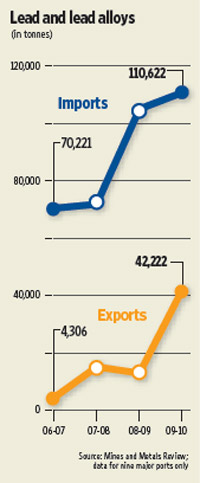 In the first of a two-part series, Mint reveals how rising demand and the entry of new firms into the market, along with lack of proper attention to collection and recycling, have led to increased levels of lead exposure among factory workers....Read Full Story In the first of a two-part series, Mint reveals how rising demand and the entry of new firms into the market, along with lack of proper attention to collection and recycling, have led to increased levels of lead exposure among factory workers....Read Full Story
Green technology is a technology that is environment-friendly and ensures that natural resources are conserved. Green technology is the ‘future’ at large, and the main aim of this innovative technology is to avoid any deterioration to the environmental resources....Read Full Story
The Coimbatore Corporation plans to begin in January next year privatised door-to-door collection of garbage in nine model wards in the city....Read Full Story
New Delhi: Natural rubber prices remained unchanged on Monday at record Rs.207.5 a kg in Kerala, despite the government's decision to cut import duty to 7.5 per cent to boost the domestic availability....Read Full Story
Climate change is affecting the cultivation of Assam tea, with rising temperatures reducing yields and altering the distinctive flavour of India's most popular drink, researchers say....Read Full Story
Coal deficit being faced by power utilities in country is expected to double to 104 MT in next fiscal....Read Full Story
Issue 30
, 2010
As the overwhelming evidence of accelerating climate change builds up, governments across the world see in the ‘built up environment' an opportunity to bring down greenhouse gas emission to address the crisis, says Mr Tony Arnel, Chairman, World Green Building Council....Read Full Story
The Commonwealth Games are nearly half way through but the 'green calculators' - to calculate the carbon footprint during the mega sporting event - are yet to come up at the Games Village and six sporting venues....Read Full Story
Environment minister Jairam Ramesh has expressed hope that enactment of a new law would pave the way for raising "real" environment issues instead of land acquisition woes related to projects awaiting clearance....Read Full Story
The offloading of Pune’s garbage at Urali Devachi might be a cause for much angst among the villagers, but the dump has turned a surprisingly welcome sight for ornithologists....Read Full Story
A school dropout, 28-year-old Simarjeet Singh Aulakh from Punjab’s Faridkot district now gives lessons in beekeeping....Read Full Story
The Jamia Millia Islamia University Monday submitted a draft master plan on feasibility of rainwater harvesting for Gurgaon....Read Full Story
After ensuring the fact that the city has a functional solid waste management system in place, the municipal corporation is planning to have a construction and demolition waste recycling plant....Read Full Story
The state steel and mines department would accept most of the draft guidelines on joint ventures (JVs) and Memorandum of Understanding (MoU) issued recently by the Department of Mines, Government of India....Read Full Story
National Thermal Power Corporation (NTPC) has executed a Memorandum of Understanding with Government of Punjab and Pubjab State Power Corporation on 07 October 2010 for setting up 2640 MW (4x660MW) coal based Thermal Power Project at Gidarbaha in the State of Pubjab....Read Full Story
Issue 29
, 2010
 And, perhaps, its Waterloo. With the Union ministry of environment and forests refusing to allow the company to mine bauxite in Orissa's Niyamgiri hill, the UK-based mining giant's troubles have multiplied....Read Full Story And, perhaps, its Waterloo. With the Union ministry of environment and forests refusing to allow the company to mine bauxite in Orissa's Niyamgiri hill, the UK-based mining giant's troubles have multiplied....Read Full Story
 Now, a 'green candle' that does not pollute. A Punjab-based company, the country's largest producer, processor and exporter of honey, will soon launch candles from bee wax, a byproduct for bee-keepers....Read Full Story Now, a 'green candle' that does not pollute. A Punjab-based company, the country's largest producer, processor and exporter of honey, will soon launch candles from bee wax, a byproduct for bee-keepers....Read Full Story
 Pesticide industry body loses defamation case against CSE, twice
The Crop Care Federation of India (CCFI), a pesticide industry body, has twice lost the defamation case it filed against Centre for Science and Environment, New Delhi....Read Full Story Pesticide industry body loses defamation case against CSE, twice
The Crop Care Federation of India (CCFI), a pesticide industry body, has twice lost the defamation case it filed against Centre for Science and Environment, New Delhi....Read Full Story
 CHENNAI: Tamil Nadu Friday banned use of old-style, energy intensive incandescent bulbs in offices across the state and ordered the use of compact fluorescent lamps (CFL) to save power....Read Full Story CHENNAI: Tamil Nadu Friday banned use of old-style, energy intensive incandescent bulbs in offices across the state and ordered the use of compact fluorescent lamps (CFL) to save power....Read Full Story
 Chennai, Aug 20 (PTI) More than 120 tonnes of e-waste imported from various contries by different companies in violation of Customs Act and hazardous waste management rules have been seized at the port here....Read Full Story Chennai, Aug 20 (PTI) More than 120 tonnes of e-waste imported from various contries by different companies in violation of Customs Act and hazardous waste management rules have been seized at the port here....Read Full Story
 In case of another approval being taken back because of environment issues, Indian authorities have overturned an approval given to Lafarge for setting up unit in North India....Read Full Story In case of another approval being taken back because of environment issues, Indian authorities have overturned an approval given to Lafarge for setting up unit in North India....Read Full Story
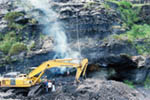 Environment activists, rejoicing at the recent jolt to the Vedanta mining project in Orissa, seem to be on a collision course yet again with industry groups in the country....Read Full Story Environment activists, rejoicing at the recent jolt to the Vedanta mining project in Orissa, seem to be on a collision course yet again with industry groups in the country....Read Full Story
 The cost of keeping tigers alive in the wild is about $80m (£50m) per year, say conservationists - but only about $50m (£30m) per year is being pledged....Read Full Story The cost of keeping tigers alive in the wild is about $80m (£50m) per year, say conservationists - but only about $50m (£30m) per year is being pledged....Read Full Story
 The Punjab Pollution Control Board (PPCB) has issued a show cause notice to the city’s Christian Medical College & Hospital regarding gross violations of the Biomedical Waste (Management & Handling) Rules of 1998...Read Full Story The Punjab Pollution Control Board (PPCB) has issued a show cause notice to the city’s Christian Medical College & Hospital regarding gross violations of the Biomedical Waste (Management & Handling) Rules of 1998...Read Full Story
Real estate development along Mumbai’s multi-billion-dollar coastline has got an immediate boost with the relaxation of the new Coastal Regulation Zone (CRZ) 2010 notification....Read Full Story
 According to a study conducted by Centre for Science and Environment on major honey brands, most of the top honey brands contain considerable quantity of antibiotics which may have serious effects on health....Read Full Story According to a study conducted by Centre for Science and Environment on major honey brands, most of the top honey brands contain considerable quantity of antibiotics which may have serious effects on health....Read Full Story
The Government is studying the green tribunal order quashing clearance granted to French giant Lafarge promoted Rs 900-crore integrated cement plant in Himachal Pradesh,...Read Full Story
A fortnight after the Ministry of Environment and Forests (MoEF) served a show-cause notice on Vedanta Aluminium, asking why its existing one million tonne alumina refinery at Lanjigarh in Kalahandi district in Orissa should not be closed down, the embattled company tod...Read Full Story
Issue 28
, 2010
 The oil leak from MSC Chitra could not have happened at a worse time. This is the breeding season for marine animals, and environmentalists fear that the spill may impact not only the breeding cycle, but also much more in the future if the oil contaminates the sediments...Read Full Story The oil leak from MSC Chitra could not have happened at a worse time. This is the breeding season for marine animals, and environmentalists fear that the spill may impact not only the breeding cycle, but also much more in the future if the oil contaminates the sediments...Read Full Story
 Government assured Parliament that it would soon carry out a research on the effects of chemicals like oxytocin and copper sulphate on human health. These chemicals are being illegally used to ripen fruits and vegetables....Read Full Story Government assured Parliament that it would soon carry out a research on the effects of chemicals like oxytocin and copper sulphate on human health. These chemicals are being illegally used to ripen fruits and vegetables....Read Full Story
 Even as the ‘Adi Amavasai' celebrations of Sorimuthu Ayyanar Temple within the Kalakkad – Mundanthurai Tiger Reserve (KMTR) are going on, Collector M. Jayaraman visited the temple and inspected the surroundings on Tuesday evening and instructed the officials to strictly...Read Full Story Even as the ‘Adi Amavasai' celebrations of Sorimuthu Ayyanar Temple within the Kalakkad – Mundanthurai Tiger Reserve (KMTR) are going on, Collector M. Jayaraman visited the temple and inspected the surroundings on Tuesday evening and instructed the officials to strictly...Read Full Story
 Regular use of paracetamol, the over-the-counter painkiller, can more than double the risk of developing asthma and serious allergies, findings of a new study claim....Read Full Story Regular use of paracetamol, the over-the-counter painkiller, can more than double the risk of developing asthma and serious allergies, findings of a new study claim....Read Full Story
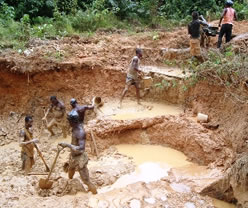 The Centre has set up a Commission of Inquiry to look into cases of illegal mining of coal, iron ore and manganese across the country. The decision seems to be a fallout of the cases involving the controversial Reddy brothers in Karnataka and some multinational companie...Read Full Story The Centre has set up a Commission of Inquiry to look into cases of illegal mining of coal, iron ore and manganese across the country. The decision seems to be a fallout of the cases involving the controversial Reddy brothers in Karnataka and some multinational companie...Read Full Story
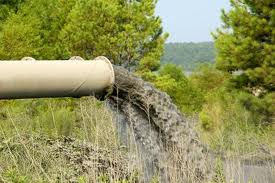 Should industrialisation be at the cost of environment? In the Dhaula area of Barnala, where the Trident group has factories, it seems the industrialists don’t care for environment and have an eye only on making money. The various units of the group are directly pumping...Read Full Story Should industrialisation be at the cost of environment? In the Dhaula area of Barnala, where the Trident group has factories, it seems the industrialists don’t care for environment and have an eye only on making money. The various units of the group are directly pumping...Read Full Story
 The Government, for the first time, has accepted the guilt of Bhopal Gas Tragedy. Replying to a day-long debate on the subject, Home Minister P Chidambaram told Parliament: “I hope that 25 years later we can all look back with a deep sense of regret and guilt that we di...Read Full Story The Government, for the first time, has accepted the guilt of Bhopal Gas Tragedy. Replying to a day-long debate on the subject, Home Minister P Chidambaram told Parliament: “I hope that 25 years later we can all look back with a deep sense of regret and guilt that we di...Read Full Story
 The government on Tuesday assured the Rajya Sabha that fishermen who could not carry on with their vocation after the August 7 Mumbai oil spill would be given compensation after the impact on them was assessed....Read Full Story The government on Tuesday assured the Rajya Sabha that fishermen who could not carry on with their vocation after the August 7 Mumbai oil spill would be given compensation after the impact on them was assessed....Read Full Story
 We are all big consumers of electronics, from multiple cellphones to our big-screen television sets to the little computer that runs our car. But all of them have a life, at the end of which it becomes garbage, waste that goes into landfills, and then pollutes the earth...Read Full Story We are all big consumers of electronics, from multiple cellphones to our big-screen television sets to the little computer that runs our car. But all of them have a life, at the end of which it becomes garbage, waste that goes into landfills, and then pollutes the earth...Read Full Story
The Centre has informed the Parliament that a group of ministers, among others, is looking at regulatory deficiencies regarding illegal mining in the country....Read Full Story
 Though the city generates over 3,500 tonnes of waste daily, so far a comprehensive solution for management of solid waste has eluded policy-makers....Read Full Story Though the city generates over 3,500 tonnes of waste daily, so far a comprehensive solution for management of solid waste has eluded policy-makers....Read Full Story
Issue 27
, 2010
 Mumbai: Cracking the whip on all those throwing plastic bags in drains, the Brihanmumbai Municipal Corporation (BMC) has fined nearly 150 people and collected a fine of Rs1.32 lakh in a fortnight....Read Full Story Mumbai: Cracking the whip on all those throwing plastic bags in drains, the Brihanmumbai Municipal Corporation (BMC) has fined nearly 150 people and collected a fine of Rs1.32 lakh in a fortnight....Read Full Story
 The Confederation of Indian Industry and the Andhra Pradesh Technology Development Corporation have come up with a strategy for solid waste management, perceived to be a major urban management issue needing funds and focus....Read Full Story The Confederation of Indian Industry and the Andhra Pradesh Technology Development Corporation have come up with a strategy for solid waste management, perceived to be a major urban management issue needing funds and focus....Read Full Story
 Environmentalists in the Capital have accused the Delhi Government of dragging its feet over the issue of managing hazardous waste as the city is yet to have a proper data bank of its scrap dealers, the amount of hazardous waste being generated and its proper disposal....Read Full Story Environmentalists in the Capital have accused the Delhi Government of dragging its feet over the issue of managing hazardous waste as the city is yet to have a proper data bank of its scrap dealers, the amount of hazardous waste being generated and its proper disposal....Read Full Story
 Police and local bodies will now have to ask devotees to remove clothes and ornaments from idols before immersing them into water bodies....Read Full Story Police and local bodies will now have to ask devotees to remove clothes and ornaments from idols before immersing them into water bodies....Read Full Story
 Next time you think of adorning your children with in-vogue costume jewellery, pause and think. These flamboyant, mix and match embellishments have been found to contain as much as six times more than the prescribed limit of lead, a potent neurotoxin capable of IQ defic...Read Full Story Next time you think of adorning your children with in-vogue costume jewellery, pause and think. These flamboyant, mix and match embellishments have been found to contain as much as six times more than the prescribed limit of lead, a potent neurotoxin capable of IQ defic...Read Full Story
 India would be confronted with the threat of accumulation of E-waste in the coming years if necessary policy and regulations are not put in place to check its growth now, says a paper presented at the recently held 'Kerala Environment Congress-2010.'...Read Full Story India would be confronted with the threat of accumulation of E-waste in the coming years if necessary policy and regulations are not put in place to check its growth now, says a paper presented at the recently held 'Kerala Environment Congress-2010.'...Read Full Story
 The country’s premier technology institutes, the IITs, have been roped in to help develop a plan for cleaning the Ganga. To implement the scheme, the Union environment ministry has signed an agreement with a consortium of seven IITs to prepare a comprehensive basin mana...Read Full Story The country’s premier technology institutes, the IITs, have been roped in to help develop a plan for cleaning the Ganga. To implement the scheme, the Union environment ministry has signed an agreement with a consortium of seven IITs to prepare a comprehensive basin mana...Read Full Story
 BATHINDA: After discovery of high levels of uranium in hair samples of a large number of mentally retarded children in Punjab’s Malwa region last year, another study suggests Punjab has become a hotspot of environmental toxicity of multiple types....Read Full Story BATHINDA: After discovery of high levels of uranium in hair samples of a large number of mentally retarded children in Punjab’s Malwa region last year, another study suggests Punjab has become a hotspot of environmental toxicity of multiple types....Read Full Story
 New Delhi: The herbal remedies for various diseases may boomerang if proper care is not taken in their application, caution medical experts....Read Full Story New Delhi: The herbal remedies for various diseases may boomerang if proper care is not taken in their application, caution medical experts....Read Full Story
 As the planet warms, floods, storms, rising seas and drought will uproot millions of people, and with dire wider consequences. Barack Obama, collecting his Nobel peace prize, said that climate change “will fuel more conflict for decades”. He took the analysis not from e...Read Full Story As the planet warms, floods, storms, rising seas and drought will uproot millions of people, and with dire wider consequences. Barack Obama, collecting his Nobel peace prize, said that climate change “will fuel more conflict for decades”. He took the analysis not from e...Read Full Story
 Residents living in the vicinity of three major landfills — Bhalswa, Okhla and Ghazipur—in the city will get rid of the foul smell coming out from these sites soon....Read Full Story Residents living in the vicinity of three major landfills — Bhalswa, Okhla and Ghazipur—in the city will get rid of the foul smell coming out from these sites soon....Read Full Story
Issue 26
, 2010
 Asserting that the UPA government was committed to cleaning up the Ganga, Prime Minister Manmohan Singh on June 1, 2010 said no untreated waste and industrial effluents would flow into the river by 2020. “Under ‘Mission Clean Ganga', it would be ensured that by 2020 no ...Read Full Story Asserting that the UPA government was committed to cleaning up the Ganga, Prime Minister Manmohan Singh on June 1, 2010 said no untreated waste and industrial effluents would flow into the river by 2020. “Under ‘Mission Clean Ganga', it would be ensured that by 2020 no ...Read Full Story
 Millions of rupees were already spent in the past and investment of huge funds is currently being made to clean the national river Ganga.
But, not much positive change can be seen in the health of the river. Local authorities claim three dyeing and printing units that ...Read Full Story Millions of rupees were already spent in the past and investment of huge funds is currently being made to clean the national river Ganga.
But, not much positive change can be seen in the health of the river. Local authorities claim three dyeing and printing units that ...Read Full Story
 Large number of children of Teja Rawela and Dona Nanka villages falling in the Jalalabad Assembly segment are exhibiting stunted growth. Young girls are facing premature greying and thinning of hair and the number of such kids is much larger than the normal population d...Read Full Story Large number of children of Teja Rawela and Dona Nanka villages falling in the Jalalabad Assembly segment are exhibiting stunted growth. Young girls are facing premature greying and thinning of hair and the number of such kids is much larger than the normal population d...Read Full Story
 First the bad news: More than half of 130 Indian cities being monitored for air pollution are at critically polluted levels. Now the good news: Air pollution in Indian cities has been proved to be reversible, with improvements in public transport or changing over to gre...Read Full Story First the bad news: More than half of 130 Indian cities being monitored for air pollution are at critically polluted levels. Now the good news: Air pollution in Indian cities has been proved to be reversible, with improvements in public transport or changing over to gre...Read Full Story
 The newly elected Mayor has expressed apprehension about the three landfill sites of the Municipal Corporation of Delhi (MCD) as they are already full beyond their capacity. The Mayor, P.R. Sawhney, said the corporation was facing space crunch and did not have place for...Read Full Story The newly elected Mayor has expressed apprehension about the three landfill sites of the Municipal Corporation of Delhi (MCD) as they are already full beyond their capacity. The Mayor, P.R. Sawhney, said the corporation was facing space crunch and did not have place for...Read Full Story
 The city which produces 8,000 metric tons of e-waste each year, ranks third in the country when it comes to e-waste generation, thanks to the lack of re-cycling and treatment units.Mr Biswajit Mukherjee, senior law officer of West bengal Pollution Control Board (WBPCB),...Read Full Story The city which produces 8,000 metric tons of e-waste each year, ranks third in the country when it comes to e-waste generation, thanks to the lack of re-cycling and treatment units.Mr Biswajit Mukherjee, senior law officer of West bengal Pollution Control Board (WBPCB),...Read Full Story
 The Punjab Pollution Control Board (PPCB) is not working to reduce pollution. Noted environmentalist and PPCB member for one year Sant Balbir Singh Seechewal stated this at a workshop on Religion and Environment organised here by Mahatma Gandhi State of Public Administr...Read Full Story The Punjab Pollution Control Board (PPCB) is not working to reduce pollution. Noted environmentalist and PPCB member for one year Sant Balbir Singh Seechewal stated this at a workshop on Religion and Environment organised here by Mahatma Gandhi State of Public Administr...Read Full Story
 In a move that could cause concern, the telecom department has given the mobile operators six more months to self-certify that radiation from their towers meet the prescribed limits....Read Full Story In a move that could cause concern, the telecom department has given the mobile operators six more months to self-certify that radiation from their towers meet the prescribed limits....Read Full Story
 In a bid to have better outcome in biomedical waste management through upgraded technology, the Directorate Health Services (DHS) has gone into overdrive to have new biomedical waste management (BMW) facilities, one at Okhla and other at Nilothi in outer Delhi....Read Full Story In a bid to have better outcome in biomedical waste management through upgraded technology, the Directorate Health Services (DHS) has gone into overdrive to have new biomedical waste management (BMW) facilities, one at Okhla and other at Nilothi in outer Delhi....Read Full Story
Issue 25
, 2010
 Concerned over the threat posed to the environment by e-waste generated in the State, the Karnataka State Pollution Control Board (KSPCB) has launched a project ‘Crystal’ to bring waste treating companies together and help them in treatment of waste using state-of-the-a...Read Full Story Concerned over the threat posed to the environment by e-waste generated in the State, the Karnataka State Pollution Control Board (KSPCB) has launched a project ‘Crystal’ to bring waste treating companies together and help them in treatment of waste using state-of-the-a...Read Full Story
 The Atomic Energy Regulatory Board organised a radiation safety awareness programme for metal scrap dealers at Mayapuri here on May 6, 2010y.Sharing details of the operation carried out by Bhabha Atomic Research Centre and Atomic Energy Regulatory Board experts to recov...Read Full Story The Atomic Energy Regulatory Board organised a radiation safety awareness programme for metal scrap dealers at Mayapuri here on May 6, 2010y.Sharing details of the operation carried out by Bhabha Atomic Research Centre and Atomic Energy Regulatory Board experts to recov...Read Full Story
 The Madhya Pradesh Pollution Control Board (MPPCB) has given clearance to a private waste management company to dispose 346 tonnes of toxic waste of the now-defunct Union Carbide Corporation (UCC)'s pesticide plant, officials said.Madhya Pradesh Waste Management Project...Read Full Story The Madhya Pradesh Pollution Control Board (MPPCB) has given clearance to a private waste management company to dispose 346 tonnes of toxic waste of the now-defunct Union Carbide Corporation (UCC)'s pesticide plant, officials said.Madhya Pradesh Waste Management Project...Read Full Story
 The state government is keen to reduce its carbon footprint. The Environment Department has created a list of instructions that may soon become mandatory for all government offices. The list will be put up before the state cabinet for approval on Thursday. “We are commi...Read Full Story The state government is keen to reduce its carbon footprint. The Environment Department has created a list of instructions that may soon become mandatory for all government offices. The list will be put up before the state cabinet for approval on Thursday. “We are commi...Read Full Story
 On April 10, 2007, a uranium pipeline burst in Jaduguda, causing a spill of the fuel that keeps our nuclear energy schemes running. Further, adds Half Life, a report on radioactivity in India by environmental group Toxic Links, on August 16, 2008, another uranium pipe b...Read Full Story On April 10, 2007, a uranium pipeline burst in Jaduguda, causing a spill of the fuel that keeps our nuclear energy schemes running. Further, adds Half Life, a report on radioactivity in India by environmental group Toxic Links, on August 16, 2008, another uranium pipe b...Read Full Story
A day after it emerged that the radioactive scrap that killed one and poisoned seven came from Delhi University, the central varsity got a showcause notice from the Atomic Energy Regulatory Board.The Board directed DU to stop nuclear radiation-related operations for two...Read Full Story
To walk through the squalor of Mayapuri, a grimy industrial area of hundreds of tiny scrap-metal shops, is to bear witness to the industrial detritus of the world: tons of rusted iron pipes, twisted steel poles, copper and other discarded metals from Europe, Russia, Jap...Read Full Story
 The Delhi government will announce new, stricter guidelines for disposal of bio-medical waste by hospitals. The decision came after the recent incident of radioactive waste ending up in Mayapuri scrap market that claimed a life, and a recent Central Pollution Control Bo...Read Full Story The Delhi government will announce new, stricter guidelines for disposal of bio-medical waste by hospitals. The decision came after the recent incident of radioactive waste ending up in Mayapuri scrap market that claimed a life, and a recent Central Pollution Control Bo...Read Full Story
Issue 24
, 2010
 The tanneries in Ambur and Vaniyambadi regions have been given a deadline up to this month end to complete the installation of the reverse osmosis system for treating effluents through individual and common treatment plants. This was disclosed by district environment en...Read Full Story The tanneries in Ambur and Vaniyambadi regions have been given a deadline up to this month end to complete the installation of the reverse osmosis system for treating effluents through individual and common treatment plants. This was disclosed by district environment en...Read Full Story
 A day after HT exposed how iron ore dust from West Singhbhum’s mines and crusher units was choking and killing locals, the Jharkhand government swung into action. “The government will shut down all polluting crushers and mining companies,” said Jharkhand Food and Civil ...Read Full Story A day after HT exposed how iron ore dust from West Singhbhum’s mines and crusher units was choking and killing locals, the Jharkhand government swung into action. “The government will shut down all polluting crushers and mining companies,” said Jharkhand Food and Civil ...Read Full Story
 Painting a frightening picture of the extent of violation of children's rights in the mining areas across the country, HAQ, a child rights organisation, has said that the government must recognise that children are impacted by mining.“The impacts must be considered and ...Read Full Story Painting a frightening picture of the extent of violation of children's rights in the mining areas across the country, HAQ, a child rights organisation, has said that the government must recognise that children are impacted by mining.“The impacts must be considered and ...Read Full Story
 Member of the Ridge Management Board (RMB) on Monday told the Supreme Court that it has given no green clearance to Municipal Corporation of Delhi's plan to create a new garbage disposal dump at the abandoned Bhatti mines area in the Ridge area. Citing a 10-year-old stu...Read Full Story Member of the Ridge Management Board (RMB) on Monday told the Supreme Court that it has given no green clearance to Municipal Corporation of Delhi's plan to create a new garbage disposal dump at the abandoned Bhatti mines area in the Ridge area. Citing a 10-year-old stu...Read Full Story
 The Comptroller and Auditor-General of India is planning a comprehensive audit of water pollution in India that would cover the extent and causes of pollution of lakes, rivers and ground water. The aim of the audit would be to identify critical issues and suggest soluti...Read Full Story The Comptroller and Auditor-General of India is planning a comprehensive audit of water pollution in India that would cover the extent and causes of pollution of lakes, rivers and ground water. The aim of the audit would be to identify critical issues and suggest soluti...Read Full Story
 Vedanta Aluminium has violated forest conservation guidelines and failed to follow the Forest Rights Act in letter and in spirit at a proposed bauxite mine project in the Niyamgiri Hills of Orissa, according to a report submitted by a three-member team to the Union Envi...Read Full Story Vedanta Aluminium has violated forest conservation guidelines and failed to follow the Forest Rights Act in letter and in spirit at a proposed bauxite mine project in the Niyamgiri Hills of Orissa, according to a report submitted by a three-member team to the Union Envi...Read Full Story
 Every lease holder will have to rehabilitate and reclaim the area once mining ends in the Aravallis. The Haryana government has proposed an extensive rehabilitation plan in the Aravallis and a detailed proposal has been submitted before the special bench of the Supreme ...Read Full Story Every lease holder will have to rehabilitate and reclaim the area once mining ends in the Aravallis. The Haryana government has proposed an extensive rehabilitation plan in the Aravallis and a detailed proposal has been submitted before the special bench of the Supreme ...Read Full Story
 Five people fell seriously ill after being exposed to some “radioactive material”, reportedly present in medical waste equipment at a scrap dealer’s shop in Mayapuri in west Delhi on Thursday night, police said.The skin of two persons reportedly turned completely black....Read Full Story Five people fell seriously ill after being exposed to some “radioactive material”, reportedly present in medical waste equipment at a scrap dealer’s shop in Mayapuri in west Delhi on Thursday night, police said.The skin of two persons reportedly turned completely black....Read Full Story
 A multi-dimensional art project that looks to initiate the public display of art works begins in the Capital today. In Context: Public. Art.Ecology focuses on social interventions in the public sphere, with themes ranging from weather patterns and the effects of climate...Read Full Story A multi-dimensional art project that looks to initiate the public display of art works begins in the Capital today. In Context: Public. Art.Ecology focuses on social interventions in the public sphere, with themes ranging from weather patterns and the effects of climate...Read Full Story
 Sunscreen might protect your skin from UV rays but it is actually bad for your health as a new study has found that nano particles present in it are toxic. Researchers at the Department of Pharmacology and Toxicology of University of Utah found evidence that sunscreens ...Read Full Story Sunscreen might protect your skin from UV rays but it is actually bad for your health as a new study has found that nano particles present in it are toxic. Researchers at the Department of Pharmacology and Toxicology of University of Utah found evidence that sunscreens ...Read Full Story
 Environment is an important aspect not only for the environmentalists but also for the common man, said Kailash Vijayvargiya, Science and Technology Minister. He was speaking during the inaugural session of two-day seminar organised in the Jehan Numa Palace, under the j...Read Full Story Environment is an important aspect not only for the environmentalists but also for the common man, said Kailash Vijayvargiya, Science and Technology Minister. He was speaking during the inaugural session of two-day seminar organised in the Jehan Numa Palace, under the j...Read Full Story
 As part of its 40th Anniversary, Earth Day is helping organize and support many programs throughout India....Read Full Story As part of its 40th Anniversary, Earth Day is helping organize and support many programs throughout India....Read Full Story
The Mayapuri radiation incident has for the first time exposed the lack of control on the usage of radioactive material and raised fears whether the government is really standing guard against toxic radiation. This is because of the presence of Cobalt 60 and other highl...Read Full Story
Issue 23
, 2010
 In the 1850s, the Thames in London was so polluted and stinking that the Parliament had to be shifted away from the river, says Robert Oates, director of the Thames River Restoration Trust. A century and half on, the river is much cleaner and Britain, he says, is now in...Read Full Story In the 1850s, the Thames in London was so polluted and stinking that the Parliament had to be shifted away from the river, says Robert Oates, director of the Thames River Restoration Trust. A century and half on, the river is much cleaner and Britain, he says, is now in...Read Full Story
 Sudden decline in IQ levels of children and unexplained retardation or hyperactivity among them can now be traced to unacceptably high levels of lead in their blood-sugar levels. In a significant study that could form basis of India’s first legislation on lead-free pain...Read Full Story Sudden decline in IQ levels of children and unexplained retardation or hyperactivity among them can now be traced to unacceptably high levels of lead in their blood-sugar levels. In a significant study that could form basis of India’s first legislation on lead-free pain...Read Full Story
 With the Ministry of Commerce according its principle approval to Rs 60 crore Common Effluent Treatment Plant (CETP) for the industrial hub of Baddi-Barotiwala-Nalagarh (BBN) at a meeting in Delhi today, the pollution woes of the area would be eased. Officials of the BB...Read Full Story With the Ministry of Commerce according its principle approval to Rs 60 crore Common Effluent Treatment Plant (CETP) for the industrial hub of Baddi-Barotiwala-Nalagarh (BBN) at a meeting in Delhi today, the pollution woes of the area would be eased. Officials of the BB...Read Full Story
 It was quite shocking to see a press report that almost 1500 tonnes of medical waste such as hypodermic needles, syringes, surgical masks gloves, dead bodies, human limbs and blood socked cottons dumped in Kodungaiyou load fill in Chennai. This steep rise in the toxic a...Read Full Story It was quite shocking to see a press report that almost 1500 tonnes of medical waste such as hypodermic needles, syringes, surgical masks gloves, dead bodies, human limbs and blood socked cottons dumped in Kodungaiyou load fill in Chennai. This steep rise in the toxic a...Read Full Story
 With an aim to upgrade the sewage system of Allahabad, the National Ganga River Basin Authority (NGRBA) has sanctioned over Rs 315 crore project for this holy city. "The Empowered Steering Committee of the NGRBA, that met recently, has sanctioned a Rs 315.30 crore proje...Read Full Story With an aim to upgrade the sewage system of Allahabad, the National Ganga River Basin Authority (NGRBA) has sanctioned over Rs 315 crore project for this holy city. "The Empowered Steering Committee of the NGRBA, that met recently, has sanctioned a Rs 315.30 crore proje...Read Full Story
 An ecological code for the Commonwealth Games was released on Wednesday, encapsulating a series of measures to be taken by the Delhi government as well as the Games organising committee to offset the carbon footprint left by the event.The Delhi 2010 Ecological Code was ...Read Full Story An ecological code for the Commonwealth Games was released on Wednesday, encapsulating a series of measures to be taken by the Delhi government as well as the Games organising committee to offset the carbon footprint left by the event.The Delhi 2010 Ecological Code was ...Read Full Story
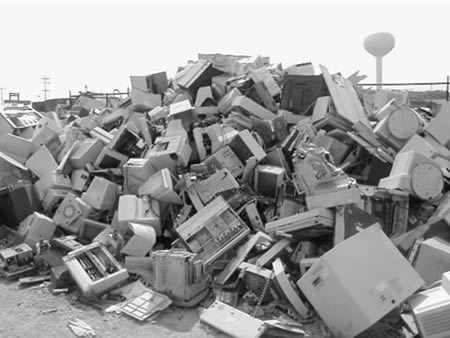 With Delhi emerging as a leading hub of electronic waste dumping — according to estimates, Delhi dumps 12,000 tonnes of e-waste every day, next only to Mumbai — the Delhi government has finally woken up to the need for a clear mandate on e-waste disposal in the city. In...Read Full Story With Delhi emerging as a leading hub of electronic waste dumping — according to estimates, Delhi dumps 12,000 tonnes of e-waste every day, next only to Mumbai — the Delhi government has finally woken up to the need for a clear mandate on e-waste disposal in the city. In...Read Full Story
 We all know Yamuna water is not fit for bathing, let alone drinking. But the latest report from the Central Pollution Control Board, sure to raise a stink before the Commonwealth Games in the capital, says the river is so full of excreta that its water resembles that of...Read Full Story We all know Yamuna water is not fit for bathing, let alone drinking. But the latest report from the Central Pollution Control Board, sure to raise a stink before the Commonwealth Games in the capital, says the river is so full of excreta that its water resembles that of...Read Full Story
 Customs officials have seized about 500 tonnes of hazardous waste, which arrived at Tuticorin port in Tamil Nadu from Greece and Reunion Island, a territory controlled by Greece and France. The hazardous waste in 20 containers was to be received in the name of a paper f...Read Full Story Customs officials have seized about 500 tonnes of hazardous waste, which arrived at Tuticorin port in Tamil Nadu from Greece and Reunion Island, a territory controlled by Greece and France. The hazardous waste in 20 containers was to be received in the name of a paper f...Read Full Story
 Bio-medical waste is being dumped in the open in Noida district hospital. It is disposed of in the hospital compound and in front of the operation theatre gate. The waste includes injections, needles, blood-soaked dressings, cotton, bandages, etc. Though separate waste ...Read Full Story Bio-medical waste is being dumped in the open in Noida district hospital. It is disposed of in the hospital compound and in front of the operation theatre gate. The waste includes injections, needles, blood-soaked dressings, cotton, bandages, etc. Though separate waste ...Read Full Story
 Two days after Prime Minister Manmohan Singh assured the Parliament of “no-panic” on the food front, an alarming new report by the World Bank has shown that an increasing number of aquifers in India are reaching unsustainable levels of exploitation, endangering long-ter...Read Full Story Two days after Prime Minister Manmohan Singh assured the Parliament of “no-panic” on the food front, an alarming new report by the World Bank has shown that an increasing number of aquifers in India are reaching unsustainable levels of exploitation, endangering long-ter...Read Full Story
 The Master Plan Delhi 2021 calls for environment assessment before any new project or upgradation of the extant infrastructure. However, the Municipal Corporation of Delhi (MCD) and Delhi Development Authority (DDA) hardly seem to care about it. Currently, the civic bod...Read Full Story The Master Plan Delhi 2021 calls for environment assessment before any new project or upgradation of the extant infrastructure. However, the Municipal Corporation of Delhi (MCD) and Delhi Development Authority (DDA) hardly seem to care about it. Currently, the civic bod...Read Full Story
 Researchers at IBM on Tuesday said that they have discovered a way to make an Earth-friendly plastic from plants that could replace petroleum-based products, which are tough on the environment. The breakthrough promises biodegradable plastics made in a way that saves on...Read Full Story Researchers at IBM on Tuesday said that they have discovered a way to make an Earth-friendly plastic from plants that could replace petroleum-based products, which are tough on the environment. The breakthrough promises biodegradable plastics made in a way that saves on...Read Full Story
Issue 22
, 2010
 A warning that most of the Himalayan glaciers will melt by 2035 owing to climate change is likely to be retracted after the United Nations body that issued it admitted to a series of scientific blunders. Two years ago, the Inter-governmental Panel on Climate Change (IPC...Read Full Story A warning that most of the Himalayan glaciers will melt by 2035 owing to climate change is likely to be retracted after the United Nations body that issued it admitted to a series of scientific blunders. Two years ago, the Inter-governmental Panel on Climate Change (IPC...Read Full Story
 A week before the government is expected to lift a two-year ban on import of toys, a study has found that many toys sold in India contain an asthma-triggering chemical way above European limits. Content of phthalates — chemical used to soften plastic — is three to 160 t...Read Full Story A week before the government is expected to lift a two-year ban on import of toys, a study has found that many toys sold in India contain an asthma-triggering chemical way above European limits. Content of phthalates — chemical used to soften plastic — is three to 160 t...Read Full Story
 The pace at which Rajasthan is drawing groundwater for consumption has overtaken the pace at which it is replenished. At this rate, the state's groundwater table - its main source of water - will soon run dry, experts warn.In 140 of the state's 237 blocks, the water tab...Read Full Story The pace at which Rajasthan is drawing groundwater for consumption has overtaken the pace at which it is replenished. At this rate, the state's groundwater table - its main source of water - will soon run dry, experts warn.In 140 of the state's 237 blocks, the water tab...Read Full Story
 To make Delhi an environment-friendly city like London or New York, the city will get country's first noise polluting monitoring system and air polluting forecasting system before Commonwealth Games in October.“Both the systems synchronized into each other will be in pl...Read Full Story To make Delhi an environment-friendly city like London or New York, the city will get country's first noise polluting monitoring system and air polluting forecasting system before Commonwealth Games in October.“Both the systems synchronized into each other will be in pl...Read Full Story
The Centre has imposed temporary restrictions on new development projects in industrial clusters that score more than 70 points on the Comprehensive Environmental Pollution Index (CEPI) issued by the Ministry of Environment and Forests. The restrictions on projects from...Read Full Story
The environment ministry has banned till August any new projects in 43 industrial hubs identified recently by the Central Pollution Control Board (CPCB) as "critically" polluted."The directives will remain in effect till August by which time the pollution watchdog along...Read Full Story
 The campaign launched by civil society groups against the huge quantities of toxic waste being generated in India has forced the United Nations to send UN special reporters Okechukwu Ibeanu to get a first hand take on practices being followed here in New Delhi. Mr Ibean...Read Full Story The campaign launched by civil society groups against the huge quantities of toxic waste being generated in India has forced the United Nations to send UN special reporters Okechukwu Ibeanu to get a first hand take on practices being followed here in New Delhi. Mr Ibean...Read Full Story
 With the growth of the city’s IT sector, e-waste menace continues to plague the city. But the authorities are yet to come up with a solution for its disposal. Pune is one of the 10 Indian cities that generate large quantities of e-waste but it is yet to set up an e-wast...Read Full Story With the growth of the city’s IT sector, e-waste menace continues to plague the city. But the authorities are yet to come up with a solution for its disposal. Pune is one of the 10 Indian cities that generate large quantities of e-waste but it is yet to set up an e-wast...Read Full Story
 As the negotiations for signing free trade agreements (FTAs) with trade partners such as Japan and the European Union (EU) gather momentum, so do concerns over environment and waste dumping.Experts fear the FTAs would facilitate trade of wastes from the developed econom...Read Full Story As the negotiations for signing free trade agreements (FTAs) with trade partners such as Japan and the European Union (EU) gather momentum, so do concerns over environment and waste dumping.Experts fear the FTAs would facilitate trade of wastes from the developed econom...Read Full Story
 Is Gangotri glacier receding at an alarming pace: shrunken by a kilometre in the past 30 years? That’s the question often debated by environmentalists and glacial experts. On Sunday, the question was once again thrown open to experts and media through a short documentar...Read Full Story Is Gangotri glacier receding at an alarming pace: shrunken by a kilometre in the past 30 years? That’s the question often debated by environmentalists and glacial experts. On Sunday, the question was once again thrown open to experts and media through a short documentar...Read Full Story
The Maharashtra Pollution Control Board (MPCB) has finally woken up to the plight of people staying in Khed and other villages in the vicinity. The board has issued closure orders to over two dozen chemical industries at the Lote Parshuram industrial estate after water ...Read Full Story
 Accumulation of trash and extensive water pollution has curtailed the diving expeditions along state's only diving site, Grande Island, located off-port town of Vasco. The site, rich with algae and corals, is slowly getting chocked with garbage churned out from sea, whi...Read Full Story Accumulation of trash and extensive water pollution has curtailed the diving expeditions along state's only diving site, Grande Island, located off-port town of Vasco. The site, rich with algae and corals, is slowly getting chocked with garbage churned out from sea, whi...Read Full Story
 Rivers, seas and other water bodies in urban India are going to waste, with untreated water flowing into them like never before.Nearly 90 per cent of the liquid sewage — 38,254 million litres — generated daily by cities that flows into streams, rivers and sea doesn’t me...Read Full Story Rivers, seas and other water bodies in urban India are going to waste, with untreated water flowing into them like never before.Nearly 90 per cent of the liquid sewage — 38,254 million litres — generated daily by cities that flows into streams, rivers and sea doesn’t me...Read Full Story
 The former Karnataka Minister for Rural Development and Panchayati Raj, Shobha Karandlaje, has launched a fresh struggle in her new role as an activist: she spearheads a campaign for a nationwide ban on endosulfan, an organochlorine pesticide, used as an aerial spray on...Read Full Story The former Karnataka Minister for Rural Development and Panchayati Raj, Shobha Karandlaje, has launched a fresh struggle in her new role as an activist: she spearheads a campaign for a nationwide ban on endosulfan, an organochlorine pesticide, used as an aerial spray on...Read Full Story
 Despite the ban on discharge of industrial effluents into River Noyyal imposed by the Supreme Court, which came into force on (January 6), large quantities of coloured effluents were seen passing along its stretch in the city throughout the day . According to the Suprem...Read Full Story Despite the ban on discharge of industrial effluents into River Noyyal imposed by the Supreme Court, which came into force on (January 6), large quantities of coloured effluents were seen passing along its stretch in the city throughout the day . According to the Suprem...Read Full Story
The Centre has expressed confidence that by 2020 the polluted river Ganga would be cleaned and Rs. 15,000 crores will be spent on it.“The Union Government is confident of getting the holy Ganga river cleaned by 2020. Rs. 15,000 crores will be spent for this purpose unde...Read Full Story
Issue 21
, 2010
 Delhi may have become the first state in the country to finalise a city-specific 'Climate Change Action Plan', but one of the government's two proposals for notching up carbon credits — through a complete switch to CFL (compact fluorescent lamp) lights — has just lost i...Read Full Story Delhi may have become the first state in the country to finalise a city-specific 'Climate Change Action Plan', but one of the government's two proposals for notching up carbon credits — through a complete switch to CFL (compact fluorescent lamp) lights — has just lost i...Read Full Story
 After the solid, bio-medical, industrial and agricultural waste, now it will be the e-waste that may pose a grave challenge to the pollution regulators in Gujarat in the coming days. The extensive use of computers and other electronic devices — in government and corpora...Read Full Story After the solid, bio-medical, industrial and agricultural waste, now it will be the e-waste that may pose a grave challenge to the pollution regulators in Gujarat in the coming days. The extensive use of computers and other electronic devices — in government and corpora...Read Full Story
 The good news is Gurgaon has got its first aero aviation club offering fantasy flights (motorised paragliding) with paramotor trikes at the Aravali Hills. The flip side is it may have come at the cost of greenery.The hovering sound of the flying paramotor trikes in Rais...Read Full Story The good news is Gurgaon has got its first aero aviation club offering fantasy flights (motorised paragliding) with paramotor trikes at the Aravali Hills. The flip side is it may have come at the cost of greenery.The hovering sound of the flying paramotor trikes in Rais...Read Full Story
 In an initiative to make the Ganges pollution free, the city's municipal corporation has banned littering of pan masala pouches and polythene bags on the banks of the river .Mayor, Kanpur Nagar Nigam, Ravindra Patni said that those found violating the order would be fin...Read Full Story In an initiative to make the Ganges pollution free, the city's municipal corporation has banned littering of pan masala pouches and polythene bags on the banks of the river .Mayor, Kanpur Nagar Nigam, Ravindra Patni said that those found violating the order would be fin...Read Full Story
 While Environment Minister Jairam Ramesh believes glacier melting has little to do with climate change, expert Dr Shakeel Ramshoo has rung the alarm bells, saying the Valley’s biggest glacier, Kolahai, may disappear altogether. The convenor of the Climate Change Researc...Read Full Story While Environment Minister Jairam Ramesh believes glacier melting has little to do with climate change, expert Dr Shakeel Ramshoo has rung the alarm bells, saying the Valley’s biggest glacier, Kolahai, may disappear altogether. The convenor of the Climate Change Researc...Read Full Story
 The amount of groundwater pumped out by Delhiites and others across northern India is highest in the world and is contributing as much as 5% to the total rise in as 5% to the total rise in sea levels. A new study using satellite data has found that the region — a swathe...Read Full Story The amount of groundwater pumped out by Delhiites and others across northern India is highest in the world and is contributing as much as 5% to the total rise in as 5% to the total rise in sea levels. A new study using satellite data has found that the region — a swathe...Read Full Story
 The developing world will suffer about 80% of the damage from climate change despite accounting for only around a third of greenhouse gases in the atmosphere, the World Bank said on Sunday. “The damage of climate change, about 75 to 80%, will be suffered by developing c...Read Full Story The developing world will suffer about 80% of the damage from climate change despite accounting for only around a third of greenhouse gases in the atmosphere, the World Bank said on Sunday. “The damage of climate change, about 75 to 80%, will be suffered by developing c...Read Full Story
 By end of January this year Tamil Nadu government will put in place a policy specially to deal with the problem of e-waste . According to sources, if this happens, it will be the first State in the country to have such a policy. The move is a shot in the arm for e-waste...Read Full Story By end of January this year Tamil Nadu government will put in place a policy specially to deal with the problem of e-waste . According to sources, if this happens, it will be the first State in the country to have such a policy. The move is a shot in the arm for e-waste...Read Full Story
 The Central Pollution Control Board (CPCB) has asked cement units in the country to reduce their dependence on coal and turn towards the use of plastic waste to bridge the supply gap for coal....Read Full Story The Central Pollution Control Board (CPCB) has asked cement units in the country to reduce their dependence on coal and turn towards the use of plastic waste to bridge the supply gap for coal....Read Full Story
As the owner of Landscape Development, a family-run company that has been around for three decades now, Dev Gujral gives plants on rent to some of the big multi-national companies and PSUs. This is part of the bigger business of landscaping, which is the core activity. ...Read Full Story
Chennai might soon turn home for patients of respiratory diseases and cancer, if there is nothing done about the unexplored area of health impacts due to hazardous disposal of e-waste in the city, warn medical experts.
Unexplored, yet an emerging problem are the heal...Read Full Story
Even as global leaders are busy negotiating for a solution on climate change, the problem of e-waste management continues to haunt the domestic industry. According to a report released by the Manufacturers Association for Information Technology (MATI) and German technic...Read Full Story
 The New Delhi Municipal Council (NDMC) will soon become the first government body in Delhi to auction its electronic waste. Fused bulbs, discarded computers, compact discs (CDs), floppy drives, keyboards, etc, will be collected from the civic body’s headquarters — the N...Read Full Story The New Delhi Municipal Council (NDMC) will soon become the first government body in Delhi to auction its electronic waste. Fused bulbs, discarded computers, compact discs (CDs), floppy drives, keyboards, etc, will be collected from the civic body’s headquarters — the N...Read Full Story
 There could be bad news for the Delhi government, which is bracing for next year's Commonwealth Games, as the Najafgarh drain basin in East Delhi has been being ranked eleventh in the country's highly polluted 88 industrial clusters.According to the report "Comprehensi...Read Full Story There could be bad news for the Delhi government, which is bracing for next year's Commonwealth Games, as the Najafgarh drain basin in East Delhi has been being ranked eleventh in the country's highly polluted 88 industrial clusters.According to the report "Comprehensi...Read Full Story
 In what is being described as the first such conservation step in Asia, more than 25 acres of land has been donated to the Karnataka forest department so that wild elephants can move freely through a dedicated corridor between two reserve forests. Wildlife Trust of Ind...Read Full Story In what is being described as the first such conservation step in Asia, more than 25 acres of land has been donated to the Karnataka forest department so that wild elephants can move freely through a dedicated corridor between two reserve forests. Wildlife Trust of Ind...Read Full Story
 Corbett national park, India's best known tiger sanctuary, has allegedly become a hunting ground for party animals at the cost of real ones? A study commissioned by the Union tourism ministry on Corbett has found that 70% of the resorts around the park are venues for we...Read Full Story Corbett national park, India's best known tiger sanctuary, has allegedly become a hunting ground for party animals at the cost of real ones? A study commissioned by the Union tourism ministry on Corbett has found that 70% of the resorts around the park are venues for we...Read Full Story
 India’s alleged eco-unfriendly and labour-unfriendly policies, particularly in shipbreaking activities in Gujarat and on e-waste disposal, are going to be probed from next week, when the United Nations’ Special Rapporteur Okechukwu Ibeanu undertakes a fact-finding missi...Read Full Story India’s alleged eco-unfriendly and labour-unfriendly policies, particularly in shipbreaking activities in Gujarat and on e-waste disposal, are going to be probed from next week, when the United Nations’ Special Rapporteur Okechukwu Ibeanu undertakes a fact-finding missi...Read Full Story
 The Brihanmumbai Municipal Corporation (BMC) has proposed to impose a ban on all types of plastic bags which are thinner than 50 microns. Going one step ahead to curb the menace, the civic body plans to include thermocol and metal plastic under the purview of the ban.Le...Read Full Story The Brihanmumbai Municipal Corporation (BMC) has proposed to impose a ban on all types of plastic bags which are thinner than 50 microns. Going one step ahead to curb the menace, the civic body plans to include thermocol and metal plastic under the purview of the ban.Le...Read Full Story
 Rivers, seas and other water bodies in urban India are going to waste, with untreated water flowing into them like never before.Nearly 90 per cent of the liquid sewage — 38,254 million litres — generated daily by cities that flows into streams, rivers and sea doesn’t me...Read Full Story Rivers, seas and other water bodies in urban India are going to waste, with untreated water flowing into them like never before.Nearly 90 per cent of the liquid sewage — 38,254 million litres — generated daily by cities that flows into streams, rivers and sea doesn’t me...Read Full Story
 Maharashtra Pollution Control Board cracks down on chemical units .The Maharashtra Pollution Control Board (MPCB) has its guns set on the chemical factories at the Lote Parshuram industrial area in Chiplun. These factories, which are blatantly violating environment prot...Read Full Story Maharashtra Pollution Control Board cracks down on chemical units .The Maharashtra Pollution Control Board (MPCB) has its guns set on the chemical factories at the Lote Parshuram industrial area in Chiplun. These factories, which are blatantly violating environment prot...Read Full Story
Issue 20
, 2009
 No municipal, industrial waste will flow into Ganga by 2020 The government has decided that no untreated municipal sewage or
industrial effluent will be allowed to be released to river Ganga by 2020, environment minister Jairam Ramesh told the Lok Sabha on Nov 25, 2009...Read Full Story No municipal, industrial waste will flow into Ganga by 2020 The government has decided that no untreated municipal sewage or
industrial effluent will be allowed to be released to river Ganga by 2020, environment minister Jairam Ramesh told the Lok Sabha on Nov 25, 2009...Read Full Story
 All hazardous waste generating industries in Goa have been via a notice issued by the Goa State Pollution Control Board...Read Full Story All hazardous waste generating industries in Goa have been via a notice issued by the Goa State Pollution Control Board...Read Full Story
 Chemical and bacteriological contamination has been found in drinking water samples in eight districts of Gujarat, a recent study by agovernment-aided body here has revealed....Read Full Story Chemical and bacteriological contamination has been found in drinking water samples in eight districts of Gujarat, a recent study by agovernment-aided body here has revealed....Read Full Story
 Amateur nature photographer Kunal Deshpande was taken by surprise when he compared a photograph of the Sewri mudflat taken a week ago to a two-year-old picture on his computer screen. "There are too many gaps in the canvas. The flamingos are fewer in number," said the 2...Read Full Story Amateur nature photographer Kunal Deshpande was taken by surprise when he compared a photograph of the Sewri mudflat taken a week ago to a two-year-old picture on his computer screen. "There are too many gaps in the canvas. The flamingos are fewer in number," said the 2...Read Full Story
 Paying condolences to the victims of the 1984 Bhopal gas leakage, Prime Minister Manmohan Singh affirmed on Wednesday that his government's commitment to addressing all issues connected to the tragedy, including safe drinking water and expeditious clean-up of the site. ...Read Full Story Paying condolences to the victims of the 1984 Bhopal gas leakage, Prime Minister Manmohan Singh affirmed on Wednesday that his government's commitment to addressing all issues connected to the tragedy, including safe drinking water and expeditious clean-up of the site. ...Read Full Story
 A new scheme proposed to clean the Yamuna is on a shaky ground even before it could take off. The project consultant, the Engineers India Limited ( EIL), had told the Delhi government while seeking approval that the fresh plan was similar to the one being followed succe...Read Full Story A new scheme proposed to clean the Yamuna is on a shaky ground even before it could take off. The project consultant, the Engineers India Limited ( EIL), had told the Delhi government while seeking approval that the fresh plan was similar to the one being followed succe...Read Full Story
 Is it really time to think about our health and survival? Yes, the time has come where the things are either getting diminished or vanishing from this planet earth. Other than the terrorism and nuclear bombs, the biggest threat to the mankind is underway, which is the C...Read Full Story Is it really time to think about our health and survival? Yes, the time has come where the things are either getting diminished or vanishing from this planet earth. Other than the terrorism and nuclear bombs, the biggest threat to the mankind is underway, which is the C...Read Full Story
 The Dera Mandi forest area near Delhi’s southern Ridge would have remained a useless patch of land but for the fight against climate change. The Delhi government has marked these greens as a systematic earner of thousands of carbon credits, contributing to the global ef...Read Full Story The Dera Mandi forest area near Delhi’s southern Ridge would have remained a useless patch of land but for the fight against climate change. The Delhi government has marked these greens as a systematic earner of thousands of carbon credits, contributing to the global ef...Read Full Story
 Delhi is going green, and not with envy! The city's green cover reached the 20.20% mark in 2007, the area under tree and forest cover having reached 299.58 sq km. The India State of Forest Report 2009 released by Forest Survey of India has also indicated that the city, ...Read Full Story Delhi is going green, and not with envy! The city's green cover reached the 20.20% mark in 2007, the area under tree and forest cover having reached 299.58 sq km. The India State of Forest Report 2009 released by Forest Survey of India has also indicated that the city, ...Read Full Story
 Just days after dead fish was found floating on the Sutlej and industrial pollution wreaking havoc in the state, Punjab CM Parkash Singh Badal today sought the release of Rs 302 crore from the Union Environment Ministry to control pollution in the Sutluj and Ghaggar riv...Read Full Story Just days after dead fish was found floating on the Sutlej and industrial pollution wreaking havoc in the state, Punjab CM Parkash Singh Badal today sought the release of Rs 302 crore from the Union Environment Ministry to control pollution in the Sutluj and Ghaggar riv...Read Full Story
 With its new, more comprehensive solid waste management plan in place, the Municipal Corporation of Delhi (MCD) has said it will generate 28 mega watts (MW) of power from treated solid waste. The civic body has announced that it will implement two ambitious projects on ...Read Full Story With its new, more comprehensive solid waste management plan in place, the Municipal Corporation of Delhi (MCD) has said it will generate 28 mega watts (MW) of power from treated solid waste. The civic body has announced that it will implement two ambitious projects on ...Read Full Story
 Just before starting his lecture on ‘Atmospheric Brown Clouds,’ Prof V. Ramanathan admits that people think he has come to dismantle Indian progress. The Director of the Center for Clouds, Chemistry and Climate, Scripps Institution of Oceanography, San Diego, in a recen...Read Full Story Just before starting his lecture on ‘Atmospheric Brown Clouds,’ Prof V. Ramanathan admits that people think he has come to dismantle Indian progress. The Director of the Center for Clouds, Chemistry and Climate, Scripps Institution of Oceanography, San Diego, in a recen...Read Full Story
 The Centre for Science and Environment (CSE) on Saturday today blamed the thick smog observed over the NCR region today to rising to polluted and urged the Centre to notify proposed new air quality standards at the earliest. Even as the government agencies maintained th...Read Full Story The Centre for Science and Environment (CSE) on Saturday today blamed the thick smog observed over the NCR region today to rising to polluted and urged the Centre to notify proposed new air quality standards at the earliest. Even as the government agencies maintained th...Read Full Story
 The Punjab State Human Rights Commission has taken cognizance of the incident of death of thousands of fish in the Sutlej waters at Nangal. The commission has sought report in this regard from the state government, through the Chairman, Punjab State Pollution Control Bo...Read Full Story The Punjab State Human Rights Commission has taken cognizance of the incident of death of thousands of fish in the Sutlej waters at Nangal. The commission has sought report in this regard from the state government, through the Chairman, Punjab State Pollution Control Bo...Read Full Story
 Children’s toys carrying the Barbie and Disney logos have turned up with high levels of lead in them, according to a California-based advocacy group — a finding that may give consumers pause as they shop for the holiday season. The Center for Environmental Health tested...Read Full Story Children’s toys carrying the Barbie and Disney logos have turned up with high levels of lead in them, according to a California-based advocacy group — a finding that may give consumers pause as they shop for the holiday season. The Center for Environmental Health tested...Read Full Story
 Plastic bags are non bio-degradable. So when they are thrown away, they create a problem that lasts for many years. Municipal officials have regularly found and reported about how drains have been clogged with discarded plastic bags. They retard flow in sewage pipes and...Read Full Story Plastic bags are non bio-degradable. So when they are thrown away, they create a problem that lasts for many years. Municipal officials have regularly found and reported about how drains have been clogged with discarded plastic bags. They retard flow in sewage pipes and...Read Full Story
More than a billion people in Asia depend on Himalayan glaciers for water, but experts say they are melting at an alarming rate, threatening to bring drought to large swathes of the continent. Glaciers in the Himalayas, a 2,400-kilometre (1,500-mile) range that sweeps t...Read Full Story
The Chandigarh Pollution Control Committee (CPCC) has issued directions to all nursing homes, clinics and hospitals , directing them to ensure that the storage time for bio-medical waste should be reduced to 24 hours. Instructions have been issued following the directio...Read Full Story
 The Central Government is not proposing to ban the use of controversial insecticide endosulfan in the country, said Union Agriculture Minister Sharad Pawar. He was talking to reporters on the sidelines of a function held to inaugurate the pilot project for replantation ...Read Full Story The Central Government is not proposing to ban the use of controversial insecticide endosulfan in the country, said Union Agriculture Minister Sharad Pawar. He was talking to reporters on the sidelines of a function held to inaugurate the pilot project for replantation ...Read Full Story
Environment minister Jairam Ramesh said the recession of Himalayan glaciers was part of the natural cyclical process which could be attributed to various reasons, including Climate Change. Replying to supplementaries during Question Hour, he said the melting of Arctic i...Read Full Story
Issue 19
, 2009
 The rich countries blame India and other developing nations for the world's rising emission levels...Read Full Story The rich countries blame India and other developing nations for the world's rising emission levels...Read Full Story
The success registered in managing e-waste at educational institutions, apartments and private offices has now goaded an NGO associated with this programme to spread its reach....Read Full Story
 A central team on Monday began a probe into allegations that a radioactive contaminated US ship has been anchored at the Alang coast in Gujarat even as NGOs demanded a CBI probe....Read Full Story A central team on Monday began a probe into allegations that a radioactive contaminated US ship has been anchored at the Alang coast in Gujarat even as NGOs demanded a CBI probe....Read Full Story
First the Delhi government went out of its way to promote the use of ‘energy efficient’ CFL bulbs...Read Full Story
 The Supreme Court’s “conditional permission” for resumption of mining in the Aravalli region of Faridabad and Palwal in Haryana is cause for concern....Read Full Story The Supreme Court’s “conditional permission” for resumption of mining in the Aravalli region of Faridabad and Palwal in Haryana is cause for concern....Read Full Story
 The national capital will have at least 100 'green buildings' in next three years with Delhi Government inking a pact with The Energy Research Institute (TERI) to implement the ambitious project....Read Full Story The national capital will have at least 100 'green buildings' in next three years with Delhi Government inking a pact with The Energy Research Institute (TERI) to implement the ambitious project....Read Full Story
 The amount of groundwater pumped out by Delhiites and others across northern India is highest in the world and is contributing as much as 5% to the total rise in sea levels....Read Full Story The amount of groundwater pumped out by Delhiites and others across northern India is highest in the world and is contributing as much as 5% to the total rise in sea levels....Read Full Story
The government is changing its approach towards cleaning the Ganga....Read Full Story
 Landfills are supposed to keep the city clean. Here, it is the other way round....Read Full Story Landfills are supposed to keep the city clean. Here, it is the other way round....Read Full Story
 In an exercise to ensure zero-discharge in Buddha Nullah following directions of state government, municipal corporation (MC) and other authorities are now going to propose a three-point action plan to state...Read Full Story In an exercise to ensure zero-discharge in Buddha Nullah following directions of state government, municipal corporation (MC) and other authorities are now going to propose a three-point action plan to state...Read Full Story
 Supreme Court has come down hard on industries polluting water bodies, applying the `polluters pay' principle against 150-odd dyeing units in Tirupur's garment export which had been discharging their waste in Noyyal river...Read Full Story Supreme Court has come down hard on industries polluting water bodies, applying the `polluters pay' principle against 150-odd dyeing units in Tirupur's garment export which had been discharging their waste in Noyyal river...Read Full Story
In a major exercise, all toys — whether manufactured in India or abroad — available in the domestic market will be screened for toxicity under the guidance of the ICMR by experts of the National Institute of Occupational Health (NIOH), Ahmedabad, National Institute of N...Read Full Story
Issue 18
, 2009
 The annual bio-medical waste generation in the country is around 5.4 million tonnes, but only 29 per cent of the health care institutions in the country are taking measures for its safe disposal....Read Full Story The annual bio-medical waste generation in the country is around 5.4 million tonnes, but only 29 per cent of the health care institutions in the country are taking measures for its safe disposal....Read Full Story
 The chain smokers might have to face tough times in New Delhi as the Delhi government seems to have reached the next level of controlling air pollution in the city. The health department of Delhi government is gearing up to keep tabs on the indoor air quality of bars, c...Read Full Story The chain smokers might have to face tough times in New Delhi as the Delhi government seems to have reached the next level of controlling air pollution in the city. The health department of Delhi government is gearing up to keep tabs on the indoor air quality of bars, c...Read Full Story
 The already highly polluted Yamuna faces a fresh threat of toxic elements during Navaratra festival when religious articles are immersed in the river as the government has not so far earmarked separate enclosures for dumping the materials as directed by the Delhi High C...Read Full Story The already highly polluted Yamuna faces a fresh threat of toxic elements during Navaratra festival when religious articles are immersed in the river as the government has not so far earmarked separate enclosures for dumping the materials as directed by the Delhi High C...Read Full Story
 India generates 150 million tonne of waste in a day and most of it is left in the landfills at the city outskirts leaving a stinking smell and vultures hovering over heaps of hazardous material....Read Full Story India generates 150 million tonne of waste in a day and most of it is left in the landfills at the city outskirts leaving a stinking smell and vultures hovering over heaps of hazardous material....Read Full Story
 President Barack Obama on Sep 22, 2009 warned time is running out to fight global warming but said the US was determined to act and that climate was the biggest issue in its ties with countries like India and China often blamed for the stalled talks....Read Full Story President Barack Obama on Sep 22, 2009 warned time is running out to fight global warming but said the US was determined to act and that climate was the biggest issue in its ties with countries like India and China often blamed for the stalled talks....Read Full Story
 Think again before opting for some fancy plastic footwear for these contain toxic materials harmful to health as well as environment, a study has claimed....Read Full Story Think again before opting for some fancy plastic footwear for these contain toxic materials harmful to health as well as environment, a study has claimed....Read Full Story
 Belatedly though, the state pollution control board has taken an initiative to ensure cost-effective use of plastic waste for road surfacing to help find a lasting and workable solution to the problem of non-biodegradable waste disposal....Read Full Story Belatedly though, the state pollution control board has taken an initiative to ensure cost-effective use of plastic waste for road surfacing to help find a lasting and workable solution to the problem of non-biodegradable waste disposal....Read Full Story
 The New Delhi Municipal Committee’s reported plan to tie up with a private company to get electronic waste (e-waste) recycled and disposed of safely seems a well-conceived move aimed at tackling the health and environmental hazards posed by discarded modern gadgets....Read Full Story The New Delhi Municipal Committee’s reported plan to tie up with a private company to get electronic waste (e-waste) recycled and disposed of safely seems a well-conceived move aimed at tackling the health and environmental hazards posed by discarded modern gadgets....Read Full Story
 Tuticorin port recently impounded containers allegedly carrying hazardous wastes, says /Shipping Gazette/, quoting the Malaysian news agency Bernama....Read Full Story Tuticorin port recently impounded containers allegedly carrying hazardous wastes, says /Shipping Gazette/, quoting the Malaysian news agency Bernama....Read Full Story
 At a time when the vulture population has all but disappeared 99% of India's four crore vultures have died in the last three decades the sighting of around 200 bearded variety of the species in Lahaul-Spiti, Himachal Pradesh, comes as a ray of hope for wildlife enthusia...Read Full Story At a time when the vulture population has all but disappeared 99% of India's four crore vultures have died in the last three decades the sighting of around 200 bearded variety of the species in Lahaul-Spiti, Himachal Pradesh, comes as a ray of hope for wildlife enthusia...Read Full Story
 While plans for a hosting a green Commonwealth Games are rife, the city’s main civic agency, the Municipal Corporation of Delhi (MCD) doesn’t have a plan in place yet for clearing the garbage from the Games Village between October 3 and 14, the duration of the event. Th...Read Full Story While plans for a hosting a green Commonwealth Games are rife, the city’s main civic agency, the Municipal Corporation of Delhi (MCD) doesn’t have a plan in place yet for clearing the garbage from the Games Village between October 3 and 14, the duration of the event. Th...Read Full Story
 To create public awareness about the need for a pollution-free Yamuna, a musical show and human chain will be organized in New Delhi on Sep 7,2009....Read Full Story To create public awareness about the need for a pollution-free Yamuna, a musical show and human chain will be organized in New Delhi on Sep 7,2009....Read Full Story
 Environment and forests minister Jairam Ramesh on Aug 4, 2009 said the government had identified 24 critically-polluted areas in the country and was trying to focus on these “critical environment hotspots”. These hotspots are Angul Talcher in Orissa, Ankleshwar in Gujar...Read Full Story Environment and forests minister Jairam Ramesh on Aug 4, 2009 said the government had identified 24 critically-polluted areas in the country and was trying to focus on these “critical environment hotspots”. These hotspots are Angul Talcher in Orissa, Ankleshwar in Gujar...Read Full Story
Issue 17
, 2009
Two years of prodding by the Bombay high court appears to be showing results. The Maharashtra Pollution Control Board on Two years of prodding by the Bombay high court appears to be showing results....Read Full Story
 Laughing gas or Nitrous Oxide (N2O) is the most abundant ozone depleting substance in the 21st century as the emissions of CFC (Chloro-Fluoro Carbon), another green house gas, has come down...Read Full Story Laughing gas or Nitrous Oxide (N2O) is the most abundant ozone depleting substance in the 21st century as the emissions of CFC (Chloro-Fluoro Carbon), another green house gas, has come down...Read Full Story
 A giant Bhetki fish weighing 320 kg has been found floating in the Ganga....Read Full Story A giant Bhetki fish weighing 320 kg has been found floating in the Ganga....Read Full Story
 Rather than dump your electronic waste (e-waste) in the garbage bin or sell it off to the scrap dealer, you will soon be able to dispose of it in an environment-friendly manner....Read Full Story Rather than dump your electronic waste (e-waste) in the garbage bin or sell it off to the scrap dealer, you will soon be able to dispose of it in an environment-friendly manner....Read Full Story
 Mobile towers are posing a threat to honey bees in Kerala with electromagnetic radiation from mobile towers and cell phones having the potential to kill worker bees that go out to collect nectar from flowers...Read Full Story Mobile towers are posing a threat to honey bees in Kerala with electromagnetic radiation from mobile towers and cell phones having the potential to kill worker bees that go out to collect nectar from flowers...Read Full Story
 The country’s per capita emission of Greenhouse Gases (GHG) will continue to be low until 2030-31, and it is estimated that the per capita emission in 2031 will be lower than per capita global emission of GHG in 2005...Read Full Story The country’s per capita emission of Greenhouse Gases (GHG) will continue to be low until 2030-31, and it is estimated that the per capita emission in 2031 will be lower than per capita global emission of GHG in 2005...Read Full Story
Prime Minister Manmohan Singh’s Council on Climate Change on Aug 24, 2009 approved “in principle” the National Mission on Efficiency which the PM said will enable about Rs 75,000 crore worth of transactions in energy efficiency...Read Full Story
In setting up the Bio-medical waste management plant in the City Beautiful, the city administration’s aspirations seems to have dashed if one goes by the expert’s opinion which says that the City Beautiful will be choked if the plant is set up...Read Full Story
 Delhi will be producing 100,000 tonnes of greenhouse gases during next year’s Commonwealth Games scheduled from October 3 to 14....Read Full Story Delhi will be producing 100,000 tonnes of greenhouse gases during next year’s Commonwealth Games scheduled from October 3 to 14....Read Full Story
The Centre has agreed to include Himachal Pradesh in the “national river conservation programme”....Read Full Story
 The National Human Rights Commission (NHRC) has ordered the closure of illegal slaughterhouses and furnaces used in extraction of animal bone fat in Meerut city of Uttar Pradesh because the blood and animal waste flushed into open drains has started polluting drinkin...Read Full Story The National Human Rights Commission (NHRC) has ordered the closure of illegal slaughterhouses and furnaces used in extraction of animal bone fat in Meerut city of Uttar Pradesh because the blood and animal waste flushed into open drains has started polluting drinkin...Read Full Story
 At least 45% of the country's land is degraded, air pollution is on the rise in all cities while rare flora and fauna is diminishing at a rapid rate, according to the State of Environment Report India 2009....Read Full Story At least 45% of the country's land is degraded, air pollution is on the rise in all cities while rare flora and fauna is diminishing at a rapid rate, according to the State of Environment Report India 2009....Read Full Story
Issue 16
, 2009
After banning use of plastic bags by the shopkeepers, the Delhi Government is planning to impose a similar restriction on 100-bedded hospitals to eliminate plastic from their premises....Read Full Story
Increasing levels of air and water pollution continue to ring alarm bells for India. If the air quality in 85 Indian cities has deteriorated further in the last one year, the pollution load has increased on 139 different stretches of 37 major rivers in the last few year...Read Full Story
The Municipal Corporation of Delhi started its much talked about door-to-door garbage collection scheme on a trial basis in two city wards here in Delhi on July 20, 2009....Read Full Story
The 300 and odd bleaching factories in Erode closed indefinitely, demanding the state government not to insist them to erect Reverse Osmosis Plant (ROP)....Read Full Story
Fish once again swam to the surface in a desperate attempt to get air, near Kudiaghat, as levels of dissolved oxygen in the particular stretch of river plunged drastically sending officials of UP Pollution Control Board (UPPCB) into a tizzy on July 20, 2009....Read Full Story
Oil giant Exxon Mobil plans to announce today a $600-million investment to produce liquid transportation fuel from algae, The New York Times reported....Read Full Story
The State government will release a comprehensive e-security and e-waste policies in the current financial year, according to Poongothai Aladi Aruna, Information Technology Minister....Read Full Story
Issue 15
, 2009
 The Assurance Committee of Jammu and Kashmir legislature suggested stringent measures to check growth of "unlicensed and illegal" industrial units especially brick kilns and stone crushers which are causing environmental pollution in the valley....Read Full Story The Assurance Committee of Jammu and Kashmir legislature suggested stringent measures to check growth of "unlicensed and illegal" industrial units especially brick kilns and stone crushers which are causing environmental pollution in the valley....Read Full Story
 It is developing a world-class international airport complex. It will now produce electricity from garbage. Delhi International Airport Limited (DIAL), the company that has taken up the job of transforming Indira Gandhi International Airport...Read Full Story It is developing a world-class international airport complex. It will now produce electricity from garbage. Delhi International Airport Limited (DIAL), the company that has taken up the job of transforming Indira Gandhi International Airport...Read Full Story
 Residents of Deonar (M-wards) are up in arms against the BMC for its decision to install a bio-medical waste treatment plant (BMWTP) in the area despite opposition from the local people and their 19 corporators....Read Full Story Residents of Deonar (M-wards) are up in arms against the BMC for its decision to install a bio-medical waste treatment plant (BMWTP) in the area despite opposition from the local people and their 19 corporators....Read Full Story
 Not in the mood to fine or book those violating the ban on using plastics in Delhi just yet, the Delhi Pollution Control Committee proposes to carry out a massive awareness drive giving Delhiites a chance to comply....Read Full Story Not in the mood to fine or book those violating the ban on using plastics in Delhi just yet, the Delhi Pollution Control Committee proposes to carry out a massive awareness drive giving Delhiites a chance to comply....Read Full Story
 This summer, your complaints about vegetable adulteration may actually get addressed....Read Full Story This summer, your complaints about vegetable adulteration may actually get addressed....Read Full Story
 Large amounts of industrial pollutants being drained into the Western Yamuna Canal (WYC) here have become a source of misery not only for local residents but also for those living downstream of the canal....Read Full Story Large amounts of industrial pollutants being drained into the Western Yamuna Canal (WYC) here have become a source of misery not only for local residents but also for those living downstream of the canal....Read Full Story
The E-Salvage project to dispose of 200 tons of electronic waste generated every month in the city is yet to see the light of day....Read Full Story
The Buddha Nullah seems to have become a major concern. Industrialists feel they have to face taunts due to a few unit owners who do not treat industrial effluents as prescribed by the Punjab Pollution Control Board (PPCB)....Read Full Story
 The Municipal Corporation of Delhi (MCD) has found 15 per cent of the Delhi’s water to be unfit for drinking....Read Full Story The Municipal Corporation of Delhi (MCD) has found 15 per cent of the Delhi’s water to be unfit for drinking....Read Full Story
 Indian has banned the import of mobile phones without a unique international mobile equipment identify (IMEI) number....Read Full Story Indian has banned the import of mobile phones without a unique international mobile equipment identify (IMEI) number....Read Full Story
As the energy conservation becomes a necessity, the incandescent lamps have paved way for CFLs, ‘the green bulb’ considering their longer life and least energy consumption....Read Full Story
While the government has banned the use of plastic bags in the city, other civic agencies seem to be flouting rules while allegedly issuing factory licences to such polluting units, including plastic bag manufacturers....Read Full Story
 In view of the evident effect of human-induced climate change on the erratic and unpredictable Indian monsoon, the Greenpeace has stressed on adopting a National Renewable Energy Law to control the greenhouse gas emissions and its impact on the monsoon....Read Full Story In view of the evident effect of human-induced climate change on the erratic and unpredictable Indian monsoon, the Greenpeace has stressed on adopting a National Renewable Energy Law to control the greenhouse gas emissions and its impact on the monsoon....Read Full Story
Toxic plastic bags may become a thing of the past if the Centre approves a proposal to make the production of eco-friendly biodegradable ‘green bags mandatory in the country....Read Full Story
 The state seems rather serious about doing its bit for the environment....Read Full Story The state seems rather serious about doing its bit for the environment....Read Full Story
Issue 14
, 2009
Residents of various villages around Kuthambakkam, near Poonamallee, on May 27,
2009staged a demonstration against the proposal to set up compost yard, meant to handle waste generated in five local bodies, in Kuthambakkam....Read Full Story
The answer to Delhi’s water woes may lie in a previously untapped resource: the Yamuna floodplain. The river’s floodplain has the capacity to absorb at least half the volume of Yamuna and can help ease water woes for more than half the Capital’s populace, a committee of...Read Full Story
Residents of Jammu division will be relieved of the polythene problem as the manufacturing of polythene bags has been banned with the Jammu and Kashmir Non Bio-Degradable Material (Management, Handling and Disposal) Act 2007 coming into force from May 11....Read Full Story
Taking a lenient view on allowing construction in green areas, the government is likely to allow raising of double-storied structures in the 17 designated greenbelts in the state capital....Read Full Story
India, along with Bangladesh and Pakistan, figured at the United Nations International Maritime Organisation’s convention on ship recycling held in Hong Kong recently....Read Full Story
In 2003, Central Pollution Control Board gave Ahmedabad the ignominious tag of being the most polluted city in the country, with dangers label of lead and sulphur found in the air....Read Full Story
After creating its own action plan on climate change, Delhi is now set to get an institute dedicated to research and planning on issues
related to climate change....Read Full Story
The complete ban on plastic bags may be far from reality but the Delhi Government has claimed that it has largely succeeded in eliminating the hazardous material from the National capital....Read Full Story
The Maharashtra Government is formulating a policy for disposal of increasing amount of electronic waste (e-waste) in cities like Mumbai and Pune in a scientific manner, a senior official said...Read Full Story
If you feel dizzier in summer, there is a good reason for it. As the mercury mounts, a little-known summer pollutant comes to play, jeopardising public health. Ozone — not the atmospheric layer that protects us from ultraviolet radiation — but a hovering pollutant creat...Read Full Story
Non-judicious use of pesticides by farmers is leading to yearly crop losses exceeding Rs 1 lakh crore. It is also harming 20 per cent of the agrarian land, which have irrigation facilities, in terms of yield and fertility, according to a study by Associated Chambers of ...Read Full Story
The 16-member BMC standing committee and the civic administration are again at loggerheads after the committee called for a new round of bids for the project to close the Deonar dump....Read Full Story
After the district administration gave into public protests and scrapped a sponge iron plant project in Udanabad, it is now an NGO of Dhanbad that has joined the war against pollution caused by these units....Read Full Story
Issue 13
, 2009
WHEN British consumers are compelled to buy energy-efficient lightbulbs from 2012, they will save up to 5m tons of carbon dioxide a year from being pumped into the atmosphere....Read Full Story
The Ministry of Environment and Forests on Friday told the Supreme court that it will
conduct a survey in six weeks to demarcate boundaries of various mining companies in
Anantpur mining region bordering Karnataka and Andhra Pradesh....Read Full Story
The state government has proposed to set up a Rs 3 crore garbage disposal system in Katra, the base camp of the Vaishno Devi shrine....Read Full Story
The Allahabad High court castigated Uttar Pradesh government for having failed to take adequate steps and release sufficient funds for controlling pollution in the river Ganga....Read Full Story
The construction and housing sector will get a tad greener by the end of the next year....Read Full Story
The Navsari Agriculture University (NAU) has undertaken a research project to study the impact of pollution on farming and agriculture in the industrial belt stretching from Bharuch to Vapi in South Gujarat....Read Full Story
Power regulator Central Electricity Regulatory Commission is in favour of a fixed capital cost for renewable energy projects on the lines of thermal power projects, and a draft regulation for the same is likely to be notified within a week....Read Full Story
The Delhi airport extracts 5,000 kilolitres of water per day (KLD) from the ground though it does not have Central Ground Water Authority’s permission to draw this amount, pollution control panel officials said.In further violation, they said the Delhi International Air...Read Full Story
It was once the lifeline of the Bangladeshi capital. But the once mighty Buriganga river, which flows by Dhaka, is now one of the most polluted rivers in Bangladesh because of rampant dumping of industrial and human waste....Read Full Story
The waste management plan ofLucknow Municipal Corporation (LMC) seems
to be taking off finally....Read Full Story
In a bid to ensure that all healthcare units comply with the rules related to disposal of bio-medical waste, the Maharashtra Pollution Control Board (MPCB) has initiated action against 230 erring establishments....Read Full Story
Instead of disposing of garbage and other waste material at a dumping ground, the municipal authorities here are directly throwing garbage into a nullah (stream) in Rajouri...Read Full Story
Issue 12
, 2009
In a bid to conserve water, industries, residential areas, restaurants and government enterprises have geared up towards waste water management....Read Full Story
French brands using animal logos such as Lacoste and its crocodile are being asked to help save endangered species via a new international campaign titled "Save your logo"....Read Full Story
Danger to the whatever is left of the Aravali Hills has become a big issue....Read Full Story
In an effort to raise awareness about rising pollution in river Ganga, hundreds of students today formed a seven-kilometre long human chain through the ghats here on the occasion of World Water Day....Read Full Story
Corporates and NGOs have decided to come together to work on, and connect, two burning causes: the girl child and trees...Read Full Story
India's tiger count has dropped by at least 17 in the last 11 weeks since January 1...Read Full Story
Raising a strong objection to the Central Pollution Control Board’s failure to recommend a ban on asbestos in its latest report titled “Human health risk assessment studies in asbestos-based industries in India”, non-government organisation Ban Asbestos Network of India...Read Full Story
A covert campaign spreading misinformation has brought banned plastic bags back to the shops in several parts of the city. Local retailers appeared to be under the impression that the Delhi High Court has put a stay on the ban till March 19, which is the date of the hea...Read Full Story
Claiming that approximately 2 lakh rag pickers help dispose of almost 25 per cent of waste generated in Delhi—saving Rs 21.6 crore annually on segregation and transport—rag pickers are protesting the entry of private companies in solid waste management in Delhi...Read Full Story
Iceland is now the leading exporter of geothermal expertise to the rest of the world...Read Full Story
Litter-free roads may soon become a reality in the city. The Chennai Corporation is all set to kickstart source segregation of waste with the help of a private agency....Read Full Story
Delhi is slated to get four new biodiversity parks dedicated solely to the city’s original biodiversity....Read Full Story
From Satara and Pimpri-Chinchwad to Taloja near Thane, at least 1,200 kg of bio-medical waste from Pune is transported every day for over 140 km for disposal....Read Full Story
Taking serious note of the violation of the Punjab Plastic Carry Bags Control Act, the Rural Medical Services Association (RMSA), Punjab, has initiated a campaign against the manufacture and use of polythene bags in Punjab....Read Full Story
Issue 11
, 2009
 Demanding that the universally accepted concept of ‘polluter pays’ be applied to those who generate hazardous sludge at Karur, the affected farmers have demanded immediate remedial measures and a study to work out safe disposal of the sludge...Read Full Story Demanding that the universally accepted concept of ‘polluter pays’ be applied to those who generate hazardous sludge at Karur, the affected farmers have demanded immediate remedial measures and a study to work out safe disposal of the sludge...Read Full Story
After trying it out in six colonies in the city, ITC Limited looks set to tie up with five corporations (three in Tamil Nadu and two in Kerala) to expand its Wealth Out of Waste programme, under which it pays for paper waste collected from houses....Read Full Story
 The Municipal Corporation of Ahmedabad on Friday considered several raids across the city and recovered huge quantities of used syringes and other medical wastes, suspected to be the reason behind the recent Hepatitis B outbreak....Read Full Story The Municipal Corporation of Ahmedabad on Friday considered several raids across the city and recovered huge quantities of used syringes and other medical wastes, suspected to be the reason behind the recent Hepatitis B outbreak....Read Full Story
 Tropical trees have grown bigger over the past 40 years and now absorb 20% of fossil fuel emissions from the atmosphere....Read Full Story Tropical trees have grown bigger over the past 40 years and now absorb 20% of fossil fuel emissions from the atmosphere....Read Full Story
 Findings by Christopher Weber and H. Scott Matthews of Carnegie Mellon University in Pittsburgh, Pa., who compared the greenhouse gas emissions caused by producing and transporting various categories of food in the United States indicate "If you're looking across everyt...Read Full Story Findings by Christopher Weber and H. Scott Matthews of Carnegie Mellon University in Pittsburgh, Pa., who compared the greenhouse gas emissions caused by producing and transporting various categories of food in the United States indicate "If you're looking across everyt...Read Full Story
 New York wants to use the sun's power to provide clean drinking water for its nine million residents without adding more of the potentially harmful chlorine it uses as a disinfectant....Read Full Story New York wants to use the sun's power to provide clean drinking water for its nine million residents without adding more of the potentially harmful chlorine it uses as a disinfectant....Read Full Story
 While the US scientists and their international counterparts are breaking their heads over how to control climate here is a whammy from NASA...Read Full Story While the US scientists and their international counterparts are breaking their heads over how to control climate here is a whammy from NASA...Read Full Story
 The Maraimalai Nagar municipality has served a notice to SRM university for letting out untreated biomedical waste in the open, polluting ground water in the surrounding residential areas....Read Full Story The Maraimalai Nagar municipality has served a notice to SRM university for letting out untreated biomedical waste in the open, polluting ground water in the surrounding residential areas....Read Full Story
 The Gujarat Pollution Control Board (GPCB) is firming up plans to implement a technology-based reporting system for gathering information of medical waste generated by hospitals and clinics across the state....Read Full Story The Gujarat Pollution Control Board (GPCB) is firming up plans to implement a technology-based reporting system for gathering information of medical waste generated by hospitals and clinics across the state....Read Full Story
 Bollywood biggies might disagree, but a vast majority of Indians (98 per cent) support the ban on smoking in public places, including restaurants and bars, and an overwhelming 99 per cent favour enforcement of a smoke-free environment at the work place....Read Full Story Bollywood biggies might disagree, but a vast majority of Indians (98 per cent) support the ban on smoking in public places, including restaurants and bars, and an overwhelming 99 per cent favour enforcement of a smoke-free environment at the work place....Read Full Story
 Constructed at a cost of Rs 26.59 crore, the Delhi Jal Board on Monday commissioned its first waste water recycling plant in Haiderpur....Read Full Story Constructed at a cost of Rs 26.59 crore, the Delhi Jal Board on Monday commissioned its first waste water recycling plant in Haiderpur....Read Full Story
 Though the government has banned polythene bags in the city, it has not yet come up with a better environment-friendly alternative....Read Full Story Though the government has banned polythene bags in the city, it has not yet come up with a better environment-friendly alternative....Read Full Story
 The Delhi government’s Irrigation and Flood Control Department (IFCD) is gearing up to do its own bit towards reducing pollution in the Yamuna....Read Full Story The Delhi government’s Irrigation and Flood Control Department (IFCD) is gearing up to do its own bit towards reducing pollution in the Yamuna....Read Full Story
Issue 10
, 2009
 The Supreme Court has directed the Centre and MP and Gujarat govts to resolve the issue relating to disposal of around 350 metric tonnes of hazardous toxic waste from the now-defunct Union Carbide India Ltd's plant in Bhopal. The uncertainty over the fate of the toxic w...Read Full Story The Supreme Court has directed the Centre and MP and Gujarat govts to resolve the issue relating to disposal of around 350 metric tonnes of hazardous toxic waste from the now-defunct Union Carbide India Ltd's plant in Bhopal. The uncertainty over the fate of the toxic w...Read Full Story
 The Supreme Court-appointed Central Empowered Committee (CEC) has stated in its additional report filed last week that it will treat the entire Aravalli range area as a prohibited zone for mining, barring specific locations, to ensure their environmental sustainability....Read Full Story The Supreme Court-appointed Central Empowered Committee (CEC) has stated in its additional report filed last week that it will treat the entire Aravalli range area as a prohibited zone for mining, barring specific locations, to ensure their environmental sustainability....Read Full Story
 Walking along the long stretch of platforms along the Chausatti Ghat, on the way to famous Dashashwamedh Ghat in the city, one may come across a number of old buildings that are directly discharging their sewerage into the holy Ganga....Read Full Story Walking along the long stretch of platforms along the Chausatti Ghat, on the way to famous Dashashwamedh Ghat in the city, one may come across a number of old buildings that are directly discharging their sewerage into the holy Ganga....Read Full Story
 Inestimable efforts and huge sums of money have gone into resuscitation of the Yamuna, but the river within the limits of the city remains the “worst affected”. The river has again found mention in the list of the worst polluted ones drawn up by the Central Pollution Co...Read Full Story Inestimable efforts and huge sums of money have gone into resuscitation of the Yamuna, but the river within the limits of the city remains the “worst affected”. The river has again found mention in the list of the worst polluted ones drawn up by the Central Pollution Co...Read Full Story
 With glacial lake outburst floods (GLOFs) posing a huge development challenge to the countries in the Himalayan belt, the UNDP Bureau for Crisis Prevention yesterday said it would hold a special workshop to discuss the issue....Read Full Story With glacial lake outburst floods (GLOFs) posing a huge development challenge to the countries in the Himalayan belt, the UNDP Bureau for Crisis Prevention yesterday said it would hold a special workshop to discuss the issue....Read Full Story
 India may have banned import of Chinese toys till June, but children will continue to be exposed to risks of liver damage or disruption of mental health due to alarming levels of toxic lead and cadmium found in toys that are still being sold, experts maintain....Read Full Story India may have banned import of Chinese toys till June, but children will continue to be exposed to risks of liver damage or disruption of mental health due to alarming levels of toxic lead and cadmium found in toys that are still being sold, experts maintain....Read Full Story
 Facilities meant to convert solid waste into compost are being used as open dumping sites in the Tiruvottiyur and Manali municipalities. In Manali, a composting project involving self-help group members a few years ago was shelved “because no one came forward to purchas...Read Full Story Facilities meant to convert solid waste into compost are being used as open dumping sites in the Tiruvottiyur and Manali municipalities. In Manali, a composting project involving self-help group members a few years ago was shelved “because no one came forward to purchas...Read Full Story
 The Indian Institute of Remote Sensing (IIRS) on Feb 1, 2009 launched the country’s first carbon dioxide measurement exchange tower here in Lamachaur (Uttarakhand)...Read Full Story The Indian Institute of Remote Sensing (IIRS) on Feb 1, 2009 launched the country’s first carbon dioxide measurement exchange tower here in Lamachaur (Uttarakhand)...Read Full Story
 Concerned that the notification banning the use of plastic bags in Delhi that came into effect this past month would not be able to cover the entire gamut of plastic use in the city, environmentalists have now demanded that the Government also look “into other non-biode...Read Full Story Concerned that the notification banning the use of plastic bags in Delhi that came into effect this past month would not be able to cover the entire gamut of plastic use in the city, environmentalists have now demanded that the Government also look “into other non-biode...Read Full Story
 Even as regular plastic bags have been banned in the Capital, the Delhi Government is all set to introduce a new kind of plastic bag: woven bags using old plastic....Read Full Story Even as regular plastic bags have been banned in the Capital, the Delhi Government is all set to introduce a new kind of plastic bag: woven bags using old plastic....Read Full Story
The market for Chinese toys has landed itself in a spot of bother with the director general of foreign trade, Department of Commerce, stating that they were toxic. This was conveyed to the Bombay High Court on Thursday by the Central government. The import of these toys...Read Full Story
 Rising sea levels are causing salt water to flow into the Ganga, threatening its ecosystem and turning vast farmlands barren, a climate change expert warned...Read Full Story Rising sea levels are causing salt water to flow into the Ganga, threatening its ecosystem and turning vast farmlands barren, a climate change expert warned...Read Full Story
The UP Project Development Corporation (UPPDC) has been entrusted with the task of taking care of the Gomti. It was decided on Feb 2, 2009 that the agency would be carrying out the dredging operations in the river, the cost of which would be borne by Lucknow Development...Read Full Story
Issue 9
, 2009
 The world's worst man-made disaster - the Bhopal gas tragedy - occurred on the night of Dec 2-3, 1984, and the Madhya Pradesh High Court had set a Jan 31, 2009, deadline to remove the poisonous waste from the plant site....Read Full Story The world's worst man-made disaster - the Bhopal gas tragedy - occurred on the night of Dec 2-3, 1984, and the Madhya Pradesh High Court had set a Jan 31, 2009, deadline to remove the poisonous waste from the plant site....Read Full Story
 Facing flak for ordering destruction of bulbs worth nearly Rs 7 crore, collected in lieu of CFLs distributed across the state, the electricity board has finally withdrawn the controversial order....Read Full Story Facing flak for ordering destruction of bulbs worth nearly Rs 7 crore, collected in lieu of CFLs distributed across the state, the electricity board has finally withdrawn the controversial order....Read Full Story
 MCD will launch the much-awaited door-to-door garbage collection scheme and waste disposal and recycling mechanism will be implemented in some parts of the city by March this year....Read Full Story MCD will launch the much-awaited door-to-door garbage collection scheme and waste disposal and recycling mechanism will be implemented in some parts of the city by March this year....Read Full Story
 Toxic medical waste, including mangled human limbs and foetuses, discarded in a private agricultural farm at Thumbalapati village in Coimbatore district of western Tamil Nadu, sparking off a furor among local farmers. They caught three truck drivers and informed the Kom...Read Full Story Toxic medical waste, including mangled human limbs and foetuses, discarded in a private agricultural farm at Thumbalapati village in Coimbatore district of western Tamil Nadu, sparking off a furor among local farmers. They caught three truck drivers and informed the Kom...Read Full Story
 Endorsing the general concern on imported toys containing toxic and poisonous materials flooding the country, the Government has now taken measures to set stricter compliance standards for the toy manufacturers....Read Full Story Endorsing the general concern on imported toys containing toxic and poisonous materials flooding the country, the Government has now taken measures to set stricter compliance standards for the toy manufacturers....Read Full Story
 Faced with the recurring problem of contaminants released into the Yamuna by industries in Haryana, the Delhi Jal Board has decided to take up the issue with the Central Pollution Control Board and the Haryana Pollution Control Board . The water utility has in the past ...Read Full Story Faced with the recurring problem of contaminants released into the Yamuna by industries in Haryana, the Delhi Jal Board has decided to take up the issue with the Central Pollution Control Board and the Haryana Pollution Control Board . The water utility has in the past ...Read Full Story
 Blanket ban on the use of polythene bags is no solution, rather such bans are a complete failure. This was stated by Hemant Goswami, chairperson, Burning Brain Society, during a seminar organized by the Panchkula chapter of the Indian Media Centre (IMC) in association w...Read Full Story Blanket ban on the use of polythene bags is no solution, rather such bans are a complete failure. This was stated by Hemant Goswami, chairperson, Burning Brain Society, during a seminar organized by the Panchkula chapter of the Indian Media Centre (IMC) in association w...Read Full Story
 The Brihanmumbai Municipal Corporation’s (BMC) clean-up marshals could penalise only 73,655 litterbugs across the city in the last one year. The corporation had appointed 186 marshals to monitor cleanliness and penalise citizens who mess up the city. Though Rs2.4 crore ...Read Full Story The Brihanmumbai Municipal Corporation’s (BMC) clean-up marshals could penalise only 73,655 litterbugs across the city in the last one year. The corporation had appointed 186 marshals to monitor cleanliness and penalise citizens who mess up the city. Though Rs2.4 crore ...Read Full Story
 Sauntering through the villages and small towns, it is not uncommon to see smoke emanating from the tiny windows of houses with thatched roofs. In fact, the sight of women seated in front of traditional stoves and cooking for large families is an endearing scene in Indi...Read Full Story Sauntering through the villages and small towns, it is not uncommon to see smoke emanating from the tiny windows of houses with thatched roofs. In fact, the sight of women seated in front of traditional stoves and cooking for large families is an endearing scene in Indi...Read Full Story
 The air pollution has touched dangerous levels in the National Capital Region (NCR) towns of Noida and Ghaziabad due to increasein vehicularraffic and industrial growth, officials said. The levels of Suspended Particulate Matter (SPM), comprising of gases such as sulphu...Read Full Story The air pollution has touched dangerous levels in the National Capital Region (NCR) towns of Noida and Ghaziabad due to increasein vehicularraffic and industrial growth, officials said. The levels of Suspended Particulate Matter (SPM), comprising of gases such as sulphu...Read Full Story
 A new study has revealed that performing two Google searches from a desktop computer can generate about the same amount of carbon dioxide as boiling a kettle for a cup of tea, which adversely affects the environment....Read Full Story A new study has revealed that performing two Google searches from a desktop computer can generate about the same amount of carbon dioxide as boiling a kettle for a cup of tea, which adversely affects the environment....Read Full Story
 Faced with various problems of garbage collection system and mushrooming of the sahaj safai kendras here, a meeting of the Residents Welfare Associations (RWAs) under the banner of the Federation of Sector Welfare Association, was held at the Sector 21 community centre ...Read Full Story Faced with various problems of garbage collection system and mushrooming of the sahaj safai kendras here, a meeting of the Residents Welfare Associations (RWAs) under the banner of the Federation of Sector Welfare Association, was held at the Sector 21 community centre ...Read Full Story
 Following High Court directive — Goa State Pollution Control Board (GSPCB), has beginning from today (Thursday) started inspection of hospitals, veterinary hospitals, dispensaries, pathological laboratories, nursing homes and blood banks to determine whether bio-medical...Read Full Story Following High Court directive — Goa State Pollution Control Board (GSPCB), has beginning from today (Thursday) started inspection of hospitals, veterinary hospitals, dispensaries, pathological laboratories, nursing homes and blood banks to determine whether bio-medical...Read Full Story
Issue 8
, 2008
Flagging the issue of waste management as a critical public health and environmental concern, organisations, experts and professionals from across India have urged that the issue of waste management should not be reduced to projection of waste as an economic resource at...Read Full Story
 A global green labeling system, Better Environmental Sustainability Targets (BEST) certification for lead battery manufacturers was launched at the recent Auto Expo in New Delhi....Read Full Story A global green labeling system, Better Environmental Sustainability Targets (BEST) certification for lead battery manufacturers was launched at the recent Auto Expo in New Delhi....Read Full Story
Delhi Government hospitals are on the fast track to eliminate toxic heavy metal mercury from the health- care system. After the latest meeting between medical superintendents of 30-odd hospitals and representatives of the health department, it was decided that hospitals...Read Full Story
As Delhi grew, pushing its limits to include new colonies and sub-cities, it sat on a huge pile of garbage. The city’s landfills could take no more trash and the government’s waste management strategy was clearly not working. That’s when a few colonies in Delhi decided ...Read Full Story
Issue 7
, 2007
 Toxics Link has released a pioneering study on the e-waste scenario in Kolkata, revealing that not only is the city fast joining other metros in e-waste generation, but is also emerging as a major centre for hazardous e-waste recycling in its residential areas that is b...Read Full Story Toxics Link has released a pioneering study on the e-waste scenario in Kolkata, revealing that not only is the city fast joining other metros in e-waste generation, but is also emerging as a major centre for hazardous e-waste recycling in its residential areas that is b...Read Full Story
 Toxics Link has welcomed the draft guidelines on electronic waste management announced by the Central Pollution Control Board, Ministry of Environment and Forests, but added its reservations over the lack of focus on creating systems and institution for management of wa...Read Full Story Toxics Link has welcomed the draft guidelines on electronic waste management announced by the Central Pollution Control Board, Ministry of Environment and Forests, but added its reservations over the lack of focus on creating systems and institution for management of wa...Read Full Story
It's not just the Left allies and the opposition BJP that are gunning for Congress for stalling and subverting the Forest Rights Act. Fissures are building within the party too on the issue. The environment ministry has received a letter from Congress general secretary ...Read Full Story
British mining giant Vedanta Resources' plan to operate a US$900 million refinery in eastern India hit a fresh obstacle on Friday when the Supreme Court set new conditions for the project....Read Full Story
 A Toxics-Link and CNN-IBN investigation has found that branded toys, many claiming to be non-toxic, in fact, contain dangerous amounts of lead. The Special Investigation Team began the probe by randomly buying toys from across various toy stores in Delhi....Read Full Story A Toxics-Link and CNN-IBN investigation has found that branded toys, many claiming to be non-toxic, in fact, contain dangerous amounts of lead. The Special Investigation Team began the probe by randomly buying toys from across various toy stores in Delhi....Read Full Story
Issue 6
, 2007
 Delhi-based Toxics Link has urged the Indian Government to take a cue from the recent move against mercury by the European Union Parliament through a resolution seeking to ban trade of the heavy metal by 2010 and take some strong steps for replacement and phasing out of...Read Full Story Delhi-based Toxics Link has urged the Indian Government to take a cue from the recent move against mercury by the European Union Parliament through a resolution seeking to ban trade of the heavy metal by 2010 and take some strong steps for replacement and phasing out of...Read Full Story
 When global climate change seems to have drawn most of the attention on account of rising temperatures across the planet in the recent times, this World Environment Day, Toxics Link, called for an associated focus on the worsening challenge of electronic waste, partic...Read Full Story When global climate change seems to have drawn most of the attention on account of rising temperatures across the planet in the recent times, this World Environment Day, Toxics Link, called for an associated focus on the worsening challenge of electronic waste, partic...Read Full Story
 Citizens of Delhi have been voicing concern over the damage that is being caused to the city trees and environment for the mega transport projects, like Metro and High Capacity Bus System. Tired of waiting on the sidelines, residents from some of the residential colonie...Read Full Story Citizens of Delhi have been voicing concern over the damage that is being caused to the city trees and environment for the mega transport projects, like Metro and High Capacity Bus System. Tired of waiting on the sidelines, residents from some of the residential colonie...Read Full Story
 Vegetables grown in semi-urban areas, which use industrial waste water for irrigation, have high levels of heavy metals such as lead, which is neurotoxic brain and cadmium, which can cause cancer, according to a new study by Indian and UK scientists....Read Full Story Vegetables grown in semi-urban areas, which use industrial waste water for irrigation, have high levels of heavy metals such as lead, which is neurotoxic brain and cadmium, which can cause cancer, according to a new study by Indian and UK scientists....Read Full Story
Global consumers are increasingly becoming environmentally conscious and this is pushing the demand for organic and eco-friendly products, particularly textiles. Demand for organic cotton is accelerating with brands and retailers continuing responding to consumer choice...Read Full Story
The Union Government has urged the Supreme Court it to wind up its Green Bench on the ground that it has outlived its utility and is hurting the objective of preservation of forests.The Bench's orders on the basis of advice given by lay persons have contributed in accen...Read Full Story
Issue 5
, 2007
 The fact that close to 30,000 trees have been axed in the past few years for moderninsing and decongesting transport in the National Capital Region seems too much to be swallowed without any reasoning. The question that has been haunting people, who are faced with these...Read Full Story The fact that close to 30,000 trees have been axed in the past few years for moderninsing and decongesting transport in the National Capital Region seems too much to be swallowed without any reasoning. The question that has been haunting people, who are faced with these...Read Full Story
Over 75 people, including scholars, students and staff, from University of Delhi have written to the Vice Chancellor Professor Deepak Pental, stating their deep concern over reports of 1,000 trees on the campus sports facility having been marked for felling to erect a r...Read Full Story
 Close to 40 of JNU's faculty members have drawn Vice Chancellor B.B. Bhattacharya's attention to the fact that the development of campus for addressing the needs of the academic community should be carried out only by integerating a long-term perspective of the environm...Read Full Story Close to 40 of JNU's faculty members have drawn Vice Chancellor B.B. Bhattacharya's attention to the fact that the development of campus for addressing the needs of the academic community should be carried out only by integerating a long-term perspective of the environm...Read Full Story
At a time when the National Capital is witnessing one the greatest assaults on its green cover in its history, a new study has revealed that the Delhiites draw half of their water quota from the groundwater. More concrete areas and fewer trees in and around colonies wou...Read Full Story
Environmental and health NGOs have welcomed the results of the 1st reading vote from the Environment and Public Health Committee of the European Parliament on the proposed regulation to ban EU mercury exports and ensure the safe storage of surplus mercury....Read Full Story
 Jeevika, South Asia Livelihood Film Competition, is currently accepting entries for its annual documentary film festival. The event that showcases celluloid works on challenges of livelihood faced by urban and rural poor is scheduled from July 20-23, 2007 at India Habit...Read Full Story Jeevika, South Asia Livelihood Film Competition, is currently accepting entries for its annual documentary film festival. The event that showcases celluloid works on challenges of livelihood faced by urban and rural poor is scheduled from July 20-23, 2007 at India Habit...Read Full Story
Issue 4
, 2007
 A recent survey by an industry grouping has claimed that though the National Capital has the largest number of people engaged in the recycling of urban or municipal waste compared to all other metros, yet it is the worst in managing its trash and figures below Mumbai, C...Read Full Story A recent survey by an industry grouping has claimed that though the National Capital has the largest number of people engaged in the recycling of urban or municipal waste compared to all other metros, yet it is the worst in managing its trash and figures below Mumbai, C...Read Full Story
In a bid to counter the growing problem of municipal waste management in Mumbai and its inability to address this, Brihanmumbai Municipal Corporation (BMC) will float a tender seeking expression of interest by private firms for generating energy from waste....Read Full Story
The city of joy, Kolkata, is peaking a productivity figure that it isn't quite ready to handle. The city is generating 3,000 metric tonnes of Municipal Solid Waste and its only landfill, Dhapa, is overflowing.This has forced Kolkata Municipal Corporation’s (KMC) to look...Read Full Story
In a grim reminder of the increasing environmental and health hazards in India's urban centres, a new study has revealed that Mumbai is not just the leading generator of electronic waste in the country, but also that the rate at which the commercial capital is throwing ...Read Full Story
 A half-day workshop was organised in the National Capital's National Science Centre to observe the World Wetland Day on 2 February by the Ministry of Environment and Forests and The Energy Research Institute for highlighting their ecological importance, the threat they ...Read Full Story A half-day workshop was organised in the National Capital's National Science Centre to observe the World Wetland Day on 2 February by the Ministry of Environment and Forests and The Energy Research Institute for highlighting their ecological importance, the threat they ...Read Full Story
Issue 3
, 2007
 Findings from a recent global study on mercury exposure reaffirms what scientific reports have shown conclusively over and over again, that even low-level exposure to mercury in the womb can damage metal growth in children....Read Full Story Findings from a recent global study on mercury exposure reaffirms what scientific reports have shown conclusively over and over again, that even low-level exposure to mercury in the womb can damage metal growth in children....Read Full Story
 India's Toxics Link joined a large number of non-governmental organisations to call upon Governments across the globe to place a ban on mercury exports in a bid to check increasing mercury pollution at the 24th United Nations Environment Programme (UNEP) Governing Counc...Read Full Story India's Toxics Link joined a large number of non-governmental organisations to call upon Governments across the globe to place a ban on mercury exports in a bid to check increasing mercury pollution at the 24th United Nations Environment Programme (UNEP) Governing Counc...Read Full Story
The death of a 47-year-old man who had worked for a Hindustan Lever thermometer factory for 18 years brought out hundreds of ex-employees, who had also been exposed to toxic mercury, to the streets in Kodaikanal, Tamil Nadu....Read Full Story
 Dangerous levels of mercury have been found in the indoor air of two Delhi hospitals, indicating a persistent toxic exposure to the healthcare staff and those visiting these and similar facilities, according to a new study by Toxics Link, a Delhi-based environmental gro...Read Full Story Dangerous levels of mercury have been found in the indoor air of two Delhi hospitals, indicating a persistent toxic exposure to the healthcare staff and those visiting these and similar facilities, according to a new study by Toxics Link, a Delhi-based environmental gro...Read Full Story
Scientists from 113 countries issued a landmark report stating that global warming is caused by humans and that hotter temperatures and increase in sea levels would continue for centuries no matter how much humans control their pollution....Read Full Story
The UN Development Programme and the UN Environment Programme have launched a joint Poverty and Environment Facility in Nairobi, Kenya with the aim of expanding the world body's environmental work around the world, especially in Africa and Asia....Read Full Story
Issue
,
 A U.S. research claims that India's rice harvests have been declining since the 1980s owing to polluted clouds shrouding most of South Asia and in the process reducing sunlight and rainfall....Read Full Story A U.S. research claims that India's rice harvests have been declining since the 1980s owing to polluted clouds shrouding most of South Asia and in the process reducing sunlight and rainfall....Read Full Story
 Stating that the three major challenges the planet faces are the availability of water, food, and energy, Prime Minister Manmohan Singh called upon those present at the recent 94th Indian Science Congress (ISC) to deliberate on these issues, adding that though we we do ...Read Full Story Stating that the three major challenges the planet faces are the availability of water, food, and energy, Prime Minister Manmohan Singh called upon those present at the recent 94th Indian Science Congress (ISC) to deliberate on these issues, adding that though we we do ...Read Full Story
The Post-Graduate Institute of Medical Education and Reserach (PGIMER) will soon undertake a nation-wide study, in association with the Indian Council of Medical Research (ICMR), to investigate the prevalence of respiratory diseases like asthma and COPD (Chronic Obstruc...Read Full Story
The Karnataka State Pollution Control Board says air pollution levels in Banglore from vehicular emissions may be stabilising in some parts, but the huge number of vehicles nullify this positive effect....Read Full Story
Issue 1
, 2006
 Electronic waste generation is on the rise across the country with the metro cities emerging as the centres for trade and recycling of this new age trash. A trip to the by-lanes Kolkata reveals that like Delhi and Mumbai, e-waste recycling is emerging as a highly profit...Read Full Story Electronic waste generation is on the rise across the country with the metro cities emerging as the centres for trade and recycling of this new age trash. A trip to the by-lanes Kolkata reveals that like Delhi and Mumbai, e-waste recycling is emerging as a highly profit...Read Full Story
 In a rare gathering of diverse stakeholders, ranging from national and international non-governmental organisations to state pollution control body and software corporates, came together in Mumbai to not just blow the whistle on the emerging threat of e-waste but also t...Read Full Story In a rare gathering of diverse stakeholders, ranging from national and international non-governmental organisations to state pollution control body and software corporates, came together in Mumbai to not just blow the whistle on the emerging threat of e-waste but also t...Read Full Story
 While most of the e-waste used to find its way into the Asian countries like China and India, tighter environmental regulations imposed by these countries have forced the developed world to look at Africa as the dumping ground. According to a study by the Basel Action N...Read Full Story While most of the e-waste used to find its way into the Asian countries like China and India, tighter environmental regulations imposed by these countries have forced the developed world to look at Africa as the dumping ground. According to a study by the Basel Action N...Read Full Story
 In a move that has been widely welcomed for its potential to make governance more participatory and facilitate dialogue within communities, the Government of India has allowed setting up of Community Radio Stations by non-profit organisations and educational institution...Read Full Story In a move that has been widely welcomed for its potential to make governance more participatory and facilitate dialogue within communities, the Government of India has allowed setting up of Community Radio Stations by non-profit organisations and educational institution...Read Full Story
The much hyped decline in Delhi's air pollution for the past five years or so may become a short-lived success. As a new research by the Centre for Science and Environment (C.S.E.) claims that the process has been reversed this winter, as the air pollution levels in th...Read Full Story
|


 NEWS
NEWS